

Do gophers go away on their own? Almost never, once fresh mounds keep showing up. A pocket gopher treats its burrow as home. It plugs the openings, feeds on roots, and defends that ground. A quiet week is not a move-out. It is often just deeper digging, wet weather, or a pause between mounds.
Shop the Cinch gopher trap if fresh mounds are still opening on your lawn.
This guide answers the waiting question for a homeowner who wants a plain next step. It covers why a defended tunnel stays occupied, what a pause in mounds really means, and when a reusable trap belongs in the active runway. It does not walk through every set, and it does not cover winter dormancy or lifespan. Those topics already have their own guides.
Do Gophers Go Away on Their Own?
The short answer is no for an active pocket gopher. Waiting does not push it off the property. The animal is built to live underground, and the yard already holds the food and cover it wants. Fresh soil is the clue that someone is still working that system today.
University of California Statewide IPM describes pocket gophers as animals that spend nearly all of their time in a burrow. They are rarely seen above ground. The sign you notice is a mound of loose dirt shaped like a half circle, with a plugged hole off to one side. A single gopher can push up several of those mounds in a day. That pace is not a visitor passing through.
Oregon State University's older lawn and garden note makes the same point in plainer terms. The many piles can look like a colony. In most seasons they are one animal defending its own living area. Territories can overlap at the edges. The resident still treats the main burrow as its own. Young leave the nest around six weeks of age and either start a new territory or take over an abandoned system. An empty tunnel does not stay empty for long.
So the question "do gophers go away on their own" is really a question about that resident. If mounds are fresh, the resident is still there. If the mounds stop and nothing new appears for a stretch of dry weather, you still should not assume the yard is clear. Check the newest plug before you call the problem finished.
Fresh mounds mean a gopher is still using the burrow. Waiting does not make that animal pack up and leave.
Why a Quiet Week Is Not a Move-Out
Mound building slows when the soil is soaked or frozen. That pause fools a lot of property owners. The gopher has not left. It has shifted where it digs, or it is feeding from tunnels you cannot see from the sidewalk.
Oregon State's note is direct on this point. Surface activity and mound building may stop in extremely wet or cold weather. The animals do not hibernate. In deep snow they can even travel in packed snow and clip bark above the soil line. When the thaw comes, those snow tunnels show up as raised soil strings across the lawn. A winter lull is weather, not a vacancy.
A hot, dry spell can do the same trick. Feeding tunnels sit closer to roots and moisture. The gopher may work a shaded bed or an irrigated strip and leave the open lawn alone for days. The fan-shaped mounds return as soon as it pushes soil out again. Absence of new piles for a few days is not proof the runway is abandoned.
Predators do not finish the job either. Dogs, cats, owls, hawks, snakes, and coyotes all take gophers. UC IPM still says owl boxes are unlikely to cut numbers enough to protect plants and irrigation. The gopher's habit of plugging every opening is built to keep those hunters out. A barn owl on a post is useful. It is not a control plan.
Repellents and gadgets fail for the same reason. UC IPM reports that no repellent currently sold successfully protects plants from gophers. Gopher purge, castor bean, and garlic have not been shown to drive them off. Vibrating stakes, ultrasonic devices, and pinwheels have not held up in research trials. Smoke and gas cartridges fail because the animal seals the burrow quickly. If a product claims the gopher will simply move next door, treat that claim as unproven.
A pause in mounds is weather or deeper feeding, not a departure. Predators and repellents do not clear a defended burrow.
What Fresh Mounds Tell You About the Resident
Read the dirt before you decide to wait. A pocket gopher mound is a half circle or a fan. The plug sits off to one side, not in the center. Mole hills are rounder, with the plug in the middle. Ground squirrel openings stay open and usually have no soil fan at all. Mixing those signs sends you after the wrong animal.
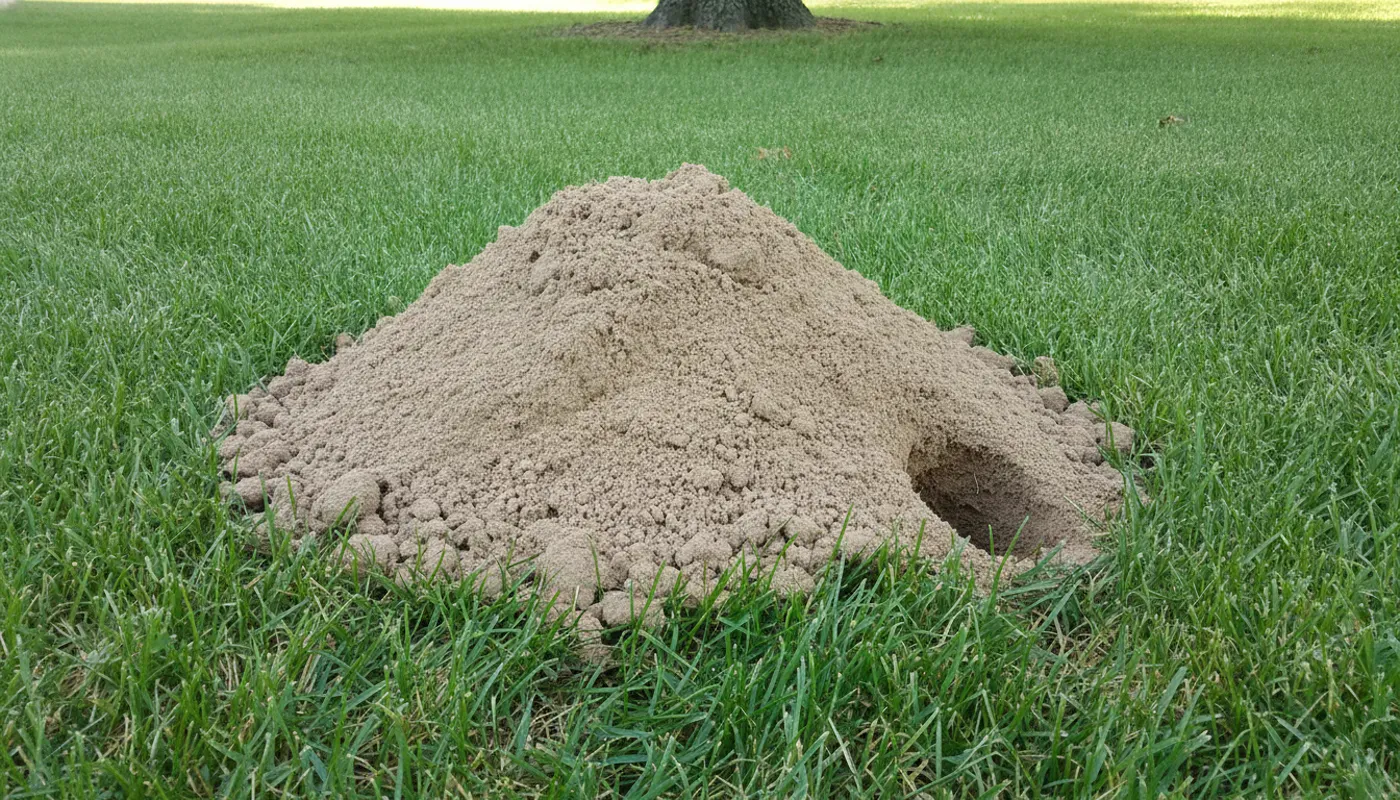
Fresh soil is darker, loose, and crumbly. Older mounds crust over, grow grass through the top, or flatten under the mower. UC IPM treats fresh mounds as the sign of an active gopher. If you can still see a clean plug and the soil smears when you press it, something used that exit recently. That is the opposite of an animal that has moved on.
One resident can cover a lot of ground. Oregon State notes that a single pocket gopher may excavate as much as 800 feet of tunnel, sometimes across an acre or more when food is spread out. On a typical lot the system is smaller, but it still reaches the lawn, the beds, and the drip line. New mounds at the edge of last week's cluster usually mean the same animal extended the run. They do not mean a new gopher arrived from the neighbor's fence.
Damage stacks while you wait. The animal eats roots, bulbs, and leafy plants, and it can pull whole seedlings underground. It gnaws flexible irrigation lines. Mounds dull mower blades and leave holes that twist an ankle. UC IPM's quick tips put it bluntly. One gopher can ruin a garden in a short time. Early action matters more than a hopeful pause.
If you want a closer look at mound shape versus mole hills, the pocket gopher signs guide stays on identification. The mole versus gopher page is the short field comparison. Use those when the plug location is unclear. Come back here for the leave-or-stay decision.
A fresh, side-plugged fan means the resident is active. Crusted, grassed-over mounds are the only piles worth treating as old.
Will the Tunnel Stay Empty If One Gopher Dies?
Sometimes a gopher does die, or a predator takes it, or it disperses. That is not the same as the problem ending. The burrow is already dug. The next animal does not have to start from scratch.
Oregon State is clear about the handoff. Young are on their own by about six weeks, and they move out to start territories or take over abandoned burrow systems. A vacant network is ready-made housing. On small lots, the replacement may be a juvenile from the same yard or a neighbor's yearling looking for open ground. You will not see the swap. You will see new plugs on mounds you thought were finished.
Lifespan does not rescue the wait-and-see plan. Pocket gophers are short-lived compared with a dog or a cat, and a separate guide covers how long gophers live. A short life still leaves the tunnels behind. The next resident inherits the runways, the food stores, and the path to your irrigation. Counting on old age is counting on a replacement.
That is also why "they will move on in winter" fails. They do not hibernate. The do gophers hibernate guide explains the seasonal slowdown. This page only needs the decision rule. Cold weather hides sign. It does not evict the animal, and it does not keep a vacant system from being reoccupied in spring.
Collapse the main runs after you remove a gopher if you can do it without tearing up the lawn you want to save. An open, intact tunnel invites the next tenant. Trapping the resident and then ignoring the runway is only half the job.
A death or a disappearance does not retire the burrow. Another gopher often moves into the same system.
What to Do Instead of Waiting
Once fresh mounds confirm a resident, switch from waiting to a direct plan. University guidance and a century of trapping practice point the same way. Find the active burrow and put a trap in the path the animal already uses. Do not sprinkle the yard and hope.
UC IPM recommends traps placed inside the burrow, in pairs facing opposite directions, with the opening covered so light stays out. Food bait is not required. Keep checking and keep setting until new mounds stop. The same page says to protect beds with hardware cloth or three-quarter-inch wire under the soil, and to use wire baskets around new shrubs and trees. Trapping lowers the number of animals. Underground fencing keeps the next one out of the plants you care about.
Use this order on a home lot:
- Mark only the mounds with loose, dark soil and a side plug. Skip crusted piles.
- Probe from the plug side until the tool drops into the main runway. That drop is the tunnel, not the mound itself.
- Open a hole only as wide as the trap needs, then set a snug trap in the runway.
- Cover the opening so light and air do not flood the run. Flag the spot so you can find it.
- Check within a day, reset if the tunnel was re-plugged, and stop only when new mounds quit appearing.
- After a catch, collapse or block the main run you opened so it is harder to reuse.
The full set, including how to probe and how to face two traps, lives in the complete gopher control guide and the professional setting tips. If a set keeps missing, the troubleshooting guide covers plugs, sprung traps, and bad placement. This article stops at the decision to act.
Poison bait is a poor default around pets, children, and wildlife. UC IPM warns that toxic baits can threaten those animals, especially in a backyard. Fumigant cartridges are a weak bet because the gopher seals the tunnel. A mechanical trap in the active runway is the method you can check with your own eyes.
Stop waiting when mounds are fresh. Trap the active runway, then protect beds with underground wire.
Which Cinch Setup Fits a Yard That Will Not Clear Itself
Cinch traps are reusable, galvanized-steel traps made in Oregon. They sit in the tunnel the gopher already travels. They do not rely on bait, gas, or a spray. That matches the biology above. You are intercepting a resident, not asking it to leave.
Size follows the tunnel you open, not a guess from the mound width. On the current product pages, the small trap is aimed at tunnels about 1 7/8 to 2 1/4 inches wide. The medium fits tunnels about 3 inches wide. The large fits tunnels about 3 1/2 inches wide. The set trap should fit snug. A loose trap gives the animal room to slip past or plug around it. Measure the runway you probe, then match that opening.
| Setup | Price | What you get | Best when |
|---|---|---|---|
| Gopher trap | $24.99 | One trap, one flag, and a brochure. | Use it on one small active patch. |
| Gopher kit | $54.99 | Three traps, three flags, and a brochure. | Use it when fresh mounds span several runways. |
| Deluxe gopher kit | $64.99 | Three traps, flags, gloves, a tunnel tool, and spray. | Use it on a large yard or stubborn soil. |
All three use the same C60-3 trap and offer small, medium, and large. Price does not change with size. Active and former military members save 10 percent with a GOVX ID. Shipping on the collection is flat rate, not free. The single trap is the right add-on when you lose one to a mower or you are covering a tight bed. The three-trap kit is the better start when fresh mounds span the lawn, because UC IPM's paired-set method uses more than one trap at a time. The deluxe kit adds the tunnel tool and spray when you expect to probe often.
A side-by-side with another brand is a different article. If you are choosing between Cinch and a Gopher Hawk on effort alone, read the ease-of-use comparison after you decide to trap. For a wider look at the line, the Cinch mole and gopher traps guide stays on the products. Regional timing, including Oregon yards, sits in the Oregon gopher control guide. None of those pages answer whether you should wait the animal out.
Set the trap only in a runway you have confirmed. The how to set Cinch traps page is the short product walkthrough. Keep children and pets away from open sets, flag every hole, and close the sod when you are done.
Match trap size to the tunnel you measured. Use one trap for a small active patch and a three-trap kit when mounds keep spreading.
How to Tell the Yard Is Actually Clear
You are done when new mounds stop, not when you hope they will. Keep the flags in place for another week after the last fresh plug. Walk the lawn after rain and after you water. Both events make new digs easy to see.
A clear yard looks like this. Older mounds crust and grass starts through them. No new side plug appears beside the beds or along the drip line. Irrigation heads stay intact. Seedlings stay rooted. If a new fan shows up, treat it as a new resident or a missed runway and set again. Do not restart the waiting clock.
Protect what you replant. Lay hardware cloth under a new raised bed before you fill it. A wire basket around a young tree keeps the next gopher off the roots even if one slips back into the lawn. Those barriers do not remove the animal in the turf. They keep the garden from becoming the reason it stays.
Check again in spring and fall. Those are the seasons when breeding and dispersal put more animals on the move. A yard that was quiet in August can grow a new fan in October because a juvenile found the old system. That is reoccupation, not proof that waiting would have worked the first time.
The yard is clear only after a week with no fresh mounds. A new fan means you set again, not that you wait longer.
Frequently Asked Questions
Do gophers leave if I stop watering the lawn?
Drought can shift where they dig, but it does not make a resident abandon a built burrow. They follow roots and moist soil, including beds you still water. Cutting irrigation may brown the turf without moving the animal.
Will coffee grounds, castor oil, or garlic make them go away?
UC IPM says plants such as garlic and castor bean have not been shown to repel gophers, and no repellent on the market successfully protects plants. Coffee grounds fall in the same unproven bucket. Use them in the compost, not as a control plan.
If I see only one mound, is a single gopher about to move on?
One fresh mound still means an active burrow. A single gopher can build several mounds a day, then pause. Mark that mound and check it tomorrow. If the plug is renewed, the resident is still there.
Do gophers go away on their own in winter?
No. They stay active underground and do not hibernate. Cold or snow can hide the mounds. The burrow is still occupied, and a vacant system is likely to be taken over again when the soil warms.
Should I trap if the mounds might be from a mole?
Confirm the sign first. Gopher mounds are fan-shaped with the plug off to the side. Mole mounds are rounder with a center plug. Trapping the wrong animal wastes the set. Use the mole versus gopher page if you are unsure, then trap only a confirmed gopher runway.
Stop Waiting on a Gopher That Still Has a Burrow
Do gophers go away on their own? Not while fresh, side-plugged mounds keep appearing. The resident defends that tunnel, a quiet spell is usually weather, and an empty system gets a new tenant. Trap the active runway, match the trap to the tunnel you measure, and watch for a full week with no new soil.
Choose a Cinch gopher trap sized to the runway you just opened, or step up to the three-trap kit if mounds are still spreading. Active and former military members save 10 percent with a GOVX ID. Questions before you order: call (503) 644-0150.
Flat rate shipping applies on trap orders. For the wider removal steps after you decide to act, use the complete control guide linked above.