

How long do gophers live? Pocket gophers generally live less than three years, but that does not make a gopher problem short-lived. They remain active throughout the year, and new animals can occupy or reopen tunnel systems as conditions change. If you are seeing fresh mounds, the useful question is not only how old the animal may be. It is whether the tunnel is active and where a trap can intercept it.
Get help choosing a gopher trap
How long do gophers live in the wild?
Most pocket gophers live for less than three years. The exact lifespan varies with species, food supply, predators, disease, weather, and local conditions. A short average lifespan does not mean that a yard will naturally become clear after a season. Gophers reproduce during the time they are alive, and more than one animal may use connected or nearby tunnel systems.
The University of California Integrated Pest Management program explains that pocket gophers spend most of their lives underground and can live up to three years. Its pocket gopher guide is useful for homeowners because it keeps attention on the animal's tunnel system rather than only on what can be seen above ground.
The University of California Master Gardeners also describes a lifespan of about three years and notes that gophers remain active rather than entering a winter sleep. You can review its gopher information alongside the signs in your own yard.
Gophers also do not hibernate. The Los Angeles County Department of Animal Care and Control notes that a gopher travels through its burrow system to inspect it and stays active all year in its Pest Information Series. That is why fresh damage can appear in spring, summer, fall, or winter.
Gophers usually live less than three years, but they can create recurring damage because they stay active year-round and new animals can use the same area.
Why does a short lifespan still matter to your yard?
A homeowner may expect a gopher problem to fade when one animal dies or moves on. That assumption can leave an active tunnel untreated. A gopher's lifespan is only one part of the picture. The other parts are reproduction, available food, soil conditions, and whether the property offers an easy route through a lawn, garden, or planting bed.
Gophers spend most of their time below ground. Mounds are evidence of excavation, not a reliable count of the animals present. One animal can produce multiple mounds, while several animals may work separate tunnels in the same yard. Avoid estimating the size of the problem from mound count alone.
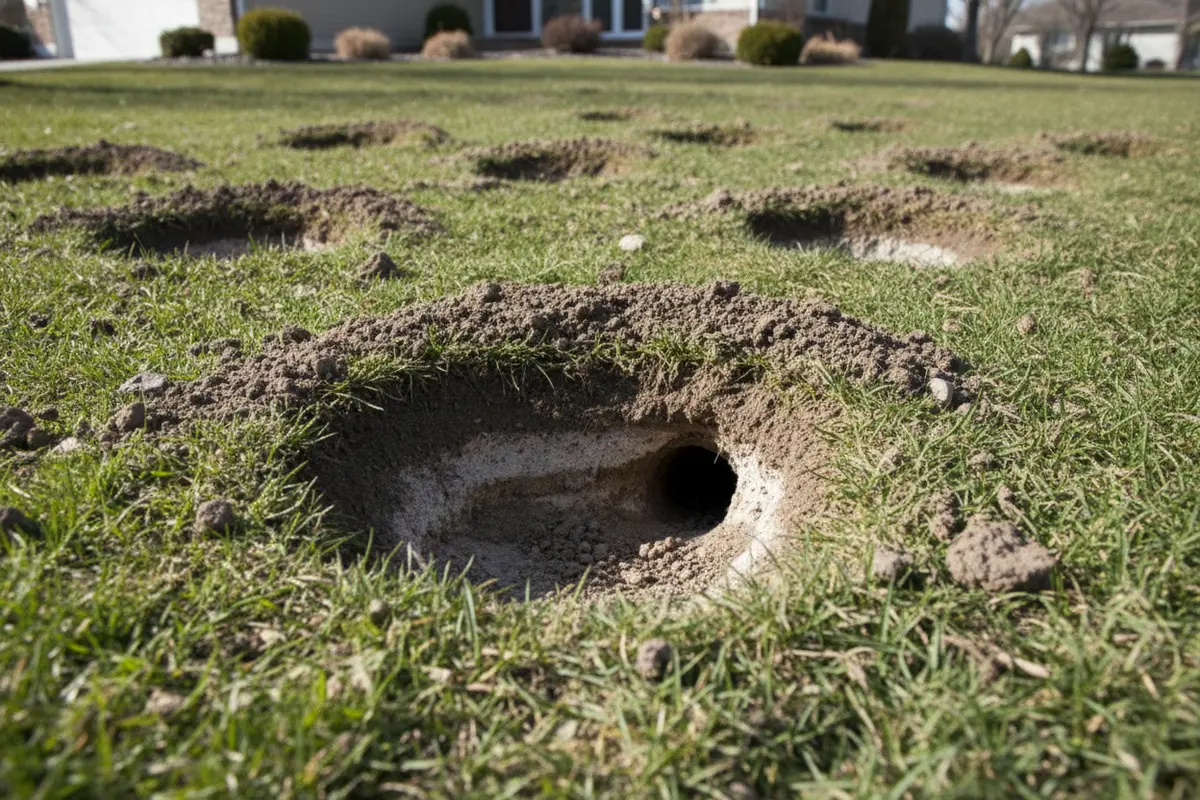
Look for a pattern instead. Fresh soil is usually looser and more distinct than weathered soil. A mound may have a fan or crescent shape, depending on how soil was pushed to the surface. Damage near roots, ornamental plants, irrigation areas, or garden beds can also point to underground activity, although no single sign identifies the pest by itself.
It helps to separate evidence into three questions:
- Is the soil newly disturbed? Fresh, loose soil is more useful than an old, compacted mound.
- Is the damage repeating? Repeated mounds along a line may indicate a connected tunnel area.
- Is there plant or root damage? Wilted plants or damaged roots can support the evidence, but they should be considered with the tunnel signs.
A yard can also look quiet for several days while an underground route remains available. Weather may cover a mound, irrigation may change its appearance, or the animal may be working elsewhere in the system. Do not treat an empty-looking surface as proof that the tunnel is empty.
A gopher's age does not tell you whether your yard is safe; fresh signs and an active tunnel are better guides for deciding what to do next.
How can you tell whether a gopher tunnel is active?
Trap placement begins with activity, not with the most noticeable mound. Gophers can maintain different kinds of tunnels, and an old mound may no longer connect to the route the animal is using. If you place a trap in an abandoned section, the equipment may be sound while the location is wrong.
Start by inspecting the newest signs. Gently open a small section of a suspected tunnel or use a tunnel tool to expose the route without collapsing more of it than necessary. Then check whether the opening is repaired or covered. A gopher that is using the passage may close the opening as it restores the tunnel. This test is more useful than repeatedly setting equipment beside an old mound.
- Choose a fresh mound or a section with recent soil movement.
- Expose a small portion of the tunnel carefully. The Cinch tunnel tool can help locate and prepare a route.
- Mark the location and observe whether the opening is closed or disturbed.
- Place the trap in the route the gopher is likely to use, following the product instructions.
Record the date and exact location when you test a tunnel. A quick photograph or yard sketch can help you distinguish a new mound from soil left by an earlier inspection. Mark nearby beds, trees, irrigation lines, and fences so you can see whether the activity follows a boundary or crosses the property.
If the opening is not repaired, do not immediately conclude that the whole yard is inactive. The exposed section may not connect to the main runway, or the animal may be using another branch. Test another fresh location rather than widening the first hole. Broad digging creates extra repair work and can destroy the evidence you need for placement.
Use the step-by-step gopher trap placement guide before setting equipment. Once a route is confirmed, compare the overview of how the traps work to understand the importance of intercepting the animal below ground.
An active tunnel matters more than a large mound, so confirm the route before you set a trap.
Does gopher activity change with the seasons?
Gophers do not disappear for the winter, although surface signs can change with weather and soil conditions. Wet soil may make new mounds easier to spot, while hard or dry soil can make excavation less visible. Irrigation and planting can also change where signs appear in a managed yard.
Seasonal changes affect what you see, not whether the animal can use its tunnel system. A quiet week does not prove that the problem has ended. Continue to inspect the newest signs and avoid making a decision based on one day of surface activity.
| Season or condition | What you may notice | Practical response |
|---|---|---|
| Wet or recently irrigated soil | Fresh mounds and disturbed soil may be easier to distinguish | Inspect the newest mound and confirm the tunnel route |
| Dry or compacted soil | Surface evidence may be less obvious | Look for plant stress, new soil, and repeated locations |
| Cool weather | Damage may appear less frequent | Keep checking active areas rather than assuming dormancy |
| Growing season | Root and plant damage may become more visible | Protect high-value planting areas and address the active tunnel |
Keep a simple record of the date and location of each new mound. This can show whether the activity is concentrated in one run or moving across the property. In a small yard, a quick sketch is enough: mark the house, garden beds, irrigation lines, and each fresh mound. In a larger property, divide the area into zones and check one zone at a time. That makes it easier to tell whether new signs are appearing near the same route or in a different part of the landscape.
Use those notes to compare like with like. If a mound appears after irrigation, mark that condition so you do not mistake washout or settled soil for new excavation. If you see repeated activity close to a prized planting bed, note the nearest fresh mound and any damaged roots. Revisit the same marked points on a consistent schedule, and record when a spot remains undisturbed. A pattern over several checks is more useful than an impression from one walk across the yard.
Seasonal observation also helps with timing. You do not need to wait for a particular month if the route is active. Conversely, you do not need to reset a trap simply because an old mound remains visible. Let recent evidence determine the next inspection.
Seasonal visibility changes, but year-round activity means a quiet surface should not be treated as proof that gophers are gone.
How should you distinguish gopher damage from other underground pest damage?
Before choosing equipment, identify the animal as carefully as you can. Gophers commonly push soil into visible mounds and feed on roots below ground. Moles often leave raised surface runs as they search for prey. The signs can overlap, especially after rain or irrigation, so a trap intended for one animal is not automatically appropriate for the other.
Check the location of the damage. A mound beside a root zone, garden bed, or underground plant growth may fit gopher activity, while a long raised ridge near the surface may suggest a different kind of movement. Look for the actual tunnel instead of relying only on the shape of a mound. The guide to what gophers eat can help connect plant and soil evidence to the right problem.
- Look at whether soil has been pushed upward or a surface ridge has been raised.
- Check whether roots or plants show signs of underground disturbance.
- Inspect a fresh location rather than an old, weathered mark.
- Use a product designed for the animal you have identified.
Misidentification can lead to a string of unhelpful adjustments. A correctly set gopher trap will not solve a mole problem, and a mole trap is not a substitute for finding a gopher runway. If the signs do not fit, pause before buying more equipment and compare them with reliable identification guidance.
Correct pest identification comes before trap selection, because the right setup depends on the animal's route and behavior.
Which trap should you choose for an active tunnel?
Choose a trap based on the tunnel size, the animal you identified, and the location you can safely access. A gopher trap is intended for a below-ground route, so the fit and placement matter more than a claim that one product will solve every situation from the surface.
Next, match the trap to the tunnel. A trap that is too large, too small, or poorly aligned may not sit correctly in the passage. When size is uncertain, compare the options in the Cinch gopher trap collection and use the manufacturer's instructions. You can also review the large gopher trap option or the XL option when the tunnel calls for a different size. Do not force a product into a passage it does not fit.
A useful fit check is practical rather than complicated:
- Can you open the tunnel without crushing the passage?
- Does the trap sit in line with the route rather than at an angle?
- Is there enough room to secure it and cover the opening as directed?
- Can you check the setup without putting children or pets near a set trap?
Mechanical traps work by intercepting the animal where it naturally travels underground, rather than trying to repel it from the surface. A reusable, well-maintained trap can also provide value over repeated seasons; consider the fit and durability of the tool, not only the first setup. For a homeowner, the useful comparison is not an unsupported promise of instant results. It is whether the device is appropriate for the identified pest, can be placed correctly, and can be checked and reset safely.
Trap size can be harder to evaluate when soil is compacted or the opening is narrow. Inspect the route before making a purchase and avoid enlarging it so much that the original shape is lost. If the route is too small for the equipment you selected, review another size rather than bending or forcing the trap. The actual tunnel is the final fit test.
It also helps to think beyond the first placement. Traps designed for repeated use should be checked and maintained according to their instructions. A durable tool can be used across seasons and changing activity, which is part of its lifetime value. That does not remove the need for correct identification or setup: the expected benefit depends on reaching the route the gopher actually uses. Store equipment safely between uses, keep children and pets away from the work area, and avoid handling a set trap carelessly.
The right trap is the one that matches the identified pest and fits the active tunnel, not simply the one with the biggest surface claim.
What should you do after setting a gopher trap?
Give the setup time to work according to its instructions, then inspect it and the surrounding tunnel. Cinch traps are typically set and left for a day rather than treated as an instant surface remedy. Keep people and pets away from the work area, and use care whenever you uncover a tunnel or handle a set trap.
If there is no result, troubleshoot the location before assuming the trap failed. The tunnel may have been inactive, the opening may not have been sealed properly, or the trap may not have been aligned with the route. Resetting the same equipment in the same unverified spot repeats the original error.
- Check whether the tunnel was active when you placed the trap.
- Look for fresh soil or a repaired opening near the setup.
- Review alignment, fit, and the manufacturer's setup instructions.
- Move to a newly confirmed active section if the first location stays undisturbed.
Do not judge the outcome from the mound alone. Recheck the tunnel entrance and the surrounding soil. If the animal has worked around the setup, document where the new disturbance occurred and compare it with the trap position. That information can tell you whether the route was nearby but not intercepted.
If the opening has collapsed, repair only what you need to inspect the route again. Excess digging can create a new opening that the animal does not normally use. A smaller, deliberate adjustment gives you a better chance of keeping the trap in the natural path.
For a broader plan, read the complete gopher traps guide. If the signs look more like mole runs, compare the mole trap options instead of treating every underground pest as a gopher. When you are ready to choose equipment for a confirmed gopher route, browse the Cinch trap store for the product that matches your needs.
When a trap produces no result, verify activity, fit, and placement before replacing equipment.
How can you make a practical gopher-control plan?
A simple plan prevents the lifespan question from becoming a reason to wait. Start with the newest evidence, identify the animal, and make one deliberate placement. Then review the result before changing several variables at once.
- Survey the property. Walk the lawn, planting beds, and edges of the property. Mark fresh mounds and note where plants or roots show damage.
- Prioritize the newest route. Choose the location with the most recent soil movement, not necessarily the largest mound.
- Confirm activity. Expose a small section, observe the opening, and preserve the route as much as possible.
- Match the equipment. Select a trap that fits the identified pest and tunnel, then read its setup directions before setting it.
- Check the result. Inspect the trap and nearby soil after the recommended interval. Record what changed.
- Repair last. Once the route remains quiet, fill and smooth the disturbed soil and restore the planting area.
This sequence also helps when a property has several problem spots. Work on one zone first instead of setting equipment everywhere without a record. If the first placement is quiet, you have a clear baseline for deciding whether to move to another active section. If activity continues, your notes show whether it is a new route or a missed branch of the original system.
The goal is not to predict the exact day an individual gopher will disappear. It is to respond to evidence while the animal is using a route. That approach is more useful than waiting for the natural end of a lifespan, because another animal can enter the area and a tunnel can remain attractive to future activity.
A repeatable plan is simple: identify the pest, confirm the newest route, fit the trap, check the setup, and repair the yard only after activity stops.
Frequently asked questions about gopher lifespan
Do gophers hibernate?
No. Gophers remain active throughout the year, although weather and soil conditions can change how visible their work is.
Can one gopher make many mounds?
Yes. Mound count does not provide a reliable count of animals. Use fresh signs and tunnel activity to guide placement.
Will a yard become clear when a gopher dies?
Not necessarily. Another gopher may occupy nearby tunnels, and the original animal may have been using only part of a larger system.
How soon should I set a trap?
Set one after you identify a fresh, active route and choose equipment that fits it. Acting on an old mound alone can waste time.
What if the damage continues after a trap is set?
Check whether the new damage is beside the setup or in a separate section of the yard. Review the route, fit, alignment, and instructions before moving the trap or choosing another size.
The practical answer is simple: lifespan explains persistence, but active-tunnel evidence should guide control decisions.
Shop gopher traps for an active tunnel
Gophers generally live less than three years, yet their year-round activity and replacement by other animals can keep a property vulnerable. Identify the pest, confirm the active route, and choose a properly sized trap before you set it.