

Comparing Gopher Hawk vs Cinch comes down to a practical question: which setup feels easier when you are standing beside a fresh gopher mound with a shovel, probe, and trap in hand? GopherHawk is designed for a vertical, surface-entry set. Cinch is placed directly into an exposed tunnel. Both approaches can work, but they ask you to do different jobs before the trap is ready.
Compare Cinch Gopher Traps and find the tunnel size that fits your yard.
GopherHawk may feel easier if your priority is making a small opening from the surface. Cinch may feel easier if you prefer to expose the runway, see the trap position, and place the mechanism directly in the gopher's path. The better choice depends less on the brand name than on whether you prefer minimal digging or visible, direct placement.
Gopher Hawk vs Cinch: What Does Easier to Use Mean?
Ease of use is not just the number of steps printed on a box. A trap can be quick to set but difficult to place accurately. Another can require more soil removal but make the final placement easier to understand. For this comparison, ease of use means the amount of locating, digging, setting, checking, and resetting required by a typical homeowner.
That distinction matters because a gopher trap is only useful when it reaches an active tunnel. Gophers can backfill unused runs, and a mound does not always show the exact path beneath the soil. Before choosing either design, confirm fresh activity and locate the runway rather than setting beside an old mound at random.
- Locating: How clearly can you identify the active tunnel?
- Accessing: How much soil must you remove to reach the tunnel?
- Placing: Can you see and center the trap in the travel path?
- Arming: Can you set the mechanism while keeping your hands clear?
- Checking: Is the catch indicator easy to see from above ground?
For most homeowners, the easiest trap is the one that reduces uncertainty at the step where they are least confident. GopherHawk reduces tunnel excavation, while Cinch makes the runway and trap position more visible.
How does GopherHawk work?
GopherHawk uses a vertical surface-entry method. Its official instructions describe probing around a fresh mound to find a tunnel, opening a small hole with a wedge, lowering the trap into the tunnel, and setting it from above. The trap remains visible at the surface, including its catch indicator.
This approach has an obvious benefit: you do not need to open a long section of tunnel. If your lawn is carefully maintained or the soil is easy to probe, making one small access hole can be appealing. It can also be a comfortable option for someone who wants to work mostly from the surface rather than excavate a runway.
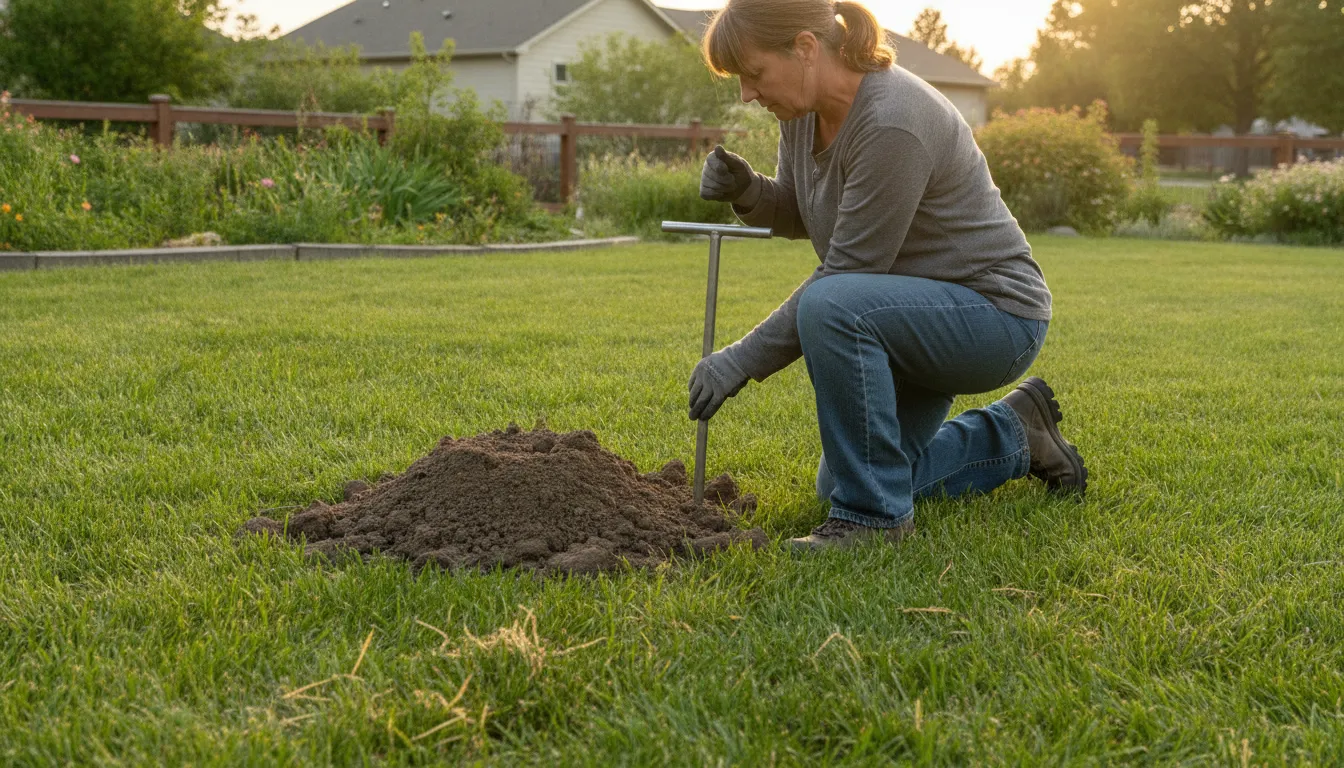
The tradeoff is that a surface opening can make the tunnel position harder to judge. You must feel for the run with the probe, widen the opening without damaging the path too much, and lower the trap so its working parts are correctly positioned. If the probe misses the tunnel or the trap is not centered, a fast setup can become a frustrating reset.
GopherHawk's method is therefore strongest for people who value:
- A small surface opening instead of a larger exposed runway.
- A trap that can be checked from above ground.
- A guided setup using a probe and wedge.
- Minimal disturbance to an established lawn or garden bed.
GopherHawk is easier when digging out a runway is your main concern. Its vertical method saves excavation, but it requires confidence with probing and surface-to-tunnel alignment.
How does the Cinch Gopher Trap work?
The Cinch Gopher Trap uses a direct tunnel-placement method. You expose the runway, prepare the trap, position it in the tunnel, and arm it while keeping your hands clear of the jaws. The current Cinch setup guide describes a four-step process: expose the tunnel, set the trigger, position the trap, and arm and monitor.
Direct placement takes more visible soil work than a small probe hole. In return, you can inspect the tunnel itself and confirm that the trap sits in the travel path. That visual feedback can be valuable for a first-time user who would rather see the relationship between the runway and the trap than rely on what a probe feels below ground.
The trap must fit the tunnel correctly. Cinch's current Gopher Kit page explains that trap sizing is based on the diameter of the tunnel system, with the standard kit including three traps and flags. Measuring the tunnel before selecting a trap is more reliable than choosing based only on the size of the mound.
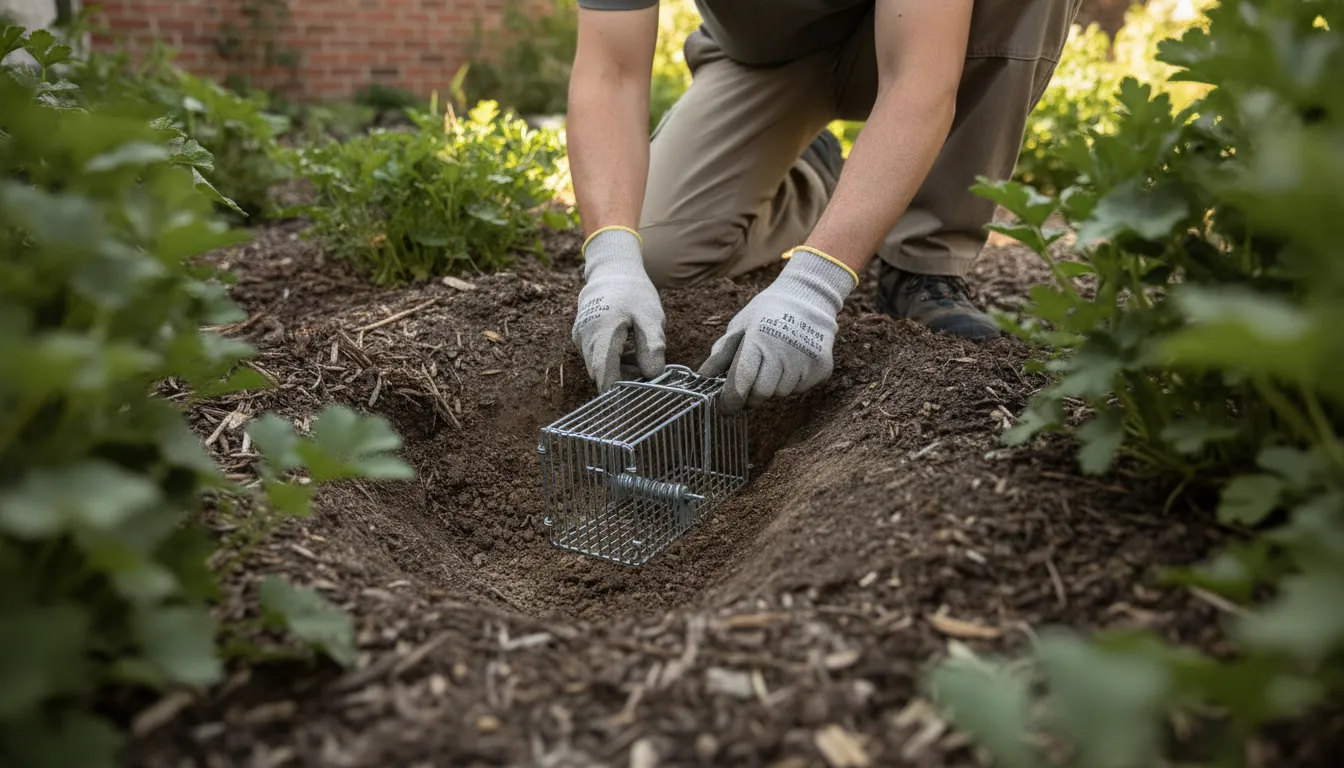
Cinch's method is especially straightforward for people who value:
- A visible runway during setup.
- Direct placement in the gopher's travel path.
- A trap selected to match measured tunnel width.
- A visible above-ground set bar or flag for monitoring.
Cinch is easier when you want to verify the tunnel and trap position with your own eyes. The extra excavation is the cost of a more direct setup, not an extra layer of hidden alignment.
Related products


Upgraded components built for frequent, intensive use by professionals and landowners.
View productWhich trap requires less digging?
If the question is strictly about excavation, GopherHawk has the advantage. Its probe-and-wedge process is intended to create a small opening from the surface into the active tunnel. That can leave less visible disruption in turf and may suit a user who wants to avoid opening a larger section of ground.
Cinch requires you to expose enough of the runway to position the trap. The amount of digging depends on the soil, tunnel depth, and space needed to work safely. In compacted ground, the process can take more effort. In loose soil, exposing the tunnel can be quick and may make the rest of the setup easier.
Quick comparison: GopherHawk uses a vertical opening and usually requires less excavation. Cinch uses an exposed runway and gives you direct visual confirmation of placement. GopherHawk favors neat lawns and limited digging; Cinch favors a visible, direct set matched to the tunnel width.
Less digging is not always less work overall. If the surface opening is fast but the trap misses the center of the tunnel, locating and resetting it can take longer than making a clean exposed runway once. Consider the condition of your soil and how comfortable you are interpreting a probe before deciding.
Choose GopherHawk when minimizing excavation is the deciding factor. Choose Cinch when a little more digging will give you better visibility and confidence in placement.
Which trap is easier to set, check, and reset?
Setting a trap safely requires control, not speed. Keep fingers away from active jaws, springs, straps, and trigger parts, and follow the manufacturer's instructions for arming and unsetting the specific model. A clear catch indicator also matters because it tells you whether the set needs attention without requiring you to disturb the trap immediately.
GopherHawk's above-ground position makes checking intuitive. The official instructions describe a visible catch indicator and removal from above. The same surface access can simplify retrieval, although hard soil may still require loosening around the trap before it is removed.
Cinch is checked through its visible set bar or flag, depending on the product setup. Because the trap is placed in the runway, a user can also inspect whether soil has shifted around the trap or whether the tunnel has been disturbed. If a reset is needed, the exposed tunnel makes the reason for the missed catch easier to diagnose.
For either trap, a useful check routine is:
- Confirm the set indicator without placing hands near the working mechanism.
- Look for fresh soil, collapsed tunnel sections, or signs that the animal has changed direction.
- Unload or unset the trap according to the manufacturer's safety directions.
- Recheck the tunnel location before moving the trap or changing its position.
- Repair the opening after the trapping work is complete.
GopherHawk offers a simple surface check, while Cinch offers more visible tunnel feedback during troubleshooting. The easier reset is the one that lets you understand why the first set did not work.
What should homeowners choose for a small yard or garden?
A small yard does not automatically call for the smallest trap or the least digging. The right choice depends on how many active runs you have, how carefully you need to protect surrounding plants, and whether the tunnel is easy to access.
GopherHawk may suit a homeowner who has a clean lawn, wants a small surface opening, and feels comfortable finding a tunnel with a probe. Cinch may suit a gardener who wants to expose the runway and place the trap where the tunnel is visible. In a planting bed, direct tunnel access may require care around roots, while a probe set may limit surface disturbance.
Use this quick decision guide:
- Pick GopherHawk if: you want limited excavation and prefer a vertical surface set.
- Pick Cinch if: you want to see the runway and place the trap directly in it.
- Pick a Cinch kit if: you need multiple traps and want the basic deployment tools together.
- Pause before setting either trap if: you have not confirmed a fresh, active tunnel.
For additional setup guidance, review Cinch's four-step trap instructions before opening the runway. If you already know the tunnel width, compare the Cinch Gopher Kit details and included trap sizes.
For a small property, match the setup to the ground in front of you. GopherHawk favors a small surface entry, while Cinch favors a visible tunnel and measured fit.
Is GopherHawk or Cinch easier to use overall?
There is no single answer for every yard. GopherHawk is easier at the excavation stage because the surface-entry design limits how much tunnel you open. Cinch is easier at the placement stage because the exposed runway shows where the trap belongs. A homeowner who dislikes digging may prefer GopherHawk. A homeowner who dislikes guesswork may prefer Cinch.
The most important step for either product is locating an active tunnel. A trap placed in the wrong run is not easier to use simply because it took less time to set. Confirm activity, select a suitable location, match the equipment to the tunnel, and check the set safely.
For Cinch users, the gopher trap collection is the best starting point for comparing available trap options. The current Cinch store also provides the path to the broader product catalog, including kits and accessories. Cinch traps are made in the USA, and the company describes its products as non-toxic mechanical control tools.
Overall, GopherHawk is easier for minimal-digging setups, while Cinch is easier for direct, visible tunnel placement. Choose the method that removes your biggest source of uncertainty, then follow the product instructions carefully.
Shop Cinch Gopher Traps and choose a setup for your measured tunnel.
Frequently asked questions
Does GopherHawk require less digging than Cinch?
Generally, yes. GopherHawk is designed around a probe and a small vertical opening. Cinch requires enough of the runway to be exposed for direct trap placement. Soil condition and tunnel depth affect the actual effort.
Which trap is easier for a first-time user?
It depends on what feels easier to you. GopherHawk reduces excavation but requires accurate probing. Cinch requires more visible digging but lets you see the tunnel and trap position. Users who prefer visual confirmation may find Cinch more intuitive.
How do I choose the right Cinch Gopher Trap size?
Measure the diameter of the active tunnel and compare it with the sizing information for the Cinch trap or kit. The trap should fit the tunnel appropriately when set. Do not choose a size from the mound diameter alone.
Should I set either trap beside an old gopher mound?
No. First confirm that the tunnel is active. Fresh soil, a recent mound, and a clear runway are more useful indicators than an isolated old mound. Follow local rules and the product instructions before setting a trap.
How often should I check a gopher trap?
Check it according to the manufacturer's directions and local requirements. Keep hands away from the working mechanism, and unset or unload the trap safely before handling or moving it.
In short, GopherHawk minimizes digging, while Cinch emphasizes direct tunnel visibility and measured placement. Confirm an active runway and follow the instructions for whichever trap matches your setup preference.