

For homeowners, gardeners, and land managers facing property damage, finding an effective, chemical-free way to protect turf and crops is a top priority. When choosing the right tools, cinch traps mole and gopher traps offer a poison-free mechanical option described by the brand, with products handcrafted in America from premium steel . Rather than relying on temporary repellents or bait, this method places a physical trap inside an active tunnel. The right choice starts with the animal causing the damage and the size of the tunnel it is using.
Explore the original handcrafted designs and check the current options with flat rate shipping at the Cinch Traps Store.
This complete guide serves as a broad hub for the Cinch Traps product family, including specialized mole traps, gopher traps, and accessories . The original design dates to 1909, and the current product line is sized by tunnel diameter so the set trap fits snugly . The dedicated guides linked below go deeper on individual setup and troubleshooting questions. Here, we begin with the decisions that prevent most avoidable mistakes: identify the pest, measure the tunnel, and choose the matching product.
What Makes Cinch Traps Different?
Cinch Traps is a mechanical pest-control brand built around placing a physical trap in an active mole or gopher tunnel. The current storefront presents the products as premium-steel, made-in-America tools with a design history dating to 1909 . That information explains the brand's positioning. It does not replace the practical work of finding an active runway and matching the trap to its diameter.
A Century of American Steel Heritage
Cinch dates its original trap design to 1909 . The current storefront describes the traps as made in America and built with premium steel . For a buyer, that heritage matters most when it is paired with a clear care routine. A trap that is cleaned, dried, and stored properly is easier to keep ready for the next job than a tool left muddy and damp.
Visible Triggers and Specialized Formats
A key feature of the Cinch system is a visible trigger. The product page says users can see when the trap has activated without digging up the set . Cinch also separates its product groups by target pest, offering mole traps, gopher traps, and accessories . Deluxe mole and gopher kits add gloves, a tunnel tool, and maintenance spray to the core trap setup .
Durability Depends on Maintenance
The storefront advises cleaning and maintaining traps after use to help prevent corrosion and keep them ready season after season . The same page states that rust or corrosion is not covered when the product has not been well maintained . Rinse away mud after a catch, dry the metal thoroughly, and use the recommended maintenance product on moving parts before storage. That routine supports both operation and warranty eligibility.
Cinch Traps combine a 1909 design heritage, premium-steel and made-in-America positioning, a visible activation trigger, and separate mole and gopher product groups. Long service depends on cleaning and maintenance because rust and corrosion are excluded from warranty coverage.
Mole or Gopher? Start With Pest Identification
Before selecting a trap, identify the pest causing the damage. Moles and pocket gophers leave different surface clues, feed differently, and use tunnels in different ways. Setting the right product begins with reading the mound or runway instead of guessing from the size of the damaged area.
Mound and Tunnel Clues
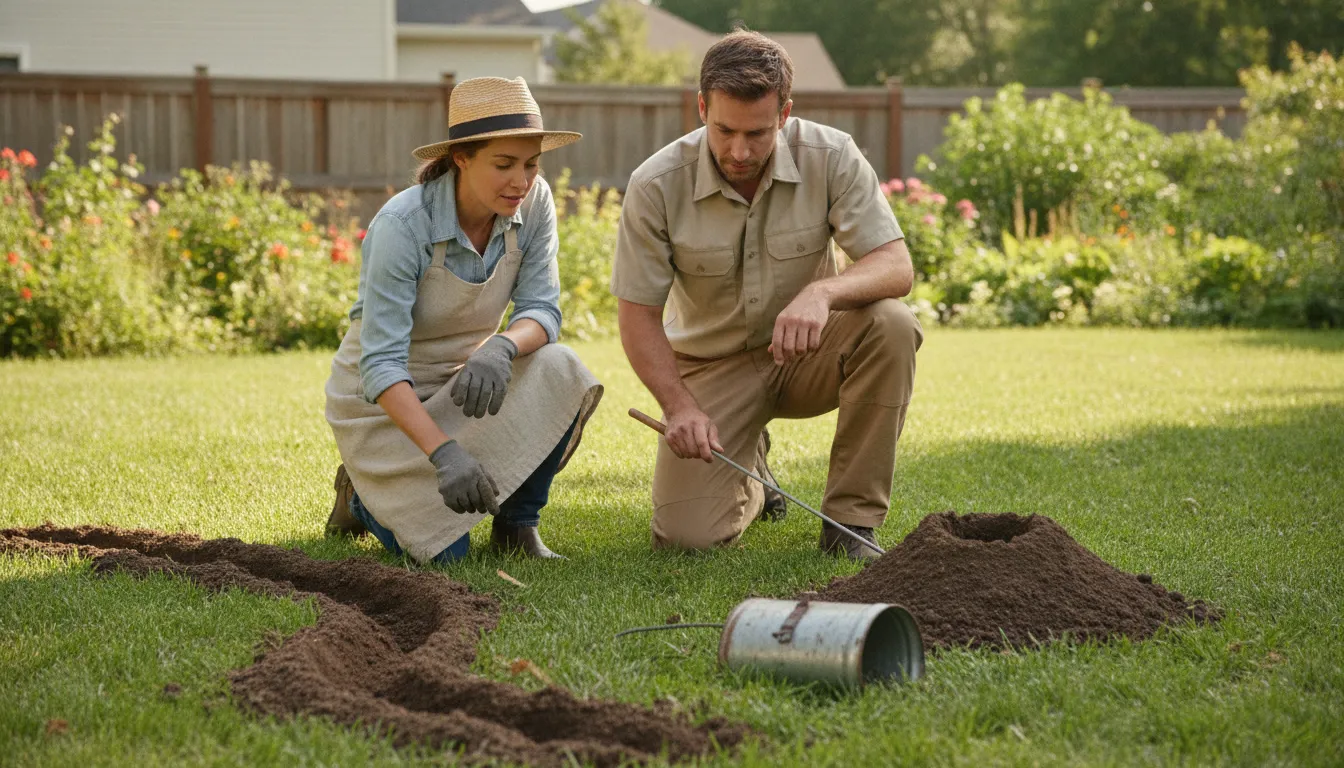
Moles typically create volcano-shaped mounds or push up meandering ridges just beneath the surface . University of Illinois Extension describes mole feeding tunnels as winding paths, while main tunnels are straighter and connect other tunnels or mounds . Those main tunnels are used almost daily, which makes them the more logical place to consider a mole trap . Illinois Extension's field description also notes that moles have elongated snouts and broad, shovel-like front feet .
Pocket gophers usually leave fan-shaped or horseshoe-shaped mounds with a plugged entrance . UC IPM describes pocket gophers as burrowing rodents that feed on plant roots and can damage irrigation lines and sprinkler systems . Their traps belong underground in active burrows, not on top of the mound .
Diet Helps Confirm the Diagnosis
The diet is another useful clue. Cinch's FAQ describes moles as insectivores and gophers as herbivores . That distinction helps explain why a raised surface runway and a damaged root zone can point to different animals. It is still wise to confirm the tunnel activity before setting a trap.
| Feature | Moles | Pocket gophers |
|---|---|---|
| Mound or surface sign | Volcano-shaped mound or raised, meandering ridge | Fan-shaped or horseshoe-shaped mound |
| Diet | Insects, grubs, and worms | Roots and vegetation |
| Best place to investigate | Straighter main tunnel | Active underground burrow |
Will a Mole Trap Work for Gophers?
Do not treat a mole trap and a gopher trap as interchangeable. Cinch provides separate product families because the animals create different tunnel systems and interact with their surroundings differently . Confirm the species first, then measure the active tunnel and choose the corresponding trap family. That simple check is more useful than trying to make one product serve both jobs.
Identify the pest by its mound, runway, and feeding pattern before you shop: moles usually leave volcano-shaped signs and surface ridges, while pocket gophers leave fan-shaped or horseshoe-shaped mounds and damage roots. The diagnosis determines the correct Cinch product family.
Which Cinch Trap Fits Your Tunnel?
Selecting the right size starts with tunnel diameter. Cinch says its sizes are determined by the diameter of the tunnel system, and the set trap should fit snugly . Locate an active runway, expose enough of it to measure, and compare the measurement with the product guidance. A snug fit supports alignment. It does not guarantee a catch if the tunnel is inactive or the placement is wrong.
Measure Before Ordering
The table below summarizes the current approximate sizing shown on Cinch's live product pages. Measurements are guides, not a substitute for checking the tunnel in front of you. Handmade products can also show small size variation, so use the fit of the set trap as the final check .
| Target pest | Trap size | Approximate tunnel diameter | Product |
|---|---|---|---|
| Mole | Small | 1 1/4 by 1 1/2 inches | Mole Trap |
| Mole | Medium | 1 7/8 to 2 1/4 inches | Mole Trap |
| Mole | Large | Approximately 3 inches | Mole Trap |
| Gopher | Small | 1 7/8 to 2 1/4 inches wide | Gopher Trap |
| Gopher | Medium | Approximately 3 inches wide | Gopher Trap |
| Gopher | Large | Approximately 3 1/2 inches wide | Gopher Trap |
Single Trap, Standard Kit, or Deluxe Kit?
Choose the format that matches the work in front of you. A single mole trap includes one trap, one flag, and one mole brochure . A single gopher trap includes one trap, one flag, and one gopher brochure . Singles make sense as replacements or add-ons. If you are starting a fresh set, a kit gives you multiple traps and flags from the beginning.
The standard mole kit includes two traps, two flags, and a brochure . The standard gopher kit includes three traps, three flags, and a brochure . Deluxe kits add gloves, a tunnel tool, and maintenance spray . The tunnel tool can help expose a clean run, while maintenance spray belongs in the care routine rather than on the soil around a set.
What Is the Most Effective Trap for Gophers and Moles?
The useful answer is not a universal brand ranking. A correctly sized mechanical trap placed in an active tunnel is the starting point supported by the extension guidance . Gopher traps do not require food bait , and Cinch's product pages describe a poison-free design . For product selection, compare the Cinch Mole Trap and Cinch Gopher Trap only after you know the pest and tunnel measurement.
Match the product family to the pest, then match the size to the measured tunnel. A snug fit and active placement are the foundations of a sound trapping setup, while singles, kits, and deluxe kits let you choose the amount of equipment and maintenance support you need.
Related products


How to Set Cinch Traps in Active Tunnels
Successful underground trapping depends on placement. Texas A&M AgriLife Extension states that trap effectiveness depends on placing traps properly in tunnels . The brand's instructions and extension guidance point to the same sequence: find fresh activity, locate the main route, set the mechanism correctly, and keep the site easy to monitor.
Locate an Active Main Tunnel
For pocket gophers, start at a fresh soil mound and use a metal probe to find the main tunnel . Utah State University describes those main tunnels as running 4 to 18 inches below the surface, with lateral tunnels branching from them . For moles, look for a straighter main tunnel that connects mounds and is used almost daily . Avoid placing a trap solely because a mound is nearby. The tunnel must be active.
The Four-Step Setting Mechanism
Cinch's how-it-works page presents a four-step mechanism. The dedicated setting guides provide the finer details for each soil and trap situation. At a high level:
- Prepare: Hold the trap firmly with the set wires loose and pull the trigger wire back .
- Position: Raise the active jaw wire and place the forward set wire across it .
- Lock: Position the rear set wire and push the trigger wire forward so the set wire sits behind the tab .
- Insert: Place the set trap snugly in the active tunnel, following the product instructions for the pest and size .
Pair the Set and Mark the Site
For mole tunnels, Cinch recommends two traps facing opposite directions to cover both routes through the tunnel . UC IPM gives the same paired-placement guidance for gopher traps , and Utah State University recommends placing one trap in each end of an exposed tunnel . Gopher traps do not require food bait .
Secure the set with wire or chain and place a flag nearby so you can find it again . The current Cinch instructions say covering is optional unless pets or other interference are a concern . In a yard used by children or animals, use a sturdy cover and secure it. Never assume an underground trap is automatically safe just because the jaws are below the surface.
Set Cinch Traps only in active tunnels, use the four-step mechanism, place paired traps in opposite directions where the guidance calls for them, and mark or cover the site according to the people, pets, and equipment using the property.
Why Mechanical Trapping Appeals to Homeowners and Professionals
Mechanical trapping gives the property owner a physical method for addressing an underground pest. It can be considered when the buyer wants to avoid placing poison bait in the landscape, needs to inspect a set visually, or wants a reusable tool for recurring work. It still requires careful placement and routine monitoring.
Poison-Free Physical Control
Cinch describes its product design as chemical-free and says it uses no poisons or harmful lawn treatments . That is a description of the method, not a promise that every trapping site is risk-free. A set is still a mechanical device with moving parts, so cover it when pets, children, or other non-target animals could reach the opening .
The U.S. Environmental Protection Agency includes moles and pocket gophers among the pests controlled by rodenticides. Its rodenticide strategy also notes that some active ingredients can remain in target animals long enough to affect predators or scavengers that consume them . That context helps explain why some property owners compare a physical trap with chemical control. Any pesticide decision must follow the product label and applicable local rules.
Targeted Placement and No-Bait Gopher Sets
Pocket gophers feed on roots and can damage irrigation lines and sprinklers . A gopher trap addresses the tunnel itself rather than broadcasting a treatment across the lawn. UC IPM states that gopher traps do not require food baits . The practical tradeoff is that the user must find the active burrow and place the trap correctly. Texas A&M makes the same point: placement in the tunnel determines how well the method works .
Visible Activation and Reusable Value
The visible trigger reduces guesswork during a property check because the user can see when the trap has activated . That can help a homeowner avoid unnecessary digging and help a professional keep a clearer record of which sets need attention. Cinch also advises cleaning and maintaining the traps to help prevent corrosion and keep them ready season after season .
Mechanical trapping is a poison-free control method that places the tool in the active burrow, does not require food bait for gopher sets, and provides a visible activation signal. It is a practical option for home and professional users when they accept the responsibility of correct placement, monitoring, and maintenance.
Soil, Weather, and Site Adjustments
Soil conditions change how easily you can find, expose, and preserve a tunnel. Since placement is central to trap performance , treat the ground in front of you as part of the setup rather than forcing a trap into a damaged opening.
Adapt the Fit to the Ground
Compacted clay or root-filled ground can make probing and excavation slow. Loose, dry soil can fall back into an opening, while wet soil can make the set harder to align. These are practical field problems, not reasons to select a different pest family. Clear enough soil to measure the tunnel, keep the opening as clean as possible, and confirm that the set trap fits snugly .
If a tunnel collapses before you can inspect it, reopen a fresh section rather than burying the trap in a blocked run. If surface activity has stopped, recheck the mound or runway before resetting. UC IPM advises placing gopher traps in active burrows , and Utah State University recommends using fresh mounds to locate active tunnels .
Protect the Set on a Working Property
Use this checklist when the lawn, garden, orchard, or field is also used by people or equipment:
- Secure the trap: Attach wire or chain as appropriate so the set remains where you placed it .
- Mark the location: Place a flag near the trap so you can find it and avoid disturbing it with a mower or tool .
- Cover when needed: Follow the site's pet, child, livestock, and wildlife precautions instead of treating an open set as harmless .
- Plan the check: Record where each set is located and inspect it at the next planned visit.
Maintenance Is Part of the System
After a catch or a wet setting, remove soil and debris, dry the metal, and apply maintenance spray to moving components. Cinch says cleaning and maintenance help prevent corrosion . Its current warranty language excludes rust or corrosion when the trap has not been well maintained . The care step protects the equipment and keeps the next set from starting with a stiff or dirty mechanism.
In difficult soil, slow down and protect the tunnel fit. Recheck activity, secure and mark each set, cover openings when site conditions require it, and clean and dry the trap after use so corrosion does not undermine future performance or warranty eligibility.
How to Read a Set and Fix Missed Catches
An empty set is information, not a reason to add random bait or switch products immediately. Review the species, activity, tunnel fit, placement, and trigger in that order. Mechanical control works from the tunnel outward, so a surface-level change may not solve a placement problem.
Diagnostic Checklist for Missed Catches
- Confirm the species: Compare the mound or runway with the mole and gopher clues above.
- Confirm fresh activity: A nearby mound does not prove that the exact tunnel is still in use .
- Check the fit: The set trap should match the tunnel diameter and fit snugly .
- Check the placement: Trapping effectiveness depends on proper placement in the tunnel .
- Check the trigger: Make sure the mechanism is set as instructed and that the visible indicator can be read from the surface .
- Leave out food bait: Gopher traps do not require food bait .
When to Move a Gopher Set
Utah State University advises moving a gopher trap to a new location when it has not been visited within a 48-hour period . Treat that as a field guideline, not a promise of a result on a fixed schedule. If the set has been backfilled, the tunnel is damaged, or the mound is no longer fresh, choose a new active section rather than repeating the same placement.
For a deeper walkthrough, read the professional gopher trap setting tips and the gopher trap troubleshooting guide. They are the right next stops when the broad decision framework above does not resolve a missed catch.
Fix missed catches by confirming the species and fresh activity, checking a snug fit and main-tunnel placement, verifying the trigger, and moving an inactive gopher set to a fresh location after the 48-hour extension guideline.
FAQ: Choosing and Using Cinch Traps
What is the most effective trap for catching gophers?
A correctly sized mechanical trap placed in an active gopher burrow is the sound starting point. UC IPM identifies pincer and box traps as common options and advises placing traps in active burrows . The Cinch choice still depends on tunnel diameter and placement, not a universal ranking .
Will a mole trap work for gophers?
Use the product family that matches the pest. Cinch offers separate mole and gopher traps because their tunnel signs and operating conditions differ . Identify the animal, measure the active tunnel, and select the corresponding trap rather than trying to adapt a mole trap to a gopher burrow.
What is the most effective mole trap?
Start with a mechanical trap set across an active main mole tunnel. Illinois Extension recommends setting mole traps across main tunnels . Cinch's instructions recommend two traps facing opposite directions to cover both routes, with the size chosen by tunnel diameter .
Do Cinch Traps require bait?
Gopher traps do not require food bait . The method relies on placing the trap in the animal's active tunnel and setting the mechanism according to the instructions. Adding food does not correct an inactive tunnel, a poor fit, or a misplaced trigger, so diagnose those issues first .
Should a Cinch Trap set be covered?
Covering is optional under the current Cinch instructions unless pets or other interference are a concern . When people, pets, or equipment use the area, cover and secure the opening, mark the location, and keep the set out of reach. UC IPM also advises covering gopher openings to block light .
Will I see results overnight?
A catch may happen quickly, but no responsible guide can promise overnight results. Success depends on fresh activity, correct species identification, tunnel fit, and placement . For an inactive gopher set, Utah State University recommends moving it after 48 hours to a new location .
Choose the pest first, measure the active tunnel, use the matching Cinch product family, and treat setup and monitoring as part of the control method. Honest expectations are more useful than an overnight guarantee.
Conclusion: Choose the Pest, Measure the Tunnel, Set With Intention
Good trapping starts with a simple sequence: identify the mole or gopher, find fresh activity, measure the tunnel, and choose the matching Cinch design. The brand traces its original trap design to 1909 , while the current products are organized around pest-specific tunnel sizes and a snug fit . Set the mechanism carefully, pair traps where the guidance calls for it, secure and mark the site, and maintain the metal after use. If a set misses, review the tunnel before changing the product.
The practical path is clear: identify the pest, measure the tunnel, set the right mechanical trap in an active run, and monitor it safely.
Ready to compare your options? Visit the Cinch Traps store to choose mole or gopher traps and kits, then check the current flat rate shipping details.