

Pocket gopher traps work best when you know what is making the mound in front of you. Pocket gophers are rarely seen above ground, so species, tunnel shape, and soil damage have to be read from the evidence they leave behind. A few fresh, crescent-shaped mounds can point to an active burrow, while wilted plants, severed roots, and damaged irrigation lines show why the problem deserves attention.
Shop Cinch gopher traps and kits when fresh pocket gopher activity shows you where to start.
What is a pocket gopher?
A pocket gopher is a small, stocky rodent adapted for life underground. It spends most of its time in a burrow, excavating with powerful forefeet and using fur-lined cheek pouches to carry food and nesting material. The animal's common name comes from those external cheek pockets, which let it move food without filling its mouth with soil.
Pocket gophers are not one single species spread evenly across the United States. Several genera and species occupy different regions, including plains pocket gophers in parts of the Great Plains and Botta's pocket gophers across much of the West. Northern, valley, yellow-faced, and other regional names may appear in extension references and wildlife databases. Exact identification usually requires location, habitat, and sometimes a specimen, but homeowners can make a useful control decision without catching or handling the animal.
The practical question is not only, "What species is this?" It is also, "Do the signs point to a pocket gopher, and is the activity causing damage here?" That answer determines whether you should protect a planting, monitor a mound, or place a gopher trap in an active tunnel.
A pocket gopher is an underground, root-feeding rodent, and its regional species name matters less for basic control than correctly identifying its fresh burrow signs.
Which pocket gopher species might be in your area?
Species ranges overlap with regional soil, climate, and vegetation. A western homeowner may encounter Botta's pocket gopher or another Thomomys-related species, while a property in the central plains may have plains pocket gophers or a closely related local species. Pocket gophers can occupy lawns, gardens, orchards, pastures, meadows, and field edges when the soil supports a stable tunnel system and food is available.
Peer-reviewed research on western pocket gophers shows that soil properties help shape where related species occur. Soil clay content, density, moisture, and shrink-swell behavior can affect how difficult it is to excavate and maintain a burrow. That does not mean a homeowner needs to identify soil chemistry or determine a species from a mound. It does mean the same-looking pest may behave differently in sandy, loamy, rocky, compacted, or seasonally wet ground.
Use a regional wildlife or university extension source if you need a formal species identification for agriculture, research, or a regulated wildlife decision. For everyday yard control, record the state or region, the type of site, the mound pattern, and the plant damage. Those observations are more useful for selecting a practical next step than guessing from fur color or a brief glimpse.
- Record location: note your state, county, and whether the site is a lawn, garden, orchard, pasture, or field.
- Record habitat: note soil texture, irrigation, slope, nearby grassland, and the plants growing over the tunnel system.
- Record activity: photograph fresh mounds and write down when new soil appears.
- Record damage: check roots, bulbs, stems, irrigation tubing, and any areas where a mower or person breaks through a tunnel.
Regional species differ, but a location record combined with mound, tunnel, and damage evidence is usually enough to choose a responsible control path.
What do pocket gopher mounds look like?
The clearest sign is a mound of loose soil shaped like a crescent, fan, or horseshoe when viewed from above. The tunnel opening is usually plugged with soil and sits to one side of the mound instead of opening in its center. A series of fresh mounds may form a rough line as the gopher extends or repairs lateral tunnels.
Fresh soil is often darker, looser, or more sharply edged than the surrounding ground. The mound may look slightly sunken rather than like a tall volcano. Do not rely on one shape alone. Weather, mowing, irrigation, and foot traffic can flatten a mound. Look for the combination of fresh soil, a side plug, repeated activity, and nearby plant damage.
University and extension guidance commonly distinguishes gopher mounds from other burrowing-animal signs this way:
- Pocket gopher: a fan or crescent-shaped mound with a plugged opening set off to one side.
- Mole: a more circular or volcano-shaped mound, often with the tunnel or plug near the center.
- Ground squirrel: an open entrance without the characteristic closed soil plug and mound pattern.
- Vole: surface-level runways, gnawing, or girdled bark rather than a sequence of large plugged mounds.
These are field clues, not a substitute for a wildlife biologist's identification. If the signs are mixed, take photos before leveling the soil. Compare the evidence with the Cinch guide to getting rid of gophers and avoid setting a mole trap based only on the presence of a dirt pile.
Look for fresh, fan-shaped or crescent-shaped soil with an off-center plug. That combination is more informative than mound size by itself.
How can you tell whether a gopher mound is active?
An old mound confirms that a gopher worked there at some point. A fresh mound tells you where the animal may still be maintaining a tunnel. Start by smoothing or marking the soil around a suspected mound without digging into the tunnel. Recheck the area later the same day and again the next day. New soil, a repaired plug, or another mound nearby is stronger evidence of current activity than a weathered pile.
Look for activity in several places rather than assuming the newest mound is the best trap location. A gopher may use lateral feeding tunnels for a short time and then return to a deeper main tunnel. The active area can shift as the animal follows roots, moisture, and softer soil.
- Mark each mound with the date and take a photo from the same angle.
- Check for newly turned soil, a fresh plug, or additional mounds along the same line.
- Probe carefully near the plugged side to locate the tunnel rather than digging up the entire mound.
- Use the freshest connected activity to decide where a gopher-specific trap belongs.
UC IPM explains that fresh mounds are the best sign of an active gopher and that a single animal can create several mounds in a day. Irrigated lawns and gardens may show activity throughout the year, while nonirrigated ground often has more mound building when soil is easier to excavate. A quiet week does not prove the gopher is gone if the ground has been dry, frozen, disturbed, or recently leveled.
Fresh soil and newly repaired plugs are the evidence to trust when choosing a trapping location; a faded mound is only a record of past activity.
What damage do pocket gophers cause?
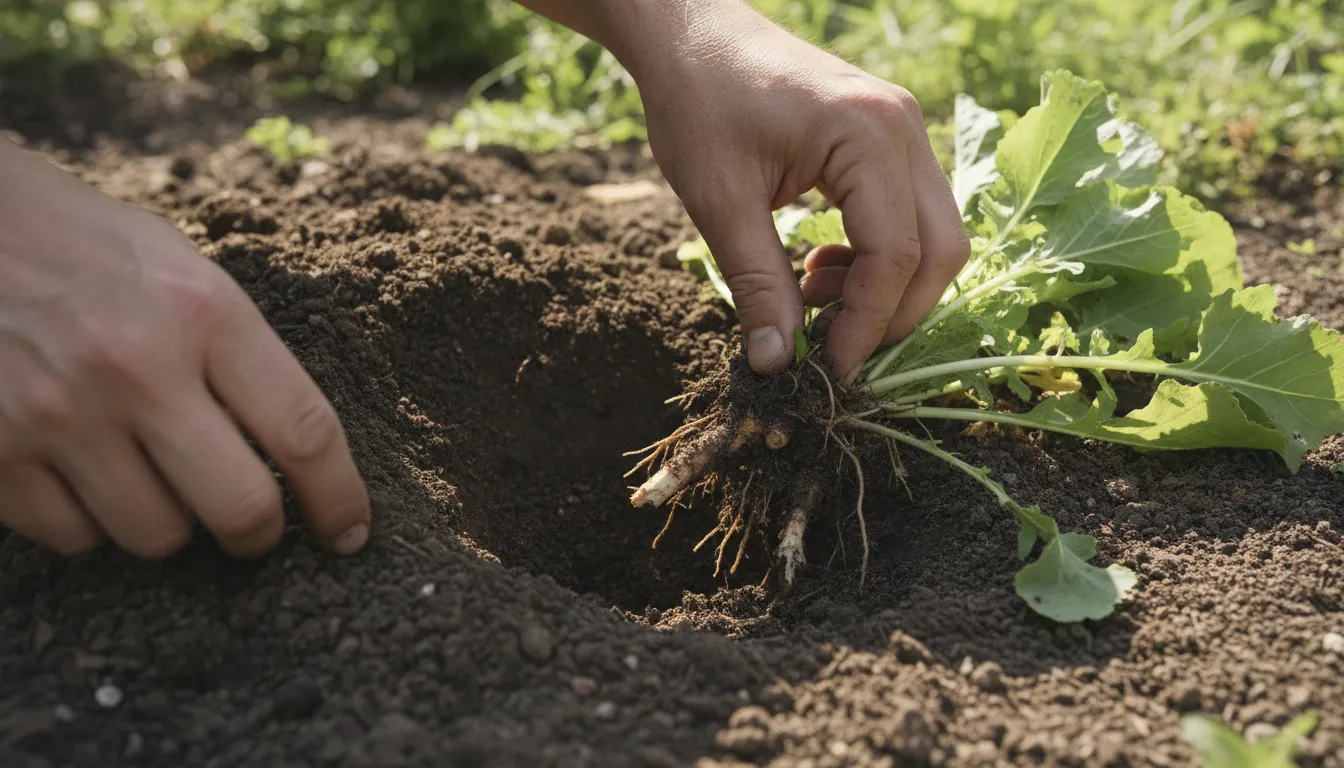
Pocket gopher damage starts below ground, where the animal feeds on roots, bulbs, and other plant parts while extending its burrow. A plant may wilt suddenly even though the leaves looked healthy the day before. In a garden or orchard, an animal can pull roots or an entire young plant into the tunnel. In a lawn, the visible problem may be a chain of mounds, uneven soil, or a tunnel that collapses under a foot or mower.
Gophers may also gnaw flexible irrigation tubing and other underground materials. Their tunnels can redirect water, weaken soil around a ditch or embankment, and expose equipment to hidden mounds. The severity depends on the site and the animal's access to roots, water, and soft soil. Do not assume every dead plant or broken line is caused by a gopher. Inspect for gnawing, a nearby active mound, and a tunnel connection before assigning the cause.
- Plants: wilted vegetables, missing roots, damaged bulbs, or young trees with underground bark damage.
- Lawns: repeated loose mounds, rough mowing, and soil collapse over a tunnel.
- Irrigation: gnawed drip tubing, unexplained water loss, or erosion where a tunnel carries water.
- Fields and slopes: weakened banks, damaged drainage features, or equipment striking raised soil.
Protective measures can help when the problem is limited to a planting area. Wire baskets around individual trees, buried mesh under a raised bed, and removal of weeds or debris can reduce access in specific situations. These steps do not remove an established animal from an open lawn or field. When fresh mounds continue and damage is spreading, targeted trapping is a more direct response.
Pocket gopher damage is often easiest to confirm at the root and tunnel level, where plant loss, gnawing, and fresh soil connect the visible symptom to an active burrow.
Related products


When should you choose pocket gopher traps?
Choose a gopher trap when you have verified fresh activity and need to remove an animal from a defined tunnel system. Trapping is most useful in a lawn, garden, orchard row, small pasture section, or other area where you can locate active tunnels and check the set regularly. It is not a reason to disturb every old mound or place equipment without confirming the burrow.
A gopher-specific trap is built for the animal's underground tunnel rather than for a mole runway. Match the trap size to the tunnel diameter and follow the product instructions. The current Cinch gopher trap page lets you choose a size for the tunnel you are working with. If you are setting several locations or want the basic tools together, the Cinch gopher kit is the relevant product path.
Mechanical trapping also avoids the uncertainty of applying toxic bait near pets, children, livestock, and wildlife. UC IPM notes that toxic baits can pose non-target risks in backyard settings. Follow all local rules and label directions for any control method, and keep people and animals away from an open excavation or set trap.
Choose a Cinch gopher trap by tunnel size after fresh mound evidence points to an active pocket gopher burrow.
How do you connect identification to trap placement?
Identification comes first because the mound shows where to search, not necessarily where to set. The plugged side of a fresh mound can help you locate the lateral tunnel, while the main tunnel may run a short distance away and below the surface. Probe carefully until you feel a drop into the tunnel, then clear only the soil needed to place the trap according to its instructions.
Keep the set underground and block light from entering the tunnel. Use the size that matches the passage rather than forcing a large trap into a small tunnel. Check the set regularly, reset it when appropriate, and keep monitoring the area for new mounds. The goal is not only one catch. It is a sustained reduction in new activity.
- Confirm that the mound is fresh and that the signs fit a pocket gopher.
- Trace the plugged side and probe for the connected tunnel.
- Select a gopher trap size that fits the tunnel, then follow the manufacturer's setup directions.
- Cover the opening, check the trap as directed, and continue monitoring for new mounds.
For more setup guidance, read Cinch's gopher trap troubleshooting guide. If the trap does not produce a result, reassess the sign before moving it. A stale mound, wrong pest, poor tunnel connection, light entering the set, or an incorrect trap size can all lead to a missed catch.
Use the mound to find the tunnel, the tunnel diameter to choose the trap, and continued monitoring to confirm whether control is working.
What should you do after pocket gopher activity slows?
Continue checking the site after the first successful set or after new mounds stop appearing. Level old mounds so fresh soil is easier to notice, repair damaged irrigation, and inspect valuable plantings for hidden root loss. If new mounds return, treat them as new evidence and repeat the identification step instead of assuming the original animal is still in the same tunnel.
Long-term prevention is site-specific. Buried mesh can protect a raised bed or individual tree, but broad exclusion may be impractical in an open lawn or agricultural area. Reduce conditions that conceal new activity, keep records of recurring zones, and use a direct control method when a defined active tunnel causes ongoing damage.
If you are comparing control methods, the non-toxic mole and gopher control guide explains why mechanical trapping can be a practical option. Use the current Cinch product pages for the trap and kit choices, and use the store when you are ready to compare the available setup.
Compare Cinch gopher traps and kits for a practical next step after you confirm fresh pocket gopher signs.
Pocket gopher identification questions
Are pocket gophers the same as moles?
No. Pocket gophers are rodents that feed on roots and create plugged, fan-shaped or crescent-shaped mounds. Moles are insect-eating mammals that commonly leave different mound and runway patterns. Start with the soil shape and plug location before choosing a trap.
Can you identify a pocket gopher by its mound alone?
A mound can provide a strong field clue, but one sign is not always conclusive. Combine shape, plug location, freshness, nearby damage, and repeated activity. Use a regional extension source for formal species identification.
Do pocket gopher traps need bait?
Many mechanical gopher traps are designed to work in the tunnel without food bait. Follow the instructions for the specific trap, match the trap to the tunnel, and check local requirements before setting it.
How many pocket gophers live in one tunnel system?
Pocket gophers are generally solitary, with one animal maintaining its own burrow except during breeding or when raising young. Multiple fresh mound systems in one yard can indicate multiple animals, but mapping the activity is more reliable than counting from mound totals alone.
Correct identification turns a confusing pile of soil into a clear decision: verify fresh activity, protect what you can, and use a properly sized gopher trap when an active tunnel is causing damage.
Sources for pocket gopher identification
For additional reference, consult the UC Statewide Integrated Pest Management Program pocket gopher guide, Iowa State University Extension's pocket gopher damage guide, the Colorado State University Extension burrowing-animal identification fact sheet, and the peer-reviewed PLOS One research on western pocket gopher distributions. These sources support the identification, damage, and soil context discussed above.
Use authoritative regional references for species questions, then let fresh mound and tunnel evidence guide the practical control decision.