

A fresh fan-shaped mound can look like a simple landscaping problem, but the visible soil is only the surface evidence of a burrow system below it. Pocket gophers feed on plant roots and can damage gardens, shrubs, vines, trees, pastures, and crops. The first useful step is not choosing a trap. It is confirming that the sign is active and locating the tunnel.
Shop gopher control products after you confirm the tunnel size and choose a set that fits the job.
The most reliable way to learn how to get rid of gophers is to work from evidence. Identify fresh activity, find the main runway beneath the mound, place a properly fitted mechanical trap, and check the set so you can adjust it when conditions change. That process works for a small backyard and gives farmers, ranchers, and pest-control professionals a repeatable starting point.
This guide covers diagnosis, tunnel location, trap selection, seasonal timing, soil-specific adjustments, property-scale planning, troubleshooting, and prevention. It focuses on direct mechanical control and practical exclusion rather than promising that a repellent will solve an active burrow system.
Learning How to Get Rid of Gophers Starts With the Right Diagnosis
Before choosing a trap or another control method, confirm that a pocket gopher is causing the damage and identify where it is working. A pile of soil is a clue, not a complete diagnosis. Pocket gophers are burrowing rodents that feed primarily on plant roots. They may pull plants into their tunnels to eat stems and leaves. So a damaged plant can point to underground activity even when you never see the animal aboveground.
UC Integrated Pest Management guidance notes that pocket gophers typically appear aboveground only while excavating or moving soil. Surface observations therefore matter. Look for a pattern of fresh soil, plugged openings, and plant damage instead of relying on one mound or one missing plant.
Read the mound, not just the damage
Look for a characteristic fan-shaped or crescent-shaped mound rather than assuming every raised patch came from a gopher. Oklahoma State Extension describes typical mounds as roughly 18 to 24 inches wide and about six inches high. They form where short lateral tunnels branch from a main runway. The plug, or blocked opening, is an important directional clue.
Record which side of the mound is plugged, then compare several mounds across the property. Freshly disturbed soil deserves priority, especially when new mounds appear near damaged vegetation. An old mound can remain visible after the animal has moved or after irrigation, grading, or another disturbance altered the soil.
Match the damage to underground feeding
Inspect the affected plant from the surface down. Gopher damage is more plausible when roots are severed, soil is pushed into the root zone, or a plant has been pulled belowground. Pocket gophers can affect garden crops, ornamental plants, vines, shrubs, and trees. They also occur in alfalfa fields, pastures, rangelands, roadsides, and landscaped areas.
Pocket gophers live alone except during mating or while raising young, so a cluster of mounds does not automatically mean a large group. One animal can create many mounds over a year. Repeated fresh activity is more useful than a quick count of soil piles. Spring can bring more mound building in some regions, but pocket gophers do not hibernate, so activity can continue throughout the year.
Diagnosis comes first because every control option depends on finding an active tunnel. Feeding burrows are commonly 6 to 12 inches below ground, while nest and storage chambers may extend farther depending on soil. A trap near the wrong mound can sit untouched even when gopher activity is present. For an overview of the tunnel-based approach, see how the CINCH trap works before moving to setup details.
Fresh mound shape, a plugged side, and underground plant damage provide a stronger diagnosis than any one surface clue, so confirm the active system before setting control equipment.
How Do You Find an Active Gopher Tunnel?
A trap works only when it meets the gopher in a tunnel the animal is using. Do not choose a location simply because a mound is large or close to a damaged plant. Locate the main runway first, then open enough of it to make a clean, stable set. Accurate main-burrow location is important for trapping and for any other method that depends on access to the burrow.
Start at a fresh mound
Choose a recently formed mound with loose soil and a distinct plugged side. The main burrow is often about 4 to 12 inches from that plug side, although the exact position varies with the mound and the soil. Select a spot that gives you room to probe and excavate without collapsing the runway.
Probe in a deliberate pattern
Use a long, durable probe that can pass through the soil in your yard or field. Begin near the plugged side and test several points rather than relying on one puncture. The probe should meet a firm soil layer, then drop when it enters the open tunnel. A probe that meets packed soil is not proof that the tunnel is absent. Try nearby points and compare the resistance.
Once you locate the runway, widen the opening carefully. Remove only enough soil to identify the tunnel and fit the trap. Excessive digging can damage the runway, disturb the surrounding ground, and make the set harder to cover. Keep loose soil from falling into the tunnel mouth.
Use the tunnel as your decision point
- Find a fresh mound and note the plugged side.
- Probe several inches from that side until the probe drops into the open runway.
- Excavate a clean opening without crushing the tunnel.
- Measure or estimate the tunnel so the trap fits without forcing it.
- Set, cover, and mark the location so you can check it later.
This sequence prevents a common mistake: putting a good trap in an inactive lateral or in a mound that only looks recent. If you find no open runway near the first mound, test another fresh mound. Activity can shift across a property, especially after irrigation, heavy rain, cultivation, or repeated disturbance.
Find the open runway by probing from the plugged side of a fresh mound, then excavate only enough tunnel to make a clean, correctly fitted set.
Which Gopher Trap Setup Works Best?
The best setup depends on the property, the activity you can confirm, and how much control you need over placement. The first decision is not the brand of product. It is whether you can accurately locate an active tunnel and fit the trap to that opening.
Why mechanical trapping is a practical first choice
Mechanical trapping works directly in the active runway. It does not require you to spread a material through the property, and it gives you a clear physical set to inspect. For homeowners, this can make the work easier to understand. For growers and professionals, it creates a method that can be mapped, checked, and repeated.
Other methods have limitations. A gopher can seal a burrow after detecting smoke or gas, so fumigation may be ineffective in a closed system. Baiting requires careful label compliance and attention to the risk of exposure to pets, livestock, wildlife, and children. If a chemical method is considered, follow the product label and local requirements. Do not place an unapproved material in a tunnel or assume that more product makes a method safer.
Match trap size to the tunnel
A trap that is too large can be unstable or difficult to cover. A trap that is too small may not sit correctly in the runway. Cinch gopher trap sizes are designed for common tunnel dimensions: Small for approximately 2.25-inch tunnels, Medium for approximately 3-inch tunnels, and Large for approximately 3.5-inch tunnels. Measure the opening rather than choosing by property size alone.
| Gopher trap size | Approximate tunnel size | Best use |
|---|---|---|
| Small | 2.25 inches | Smaller confirmed runways |
| Medium | 3 inches | Common residential or field runways |
| Large | 3.5 inches | Larger confirmed runways. |
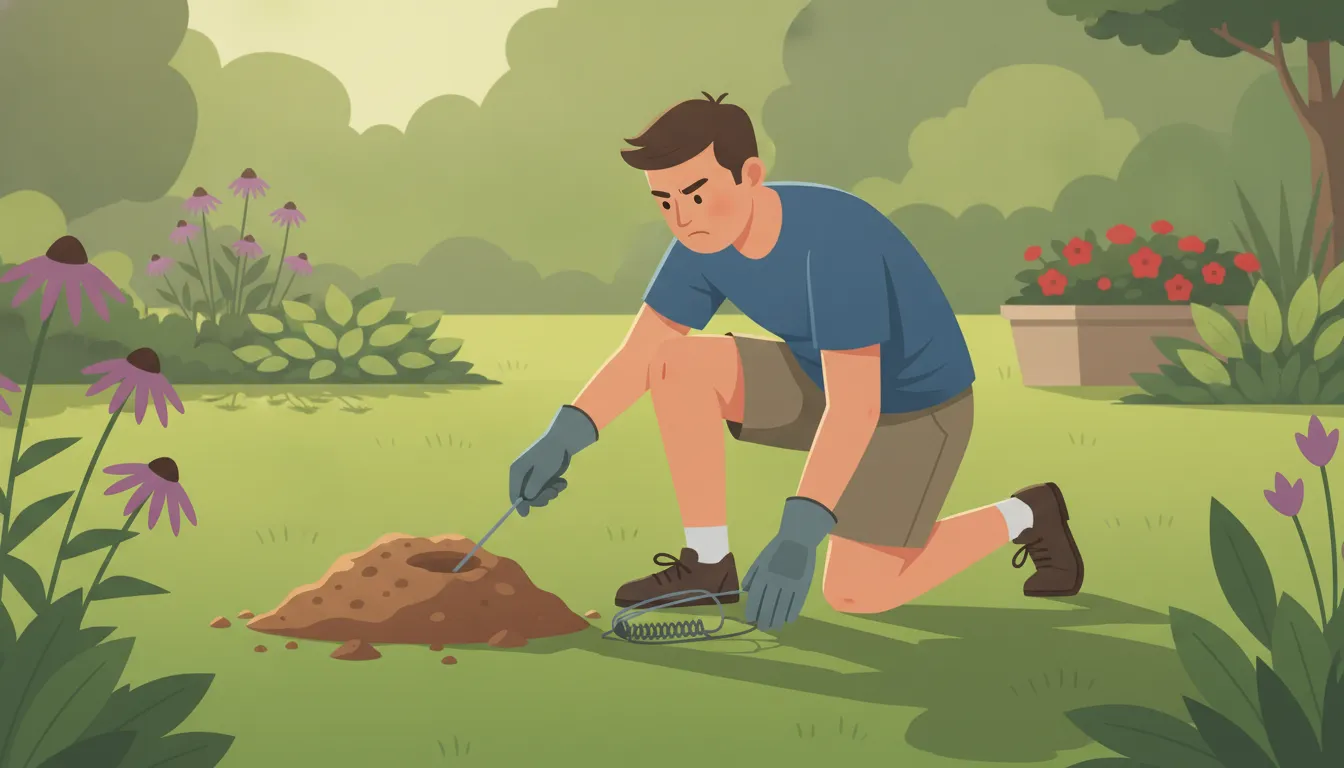
Keep the set aligned with the direction of travel. Avoid twisting the trap or leaving a gap that lets the gopher pass around it.
Make sure the trigger and striking parts can operate freely. Protect the opening from light and loose soil while keeping the tunnel path usable.
Set and check methodically
After the trap is fitted, cover the opening so light does not enter the burrow. Mark the location with a visible flag or another safe marker. Record the mound, date, soil condition, trap size, and any later result. A simple record prevents you from repeating the same unproductive placement on a large property.
Do not handle a set casually. Keep hands, tools, pets, and children clear of the operating parts. Follow the product instructions for setting, checking, and resetting the specific trap. If a set has been disturbed, approach it as active until you have safely confirmed its condition.
The most effective setup is a properly sized mechanical trap aligned inside a confirmed runway, covered from light, marked for follow-up, and checked according to the product instructions.
When Is the Best Time to Trap Gophers?
The best time to trap is when you can confirm fresh activity and work the soil safely. Pocket gophers do not follow a single short season. They remain underground and can continue feeding, tunneling, and rebuilding mounds in winter, summer, and the transition months.
Prioritize fresh activity over the calendar
New soil, a clean plug, and nearby plant damage are stronger signals than a date on the calendar. Start with the newest mound you can find. If a set does not produce a catch, do not automatically conclude that the animal left the property. Recheck the mound and tunnel before changing methods.
Spring can be a productive period for locating new mounds because activity may become more visible. Irrigation can also stimulate or reveal fresh soil movement in dry regions. After heavy rain, however, tunnel walls may soften and openings can collapse. Wait until you can make a stable set rather than forcing a trap into saturated ground.
Adjust for soil and irrigation
- Dry, hard soil: Probe slowly and use a tool that can identify the runway without bending or stopping at the first compact layer.
- Loose or sandy soil: Excavate carefully and support the opening so loose material does not fill the tunnel.
- Clay soil: Work when the ground is workable, not sticky or waterlogged. A collapsed opening can hide the runway and undermine trap fit.
- Irrigated ground: Watch for new mound activity near wet zones, but do not set where water can wash soil into the trap.
Plan follow-up around your schedule
Timing also includes the time you can give the set. A trap that is placed accurately but ignored for too long is not a complete control plan. Mark every set and create a check schedule that fits the property. On a farm or ranch, divide the property into zones so a worker can check each one consistently. On a residential lot, a simple map or photograph can prevent missed sets.
When conditions change, reassess rather than abandoning the method. New mounds may indicate a different runway. Irrigation may alter soil resistance. Cultivation may remove old signs. A good timing decision is the one that combines fresh evidence, workable soil, and a realistic follow-up plan.
Trap when fresh activity and a workable tunnel are present, then schedule a prompt check; evidence and follow-through matter more than a fixed month.
Browse the full range of gopher traps and compare sizes after you confirm the runway you need to protect.
Related products


Upgraded components built for frequent, intensive use by professionals and landowners.
View productHow to Get Rid of Gophers on Small and Large Properties
The same basic process applies to a garden, lawn, orchard, pasture, or commercial property. Confirm the pest, locate the active runway, fit the trap, check the result, and protect the highest-value areas from new access. The difference is how you organize the work.
For a yard or garden
Start with the plants and areas that matter most. Mark fresh mounds near vegetables, ornamental beds, young trees, irrigation lines, and visible lawn damage. Work one or two confirmed runways at a time so you can tell which placement produced a result.
Keep a short record of the set location and outcome. If a mound is rebuilt after a trap is placed, that is useful information. It may mean the trap did not fire, the opening was not aligned, or the gopher used a nearby branch. Recheck the tunnel instead of moving randomly around the yard.
For farms, ranches, and orchards
Divide the property into manageable zones. Prioritize areas where gopher damage affects crop roots, irrigation, pasture quality, young trees, equipment access, or erosion control. Map fresh mounds and assign checks so each set has an owner and a time window.
Use consistent notes across workers. Record the zone, mound date, tunnel location, trap size, placement direction, check result, and reset action. This makes it easier to identify recurring runways and decide where exclusion or additional monitoring will provide the most value.
For professional operators
Explain the method in terms the property owner can verify: the signs that supported the diagnosis. The location of the active runway, the set that was installed, and the follow-up required. A clear record supports repeat visits and avoids promising that one placement will solve every mound on a property.
Mechanical control is most useful when it is treated as a program rather than a single event. Start with the highest-confidence signs, use equipment that can be fitted accurately, and review results before expanding the work area.
Small properties need focused placement, while large properties need zones, maps, and consistent checks; both depend on the same evidence-led tunnel process.
What Should You Do If a Gopher Trap Does Not Catch?
An empty trap is a reason to troubleshoot, not proof that trapping cannot work. Begin by asking whether the gopher was active at that exact location. A well-built trap placed in an inactive tunnel will not catch an animal using another branch.
Check the activity first
Look for a rebuilt mound, a changed plug, fresh soil, or nearby plant damage. If the mound has not changed, test another fresh mound before altering the entire approach. Pocket gophers can seal or extend tunnels, and surface signs do not always show the precise route immediately.
Check fit and alignment
Confirm the tunnel opening and compare it with the trap size. The trap should sit securely in the runway without a passage around the sides. It should face the direction of travel and operate without obstruction. Remove loose soil that interferes with the mechanism, but do not over-excavate the tunnel.
Check disturbance and conditions
Light entering the tunnel, a draft at the opening, loose soil, flooding, or repeated digging can change how a gopher responds. Cover the opening carefully and keep the set stable. If rain or irrigation has altered the soil, wait for a workable condition and reset the tunnel rather than forcing a poor fit.
- Confirm the mound is fresh and the tunnel is open.
- Probe again if the first location was uncertain.
- Correct the trap size, direction, and fit.
- Cover the opening and mark the set.
- Check the result on a planned schedule.
- Move to a new confirmed runway if the original location remains inactive.
When repeated checks show no activity, expand your diagnosis. The damage may come from a mole, vole, root disease, irrigation failure, or another disturbance. Correct identification protects both your time and the non-target animals around the property.
If a trap does not catch, verify fresh activity, refit the set, reduce disturbance, and move only after the original runway has been checked carefully.
Review the CINCH setup method before making your next placement adjustment, especially when the tunnel fit or cover is uncertain.
How Can You Prevent New Gopher Damage?
Prevention works best as a property-management plan, not as a promise that gophers will never return. Protect the areas that matter most, make new activity easy to spot, and respond while a fresh tunnel is still easy to locate.
Protect raised beds before planting
Use buried wire mesh around raised beds and other high-value plantings when the design fits the site. The barrier must be deep enough to discourage digging under it and should be installed without leaving gaps at corners or gates. Choose a durable material that can withstand moisture and contact with soil.
Use buried fencing around established plantings
For a protected bed or planting area, extend the fence belowground and bend the lower portion outward at approximately 90 degrees. That underground skirt can discourage digging directly beneath the barrier. An aboveground portion can also deter overland movement. Work carefully around roots and utilities. Treat the fence as a boundary around the protected planting, not as a substitute for managing a gopher already inside it.
Shield irrigation lines and utility cables
Underground flexible sprinkler lines and utility cables can create vulnerable routes through a landscaped area. Where appropriate for the site, surround a line with coarse gravel so the digging conditions change around it. Confirm local installation requirements before modifying a utility corridor, and never dig near marked utilities without following the required safety process.
Reduce attractants and keep monitoring
Keep garden beds maintained, repair irrigation leaks, and inspect the edges of orchards, lawns, and pastures. Gophers are attracted to usable root systems, but removing vegetation will not remove an animal already using an established tunnel. Monitoring remains important after exclusion work.
- Walk protected areas on a regular schedule.
- Mark new mounds and compare them with older signs.
- Repair gaps in mesh, gates, and buried barriers.
- Respond to fresh activity before the tunnel network expands.
Exclusion protects priority plantings, but regular monitoring and prompt trapping remain necessary because barriers do not remove a gopher already inside the protected area.
Frequently Asked Questions
How can I tell whether a gopher mound is still active?
Look for loose, recently disturbed soil, a clear plugged side, and nearby plant or root damage. A mound that has not changed may be old, but lack of visible change is not conclusive by itself. Compare several mounds and probe the freshest candidates to confirm an open runway.
How deep should I look for the main tunnel?
Feeding tunnels are commonly about 6 to 12 inches below ground, although soil and site conditions vary. Start near the plugged side of a fresh mound and probe several points. The sudden drop into an open tunnel is more useful than digging to a fixed depth at every mound.
How do I choose the right gopher trap size?
Choose by the measured tunnel, not by the size of the yard or the number of mounds. Cinch gopher trap sizes correspond to approximately 2.25-inch, 3-inch, and 3.5-inch tunnel dimensions. The trap should sit securely and allow the mechanism to operate without a gap around the sides.
What should I change if the trap does not catch?
First confirm that the runway is active. Then check the trap size, alignment, cover, and any loose soil or water that could interfere with the set. If the tunnel remains inactive, move to another fresh mound. If signs are inconsistent, reconsider whether a gopher is the source of the damage.
Can I protect a garden after removing a gopher?
Yes. Use appropriate buried mesh or fencing around the highest-value beds, repair gaps, and continue checking for new mounds. Exclusion is a protection step, not a replacement for trapping an animal that is already inside the barrier.
The practical answer to how to get rid of gophers is a repeatable cycle: diagnose fresh signs. Locate the runway, fit the trap, check the result, and protect priority areas.
Ready to Build a Gopher Control Plan?
A good control plan starts with the evidence in front of you: fresh mounds, a confirmed tunnel, soil conditions, and the scale of the property. From there, choose a method you can place accurately, check consistently, and adjust when the first set does not produce a catch. Mechanical trapping gives homeowners, growers, and professionals a direct way to work in the active runway without relying on a vague repellent claim.
For a first set, keep the process simple. Start with the freshest sign, probe methodically, match the trap to the opening, cover and mark the set, and schedule the check. If the result is empty, use what the tunnel tells you before changing methods.
Choose tools for your next confirmed gopher set and match them to your tunnel and property.