

If fresh ridges are crossing the lawn, knowing how to catch moles starts with one practical question: is a mole still using that tunnel? The best place to begin is the changing damage, not an old mound or a random spot in the yard. Confirm the pest, test a route, then use a mole-specific trap according to its instructions.
Ask Cinch Traps about your mole-control options
How can you tell whether moles are causing the damage?
Look at the pattern across the yard. Moles commonly push soil upward as they make shallow surface tunnels, leaving narrow, raised ridges that can travel across turf. They may also leave rounded soil mounds. Pocket gophers usually create a different pattern: distinct mounds of loose soil and plugged openings associated with their tunnel systems. A mound by itself is not a reliable identification; compare it with the nearby ridges, openings, and fresh soil.
Other changes can be misleading. Settling ground, irrigation problems, and digging by other animals can leave uneven patches. An old ridge can remain visible after an animal has moved on. Walk the area and note what is newly raised, freshly disturbed, or changing from day to day. If you can, take a quick photo or mark the boundary of the damage. This gives you a useful baseline rather than relying on memory.
- Possible mole sign: a narrow raised line that continues across the lawn and appears freshly lifted.
- Possible gopher sign: distinct soil mounds or plugged openings. Gopher tunnel systems call for a different trap and placement approach.
- Unclear sign: one old mound or a low patch without any continuing change. Observe before choosing equipment.
If the evidence points to gophers instead, switch to a gopher-specific method. Cinch's step-by-step gopher trapping guide explains the difference in approach. Moles and gophers both travel underground, but their signs and trap placements are not interchangeable. For more context on mole feeding and the damage you may see, read what moles eat and how that relates to lawn damage.
It also helps to separate the pest question from the control question. You do not need to explain every feature of a tunnel network before acting. You do need enough evidence to avoid setting a mole trap in a likely gopher run, or choosing a device that does not match the animal and passage you have identified.
Identify the animal from the pattern of fresh signs; mole ridges and gopher mounds call for different equipment and placement.
How do you find a mole tunnel that is active?
A prominent ridge may be old, while a less obvious straight section may still be in use. Choose a narrow, relatively straight run and gently press down a short section with your shoe or a hand tool. Do not flatten the whole ridge. Mark the test spot, leave the surrounding route alone, and return later to see whether the soil has lifted or been disturbed again.
Renewed disturbance suggests the mole may still be using that passage. If the pressed section remains flat, do not assume every tunnel is inactive. Test another fresh-looking straight run, especially one nearer the area where the damage is changing. A handful of simple observations can help you avoid placing a trap in a forgotten tunnel.
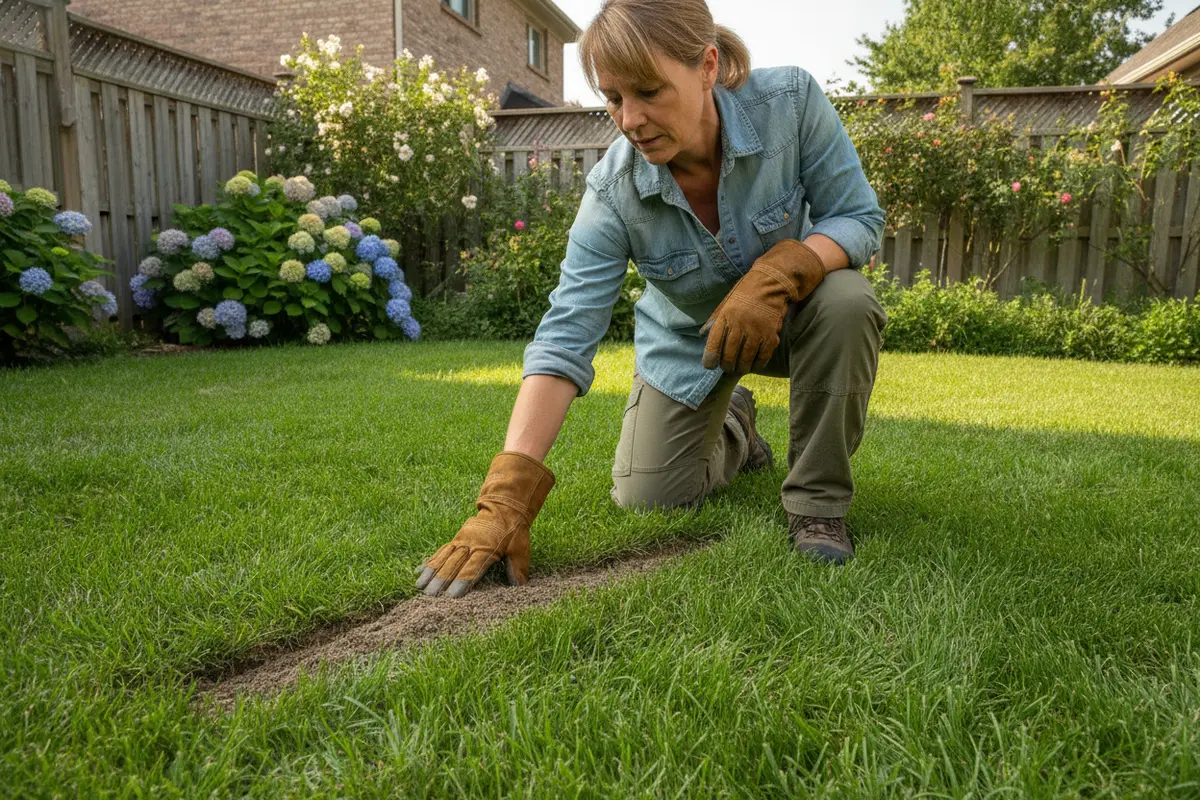
- Choose a straight section of a visible surface ridge, away from a broad mound or a collapsed patch.
- Press down only a short section. The goal is to create a clear test point, not to destroy the route.
- Mark its location or take a photo so you can compare the same spot later.
- Give the animal time to travel, then look for renewed lifting or a fresh disturbance.
- If nothing changes, test another promising ridge instead of setting in the first location by default.
When several possible runs cross the lawn, keep simple notes: where you tested, when you checked, and what changed. For example, if you press two ridges and only one is raised again, that is a more useful candidate than a third ridge that has remained unchanged. This small comparison turns a guess into a placement decision based on current signs.
Be gentle when probing. A deep hole or a badly collapsed section can disrupt the passage you are trying to assess. You do not need to uncover a long length of tunnel during this test. Once a route shows renewed activity, use the product directions to expose only the amount needed for the trap setup.
For an overview of how an in-tunnel device intercepts an animal where it travels, see how Cinch traps work. A tunnel test is still useful even if you already own a trap: the device cannot catch an animal in a route it no longer uses.
Test a short, straight section and use renewed disturbance—not the age or size of a ridge—as your placement clue.
What kind of trap should you use to catch a mole?
Choose a mechanical trap made for moles and designed to sit in the tunnel. It should match the passage and be installed in the manner shown for that model. A gopher trap is not automatically suitable for a mole, and a large device is not necessarily a better fit for a small run. Confirm the animal first, then compare the trap directions with the tunnel you have tested.
Before buying or setting a device, consider three things: the pest, the tunnel, and the directions. Check whether the product is specifically for moles, whether its size and configuration fit your likely run, and whether you can follow the setup and safety instructions. If you are uncertain about the model or size, compare the mole trap product details with the mole trap comparison guide before choosing.
| Option | When it fits | What to check |
|---|---|---|
| Mole-specific in-tunnel trap | Fresh signs and a tested mole run | Match its size and placement to the model directions and tunnel. |
| Gopher trap | Signs point to pocket gophers | Gophers use different tunnel systems; follow a gopher-specific guide. |
| Bait or repellent | Only if the product is labeled for the identified pest and intended use | Read and follow the label; these are not tunnel-interception traps. |
| No equipment yet | The animal or activity is unclear | Observe fresh signs and test a route before buying or setting. |
A reusable trap can make sense when you want equipment for recurring activity, but durability alone does not guarantee a catch. Placement in an active route and following the setup directions matter. Cinch Traps describes its products as professional-grade in-tunnel traps and has refined them since 1909. The company is family-owned, makes its traps in Oregon, and offers a lifetime warranty; review the product and warranty terms for the specific coverage.
Rather than choose on a bold claim or an assumed capture rate, compare practical factors: intended pest, tunnel fit, setup steps, maintenance, and whether the product can be used again as directed. A higher initial price may be worth considering in light of durable, reusable equipment and its warranty, but it is still important to select the correct trap for the situation.
For wildlife-damage management resources beyond a home trapping setup, USDA APHIS is a federal starting point. Use the trap's instructions for the actual setup, and check the applicable local requirements before trapping.
Choose a mole-specific trap that fits the confirmed run, and weigh correct placement, repeat use, and the product directions—not dramatic promises.
Related products


How do you set a mole trap in the tunnel?
Follow the instructions supplied with the exact model. Traps can differ, so a general description should not replace the manufacturer's setup steps. In broad terms, you locate the tested run, open only the amount of soil the directions call for, position the device as shown, and leave the tunnel route in the condition required for proper operation. Do not improvise a different mechanism or leave working parts above ground when the trap is designed to sit in the tunnel system.
It is understandable to worry that setup will be complicated. Work through one step at a time, and stop to check the instructions if a part does not sit as shown. Do not force the trap into a narrow or collapsed passage. A small adjustment to the location may be better than altering the device or damaging the tunnel. The mole trap setup guide offers a useful walkthrough, and the tunnel tool details show an accessory intended for tunnel work.
- Confirm that the selected spot showed recent activity before opening the soil.
- Use the model's setup diagram and directions rather than memory or a different trap's instructions.
- Keep the route and surrounding soil as the instructions require; avoid opening more tunnel than needed.
- Mark the set location, and keep children and pets away from the device while it is set.
- Make the trap safe according to its instructions before inspecting, adjusting, or removing it.
Mechanical equipment can injure fingers or hands if handled carelessly. Keep children and pets away during setup and while the trap is set. Wear gardening gloves when handling soil and equipment, and avoid touching a captured animal directly. If the trap shifts, becomes buried, or appears damaged, do not reach blindly into the tunnel. Follow the product directions for making it safe before you inspect it.
Protect the area from accidental disturbance too. Let household members know where the trap is, mark it clearly, and avoid mowing, digging, or watering heavily over the site if those activities could dislodge it. If you cannot secure the location from children or pets, do not leave a set trap there; choose a safer location or another suitable approach.
Set the exact model as directed, keep the site marked and protected, and do not force a device into a tunnel that does not fit.
When should you check a mole trap, and what if it misses?
Check on the schedule stated in the product instructions. Traps are typically set and left for a day before checking, rather than expected to produce an instant result; the directions for your model take priority. Keep the location marked so you can find it without stepping onto the setting. When you approach, look at the site first. If anything is disturbed, make the trap safe before you try to inspect or reset it.
If there is no catch, treat that as information. Do not move the trap, change the equipment, and test a new tunnel all at once. Check the likely causes in order:
- Was the route active? If the test spot showed no renewed disturbance, try a different fresh run.
- Did the device stay in place? Soil movement, mowing, watering, or an animal disturbing the run may have shifted it.
- Was it set as shown? Compare the actual placement with the instructions rather than guessing at a correction.
- Does the trap fit the tunnel and pest? Recheck that it is made for moles and appropriate for the passage.
- Is the area safe to work on? If the trap is disturbed, secure it before handling or adjusting it.
For example, suppose a trap remains undisturbed and the ridge has not lifted again. The evidence points first to a route that may no longer be active, so test another fresh-looking section. If the ridge has lifted but the device shifted, review the setup directions and correct the placement only after making it safe. Changing one factor at a time helps you learn from the result.
After a catch, follow the product instructions and applicable local requirements for handling and disposal. Avoid touching the animal directly. If activity continues elsewhere, repeat the identification and tunnel test rather than assuming that one catch means all activity has stopped. The mole and gopher FAQs cover additional questions about the two pests and trap use.
Give a correctly set trap the recommended interval, then use fresh tunnel evidence to decide whether to reset, adjust, or move it.
How do you make a practical plan for a mole problem?
A clear plan keeps the work focused on the active damage. Start where new ridges are appearing, confirm whether the signs fit moles, and test a small number of straight runs. Select a mole trap that suits the route, set it according to its directions, mark the site, and check it as instructed. If the first placement does not work, use what changed to decide the next step.
For a small yard with two visible ridges, press and mark a short section on each. If only one is raised again, focus on that route. For a larger property, map separate damage areas instead of treating the whole lawn as one tunnel. A note on the date, location, and condition can prevent you from repeating an unhelpful placement after a few days.
| Stage | Action | What the result tells you |
|---|---|---|
| Observe | Compare fresh ridges, mounds, and plugged openings. | Whether mole activity is the likely problem. |
| Test | Press and mark a short, straight run; recheck it later. | Whether the route shows renewed activity. |
| Choose | Match a mole trap to the confirmed tunnel. | Whether the device and placement suit the pest. |
| Set | Follow the model directions and protect the marked site. | Whether the setup remains secure and safe. |
| Review | Check on schedule and change one factor if needed. | Whether to reset, adjust, or test another route. |
When the ground stays flat and no fresh signs appear, repair the lawn only after you are confident the area is no longer changing. Rake or press displaced soil back into place as appropriate for the lawn, then keep watching for new ridges. The goal is not to keep setting traps in every old line; it is to respond to current activity and stop once it is no longer present.
To learn more about the company's general approach, see the Cinch Traps beginner's guide. If you are ready to compare available equipment, visit the Cinch Traps store. For a specific question about which direction to take, you can contact Cinch Traps with a description of the animal signs and tunnel conditions you see.
A useful plan is measured and repeatable: identify the pest, confirm an active route, set correctly, then adjust only in response to evidence.
Frequently asked questions about catching moles
Can you catch a mole without testing the tunnel?
You might, but a trap in an inactive run cannot intercept the animal. Pressing and rechecking a short section helps you choose a location based on current signs.
Should you use a gopher trap for a mole?
Choose equipment designed for the pest you identified. Mole runs and gopher tunnel systems differ, so use a mole-specific trap for a mole and follow its instructions.
How long should a mole trap stay set?
Use the interval in the instructions for that model. Traps are typically set and left for a day before checking, but the product directions take priority.
What should you do if the trap does not catch a mole?
Check whether the tunnel is active, whether the trap stayed in place, and whether it was installed as directed. Make it safe before adjusting it, and change one factor at a time.
Can children or pets be near a set mole trap?
Keep children and pets away from the setting, mark the location, and make sure it cannot be reached or disturbed. If you cannot secure the area, do not leave a trap set there.
The most reliable next step is to use fresh signs and the product instructions to guide each decision rather than making repeated blind adjustments.
Review mole trap details for your active run
Catch success starts with a simple sequence: identify the animal, confirm a tunnel is in use, and place the right trap where the mole travels.