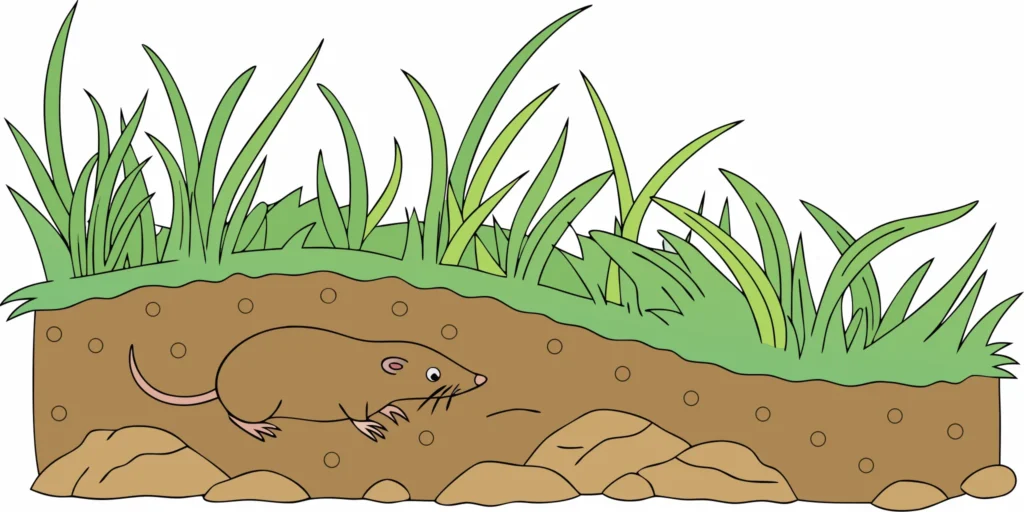
What do moles eat? Moles mainly eat earthworms, insects, grubs, ants, larvae, and other small animals living in soil. They do not usually eat grass or plant roots. Their search for underground prey creates the raised ridges, loose soil, and molehills that damage lawns.
That distinction matters. Treating your lawn as though something is eating the plants can waste time while fresh tunnels continue to spread. Here is how a mole’s diet leads to visible damage, how to confirm you have moles rather than voles, and how to stop active tunneling.Ready to stop fresh feeding tunnels? Shop Cinch mole traps built for direct placement in active runs.What do moles eat beneath your lawn?
Moles mainly eat small animals that live in soil. Their menu includes earthworms, insects, grubs, ants, and insect larvae. They dig through your lawn to find this prey, not to eat the grass. That search creates the raised ridges and loose soil that homeowners notice.Earthworms are the main draw
Earthworms are a preferred mole food because they are common in moist, healthy soil. Moles build feeding tunnels where worms may enter. The mole then checks those routes for its next meal. Some straight mole tunnels can act as earthworm traps.A lawn with many worms may support steady mole activity. Moles can eat 70 to 80 percent of their body weight each day. As a result, they spend much of their time hunting. They also feed during both day and night throughout the year.Insects, grubs, and larvae
Earthworms are important, but moles also eat a wide mix of soil animals. Their prey often includes beetle grubs, ants, and other insects. They may also eat larvae, which are young insects living below the surface.- Beetle grubs and other insect larvae
- Ants and small soil insects
- Earthworms and other soft-bodied prey
Why plants are usually not the target
Moles may eat a small amount of plant matter, but they usually do not eat bulbs or plant roots. If roots become exposed or damaged, tunneling is often the cause. A vole or another plant-eating pest may also be responsible for chewed plants.This difference explains why mole damage looks like raised tunnels and soil mounds, rather than missing plants. For help telling these pests apart, learn more about what moles eat and how their signs differ. Focus on the tunnel pattern before deciding what is damaging your lawn.Why does a mole’s diet lead to lawn damage?
When people ask what do moles eat, the answer explains why their lawns look torn apart. Moles mainly hunt earthworms, beetle grubs, ants, and other small animals living in soil. They may eat some plant matter, but they usually do not eat grass roots or bulbs.Instead, damage follows the hunt. A mole pushes through soil to reach live prey, leaving raised runways and loose ground behind it. That movement can lift turf from the soil, disturb fine grass roots, and leave grass dry or brown.Shallow feeding tunnels
Shallow tunnels help moles search the upper soil where prey is easy to reach. These feeding runs often appear as winding ridges just below the grass. Some straight tunnels also act as earthworm traps, so a mole may return and check them often.The constant search can create a wide tunnel network from the work of one animal. Moles stay active throughout the year, and their digging peaks when soil is warm and wet. During those periods, moist ground makes digging easier and brings food closer to the surface.Molehills and lifted turf
Not every sign comes from a shallow feeding run. Moles push loose soil upward while building deeper, permanent tunnels and nest cavities. This creates molehills, which can cover grass, dull mower blades, and scatter soil across an otherwise even lawn.Raised ridges cause another kind of harm. They can separate grass roots from damp soil without the mole eating those roots. The disturbed roots may cause grass to turn brown, while tunnel ridges can make mowing harder.Damage that points to active hunting
Fresh raised ridges, soft ground, and new molehills point to recent digging. Flattening a short part of a ridge can help show whether a mole still uses that tunnel. A rebuilt ridge suggests active hunting below the lawn.Finding the active route matters because not every visible tunnel gets regular use. Start with fresh, straight runs that connect other tunnels rather than every old surface ridge. Once activity is clear, follow proven guidance on how to stop moles from tearing up lawns.Moles vs. voles: Is something eating your plants?
A damaged garden does not always mean a mole ate your plants. Moles hunt animals in the soil, while voles feed on plants. The right clues can show which pest is present before you choose a control method.Diet and damage clues
What do moles eat? Their main foods are earthworms, beetle grubs, ants, and other small soil animals. They may eat some plant matter, but they usually do not eat bulbs or roots. The University of Illinois Extension explains this feeding pattern.Voles are rodents that eat grass, roots, bulbs, seeds, and bark. Look for clipped plants, missing bulbs, gnawed roots, or bark stripped near ground level. Mole damage looks different. Their digging raises turf, disturbs roots, and may leave grass brown without clear bite marks.| Clue | Mole | Vole |
|---|---|---|
| Diet | Earthworms, grubs, ants, and soil animals | Grass, roots, bulbs, seeds, and bark |
| Appearance | Pointed snout, tiny eyes, and wide digging feet | Mouse-like face, visible eyes, and small feet |
| Travel path | Raised underground ridges and deep tunnels | Narrow surface runways through grass or mulch |
| Soil signs | Raised ridges and piles of loose soil | Small open holes with little loose soil |
| Plant signs | Roots disturbed by digging | Plants clipped or directly eaten |
Tunnels versus surface runways
Trace the path before digging. A mole feeding tunnel often forms a raised ridge that feels soft when pressed. Moles also push up soil piles while making deep tunnels and nest spaces, according to the University of Missouri Extension.A vole runway is usually open at the surface and hidden beneath grass, weeds, or mulch. It may connect small entrance holes near damaged plants. Unlike a raised mole ridge, the vole path often looks like a narrow trail with clipped vegetation.A quick identification check
First, inspect the harmed plant for tooth marks, clipped stems, or missing roots. Those clues point toward voles. Then press down a short section of raised soil and check it later. A reopened ridge suggests an active mole tunnel.If digging is the main problem, review more information about what moles eat and compare the tunnel signs. Correct identification matters because a method aimed at a plant-eating rodent will not address a mole hunting below the lawn.Will killing grubs make moles leave?
Grubs are only one part of the menu
Killing grubs may reduce one food source, but it will not reliably make moles leave. Moles also eat earthworms, ants, and other small animals in the soil. In fact, Purdue Extension explains that grub control is not an effective mole control method because earthworms make up most of their diet.This wider diet explains why a mole can keep using the same lawn after a grub treatment. Its existing tunnels still give it access to other prey. Some straight tunnels even act as feeding routes that moles check again and again.What grub treatment can and cannot do
A grub treatment may be useful when grubs are damaging turf, but that is a separate lawn problem. Treating them solely to drive away moles sets the wrong expectation. You may see fewer grubs while fresh ridges and mounds continue to appear.Broad insect treatments can also remove more than the target grubs. That change may affect the small soil animals that help form a healthy lawn ecosystem. Before treating, confirm that grubs are present and causing enough turf damage to warrant action.Weather can also change mole activity after treatment. When soil dries or freezes, earthworms and other prey move deeper, and moles follow them. A short pause in surface tunneling does not prove that grub treatment drove the mole away.A realistic plan for active moles
If new tunnels continue after grub control, focus on the mole rather than trying to remove every possible food source. Start by flattening a few surface ridges, then check which ones are rebuilt. Reopened runs point to active travel routes.Once you find an active route, choose a control method made for that tunnel. Cinch Traps’ guide covers what attracts moles to your lawn and explains why common fixes often miss the real problem.The practical expectation is simple: killing grubs might change where a mole searches, but it rarely removes the reason moles can live there. A lawn with moist soil and earthworms can still support feeding activity. Direct control in an active tunnel is more reliable than treating the whole lawn as a food-removal project.How to stop feeding tunnels from spreading
Moles keep digging because they are looking for food below the lawn. They feed mainly on earthworms, beetle grubs, ants, and other small soil animals. Removing grubs alone will not solve the problem because earthworms remain an important food source.The practical goal is to find a tunnel the mole still uses, then place a correctly sized trap inside it. This approach targets the animal moving through the feeding network rather than trying to remove its food.Find the active route
Fresh surface ridges show where a mole has traveled, but not every ridge stays active. Long, straight runs deserve close attention. Research from the University of Illinois explains that moles inspect straight tunnels often because those passages can trap earthworms.- Inspect the full tunnel network. Look for fresh raised ridges and runs that connect several branches. Focus on a straight section with firm ground around it, rather than a short dead-end branch.
- Check which tunnel is active. Press down a small part of each likely run without crushing the whole passage. Return later and watch for a repaired ridge, which shows recent use.
- Clear and size the chosen tunnel. Open the active run and remove loose soil from the trap location. Measure the tunnel and choose a Cinch trap that fits snugly, since the correct size is key to proper placement.
- Set the trap in the travel path. Follow the trap instructions and position it within the cleared active tunnel. Keep checking the site, and move the trap to another active run if the mole stops using that route.
Choose placement over food control
Understanding what attracts moles to your lawn helps explain why tunnel activity can continue after grub treatment. Moles also eat earthworms, so a lawn may still offer plenty of food. Active-tunnel checks give you clearer evidence than guessing from old ridges.Weather can also shift the best trap location. Moles make shallow feeding tunnels during spring, summer, and fall. When soil dries or freezes, earthworms and other soil animals move deeper, and moles follow them. If surface ridges go quiet, check for new activity before resetting.A trap that fits the tunnel
A trap should fit the tunnel snugly without leaving an easy route around it. Cinch offers different sizes because mole tunnels vary in width. Review the available Cinch mole traps before choosing one for the active run.Cinch traps are handcrafted from galvanized steel in Beaverton, Oregon, and carry a lifetime warranty. The Deluxe Mole Kit also includes a tunnel clearing tool, which helps prepare a clean placement point. Careful clearing, sizing, and placement matter more than setting many traps in old tunnels. For the fastest results, the best mole trap for active tunnels is one designed to sit securely in the mole’s travel path.How can you tell whether a mole tunnel is active?
Fresh ridges do not always show where a mole is feeding right now. A lawn may hold both old side runs and busy routes. Test the tunnel before placing a trap, so you focus on a runway the mole still uses. Once you identify that route, follow the four-step Cinch setup process for clear placement guidance.Look for fresh feeding damage
Active surface tunnels often have raised, loose soil with clear edges. The ridge may feel soft underfoot, and nearby grass can lift from the soil. Fresh molehills can also point to recent digging, but a mound alone may connect to a deeper route.Weather changes how these signs appear. Moles make shallow feeding tunnels while prey is near the surface. They follow worms and soil insects deeper when the ground dries or freezes. The University of Missouri Extension notes that mole activity continues year-round and peaks during warm, wet months.Test a likely runway
Choose a straight ridge that connects two areas instead of a short, winding branch. Straight runs often serve as repeat travel routes. Research shared by the University of Illinois says moles inspect these tunnels often because earthworms crawl into them.- Press down a short section of the ridge with your shoe or hand.
- Mark the spot so you can find the exact test area again.
- Check it the next morning for fresh soil or a rebuilt ridge.
- Repeat the test on another straight run if the first stays flat.