

If you have found fresh mounds or damaged plants in your yard, you may be asking: what is a gopher, and what should you do next? A gopher is a burrowing rodent that spends much of its life underground and feeds on plant material. Its digging can disrupt lawns, gardens, and growing areas. Identifying the animal matters because gopher and mole signs can look similar, but the animals and traps are different.
Ask Cinch Traps about your next step
The short answer: pocket gophers are plant-eating rodents adapted to digging and traveling through underground tunnels. Fur-lined cheek pouches outside the mouth help carry food or nesting material. This guide explains those traits, the clues they leave above ground, and how to move from a possible sighting to a practical response.
What is a gopher?
A pocket gopher is a burrowing rodent. Its prominent front claws help dig, while strong incisors gnaw roots and other plant material. External cheek pouches lined with fur let it carry food or nesting material. These features suit an animal that finds food and moves through an underground network rather than spending much time in the open.
Gophers eat plant material, including roots and bulbs they encounter below ground. They may also pull nearby vegetation down into a tunnel. Because the animal and its route are usually hidden, a property owner often first notices disturbed soil or a plant that suddenly wilts, loosens, or disappears. Those signs are a starting point, not a complete map of the tunnel system.
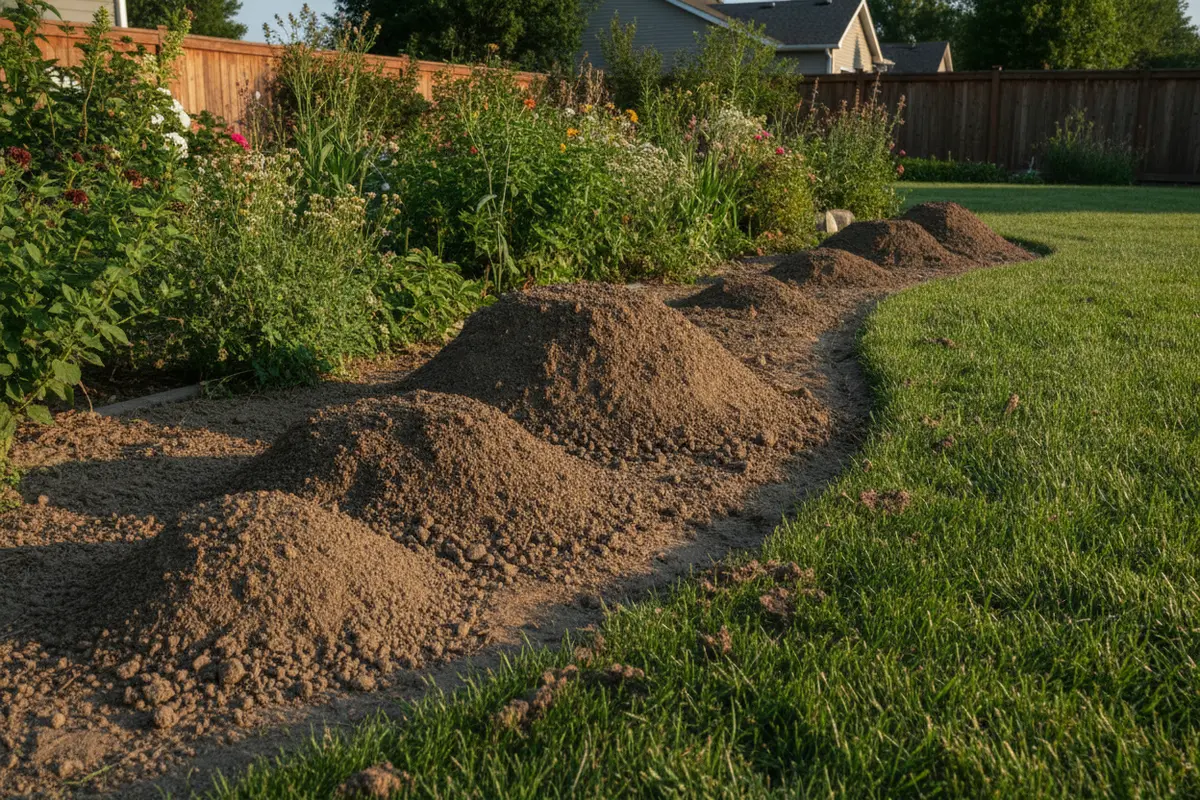
As a gopher digs, it pushes soil toward the surface. This can create mounds in lawns, gardens, or growing areas. Tunnels can branch as the animal searches for food and travels. Soil moisture, texture, and recent yard work affect how clearly activity appears, so one property may show distinct mounds while another offers less obvious evidence.
A mound is not the animal. It is a surface clue that soil was moved below ground. It may not show where a tunnel runs or whether that route is active now. Treat the mound as a reason to observe and investigate carefully, not proof of the exact place to set a trap.
Gophers differ from moles. Gophers are rodents that eat plants. Moles are insect-eating mammals that forage for invertebrates such as earthworms and other soil-dwelling prey. Both can disturb a lawn, but their signs and traps are not interchangeable. See Cinch’s mole-versus-gopher guide for a focused comparison.
A gopher is a digging, plant-eating rodent; its underground habits explain why mounds and plant changes are often the first visible clues.
What signs suggest a gopher is in your yard?
Look for a pattern of recent changes rather than relying on one mark. Gopher activity can push fresh soil onto the surface, often in distinct mounds. Some mound openings are plugged with soil. The shape can vary with ground conditions and the route below, so no single mound feature guarantees identification.
Plant damage adds context. Roots or bulbs may be eaten underground, and a plant can become loose or decline without obvious chewing above ground. But plants wilt for many reasons, including watering problems or disease. A plant symptom alone does not prove a gopher. Fresh soil near the affected bed, especially if new disturbance returns, gives you more to investigate.
Make a simple record before disturbing the area. Note the location and date of fresh mounds, take a photo, and mark an edge if you want to see whether soil changes. Recheck later. Newly moved soil or repeat disturbance can help distinguish current activity from old, weathered mounds that may no longer connect to a route in use.
- Fresh mounds: Recently moved soil suggests digging, but does not prove the exact tunnel route.
- Plugged openings: A soil-covered opening can fit gopher activity.
- Plant changes: Wilting, loose plants, or damaged roots may point to underground feeding when combined with other signs.
- Repeated disturbance: New soil in the same area helps narrow where to investigate.
Do not put your hand into a hole or tunnel. Keep children and pets away from disturbed areas while you assess them, and use tools rather than fingers when checking soil. For more context, consult Cinch’s mole and gopher FAQs and guide to what gophers eat.
Fresh mounds, possible plugs, and plant changes together are more informative than one unexplained patch of soil or a single struggling plant.
How can you tell a gopher from a mole?
Both animals live underground and disturb soil. The most useful distinction is the combination of diet and surface pattern. Gophers eat plant material and commonly push soil into mounds. Moles mainly eat soil-dwelling invertebrates and often leave raised surface ridges or runs as they forage. A mole can also make a mound, so mound shape by itself is not a perfect test.
| Clue | Gopher | Mole |
|---|---|---|
| Animal type | Burrowing rodent | Burrowing mammal, not a rodent |
| Food clue | Plant material, including roots and bulbs | Soil-dwelling invertebrates |
| Common yard evidence | Soil mounds and possible root or plant damage | Raised surface ridges or runs; may also make mounds |
| Trap principle | Intercept an active gopher tunnel | Locate an active mole run and use a mole trap |
Consider the whole scene. Are there distinct piles of loose soil, a plugged opening, and nearby plant damage? Or are there long raised surface runs with little sign of root feeding? Soil and yard conditions can blur the difference. If clues conflict, wait for another observation or use a reliable identification reference rather than guessing.
This distinction prevents a common error: selecting equipment because the lawn looks raised. A gopher trap is intended for a gopher tunnel; a mole trap is designed for a mole run. For another comparison, see Cinch’s explanation of what moles eat. Correct identification makes later decisions more focused.
Mounds and plant damage lean toward gopher activity, while surface ridges and prey feeding point more toward moles; assess several clues before acting.
Related products


Upgraded components built for frequent, intensive use by professionals and landowners.
View productWhy do gophers dig, and what damage can they cause?
Tunnels let a gopher move underground and reach food while remaining out of sight. Digging brings excess soil to the surface, and a route may pass near roots or bulbs. That is why a yard owner may see a fresh mound one morning or notice a plant loosen before ever seeing the animal. Surface damage reveals only part of what is happening below.
In a lawn, mounds interrupt a smooth surface and can make mowing or garden care less convenient. In a planting bed, feeding around roots may weaken or damage a plant. On a larger property, underground activity near growing areas may interfere with soil and vegetation. The extent depends on the site and the animal’s activity; one mound does not predict how much of the yard is affected.
Look at location as well as sign. A mound in a walkway may need attention for a different reason than one at the edge of a planting bed. A loose plant deserves closer inspection, while an old mound in an unused corner may simply be worth monitoring. Prioritizing helps you respond proportionately instead of digging up a broad area without knowing where to look.
Consider alternative explanations. Gardening, irrigation work, other animals, and ordinary plant stress can create misleading clues. Photograph the area and note changes over time. If no new disturbance appears, the sign may be old. If fresh soil continues to show up, the pattern can guide your next inspection.
There is no need to panic. Keep the goal specific: identify the likely animal and locate a route that appears active. The mound marks where soil was moved, not necessarily where an animal will pass through a trap. A mechanical trap set in an active underground route intercepts travel there rather than trying to affect the animal from the surface.
For a product-specific explanation, read how Cinch Traps work. The useful principle is to identify the pest, find the route it uses, and follow the selected product’s setup and safety directions.
Gopher digging can disrupt lawns and plants, so use fresh surface evidence to investigate underground activity instead of treating only the visible mound.
What should you do when you suspect a gopher?
A short, orderly assessment is more useful than moving a trap from mound to mound. Begin with what you can observe, then decide whether the evidence supports a gopher and where an active route may be.
- Record the signs. Note fresh mounds, possible plugs, plant damage, and where new disturbance appears. A dated photo can show what changed.
- Compare the pattern. Distinct mounds and plant damage can point toward a gopher; surface runs can point toward a mole. If signs disagree, identify the pest before selecting equipment.
- Investigate a likely route. A mound is a clue, not a guaranteed trap site. Use suitable tools and product directions to locate a tunnel that appears to be in use.
- Select the matching trap. Choose gopher equipment for a gopher tunnel and mole equipment for a mole run. Review sizing and setup instructions rather than guessing.
- Check and reassess. Follow the trap’s directions. If it does not catch, reconsider activity and placement before repeating the same setup unchanged.
Work carefully and avoid digging widely without a plan. Wear gardening gloves when handling soil or equipment, and keep hands away from the trap mechanism. Follow product safety directions, especially where children, pets, or other people use the yard. Do not modify a trap or leave it where someone could contact it.
Use the checking interval specified in the instructions; do not assume an immediate result is guaranteed. If there is no catch, review whether the route was active and whether the trap was positioned correctly. With several mounds, the newest one is not automatically the best route to target.
The step-by-step gopher trapping guide explains placement in more detail. The mole-versus-gopher guide helps compare animals before choosing equipment.
Observe first, confirm the likely pest and route, and follow the selected trap’s instructions rather than relying on a mound alone.
How do you choose a gopher trap?
Choose a trap made for gophers, then make sure you understand how to find the route, position the trap, and check it. A suitable trap beside an inactive tunnel is not a useful setup, and the visible mound may not mark the best interception point.
Consider the scale of activity and the work you need to do. One small area in a home garden is different from repeated signs across a larger property. Review the product’s intended use, sizing guidance, setup directions, and included accessories. Do not infer tunnel size from mound appearance alone. Cinch’s trap-size guidance for pocket gophers can help you compare sizing considerations.
The Cinch gopher trap is the matching product page for readers evaluating a gopher-specific option. The gopher trap kit presents a kit option, while the tunnel tool information describes an option for accessing underground routes.
Cinch Traps is a fourth-generation, family-owned company that has made traps in Oregon since 1909. Its professional-grade, in-tunnel traps are designed for repeat use and carry a lifetime warranty. Durability, maintenance, and correct placement matter when comparing equipment intended for repeated use. See About Cinch Traps for company background.
Choose a gopher-specific trap that suits the job, but base the setup on an active tunnel and the product’s instructions—not on the mound alone.
Frequently asked questions about gophers
Is a gopher a rodent?
Yes. Gophers are burrowing rodents. Pocket gophers have external, fur-lined cheek pouches and strong claws for digging.
Do gophers eat plants?
Yes. They feed on plant material, including roots and bulbs underground. Plant decline can have other causes, so look for additional signs such as fresh mounds.
Are gopher mounds the same as molehills?
Not necessarily. Gophers commonly leave soil mounds and may damage roots, while moles often leave raised surface runs as they forage. Both can move soil, so compare several clues.
Should I set a trap at the mound?
Do not assume the mound is the right setting location. Find an active gopher tunnel and follow the trap’s instructions for placement.
What if I cannot tell whether I have a mole or gopher?
Record the soil pattern and plant changes, then compare them with a reliable identification guide. If signs remain unclear, ask for help before selecting equipment.
When signs are uncertain, pause and identify the animal before choosing a trap; the right equipment depends on what is using the yard.
Choose a practical next step
Gophers are difficult to see because they spend most of their time underground, but their activity can leave clues above ground. Look for fresh mounds, possible plugs, and plant changes, then compare that pattern with ridges often associated with moles. Record what changes rather than assuming every old mound is active.
When signs point to a gopher, focus on the underground route. Choose a gopher-specific trap, follow its setup directions, and place it where an active tunnel is confirmed. Cinch makes reusable in-tunnel traps in Oregon and has served customers since 1909. Read the gopher traps guide or browse the Cinch Traps store.
Identify the animal, confirm an active tunnel, and select a trap designed for that route so your next step addresses the cause rather than only the soil it left behind.
Careful observation and correct placement give you a more informed way to protect the lawn or garden you care for.
For basic rodent biology and behavior, the University of Minnesota’s communication and publications page offers resources from an academic institution; rely on the visible site material only for its stated scope.