

Can moles damage septic system pipes, or is the ridge only turf? A raised line on the drainfield is usually a shallow feeding tunnel, not a broken pipe. Moles hunt worms and insects just under the grass. They do not chew septic lines the way tree roots can. Wet, smelly soil, sewage backup, or a crushed line is a septic problem. That needs a local health department or a licensed septic professional, not a trap.
If the ridge is only turf, compare mole trapping options before you set a trap on an active runway.
Can Moles Damage Septic System Lines or Only the Lawn?
Most of the time, the damage you can see is the lawn itself. University of California IPM says moles live almost entirely underground and push shallow tunnels where they catch worms and insects. The same guide says the greatest harm from that burrowing is dislodged plants, dried roots, and ridges that make a lawn hard to mow. That pattern is a turf problem rather than a failed drainfield.
A working septic system settles solids in a tank. Liquid then moves into a soil absorption area, often called a drainfield or leach field. Oregon State University Extension says that liquid is still sewage until the soil treats it. The soil, not the grass on top, does the treatment. A mole moving through the top few inches does not replace a crushed pipe, a saturated field, or a tank that needs pumping.
People still worry, and the worry makes sense, because drainfield pipes often sit closer to the surface than a foundation wall. Penn State Extension explains that an absorption field is fragile and that heavy equipment can compact the soil or break drain pipes. Those risks come from vehicles, construction equipment, and rototilling, not a hunting mole. Driving or parking on the field compacts soil and can break lines. A mole simply does not bring that kind of concentrated weight.
So the honest answer stays narrow. Moles can loosen turf and leave ridges over a drainfield, but they are not a common cause of septic system failure. If the only clue is a fresh ridge and the grass is otherwise firm and dry, start with the animal. If sewage is reaching the surface, stop and call a licensed septic professional before you set anything.
If the ridge is the only sign, the mole trapping options page is where CINCH lists the traps made for those lawn tunnels. Use it after you have ruled out sewage at the surface.
A mole ridge on a drainfield is usually surface tunneling. Sewage at the surface, odors, or backups point to the system, not the mole.
What a Mole Tunnel Looks Like on a Drainfield
Mole sign is easy to mix up with a gopher, and the mix-up matters. UC IPM says mole mounds tend to have circular margins. Pocket gopher mounds tend to be crescent-shaped, with soil pushed to one side. On a drainfield, look for a raised ridge that gives under your shoe, plus a round mound of loose soil if the animal pushed dirt up.
Surface ridges are feeding runs, and UC IPM describes them as ridges the mole forces up while moving through the soil. Some of those runs are only temporary. Deeper, more permanent runs sit farther down and are usually about 2 inches across. You do not need to dig the field to learn that. Press the ridge with your foot. A fresh run collapses or feels spongy, while an old run has already firmed up and grown grass back through it.
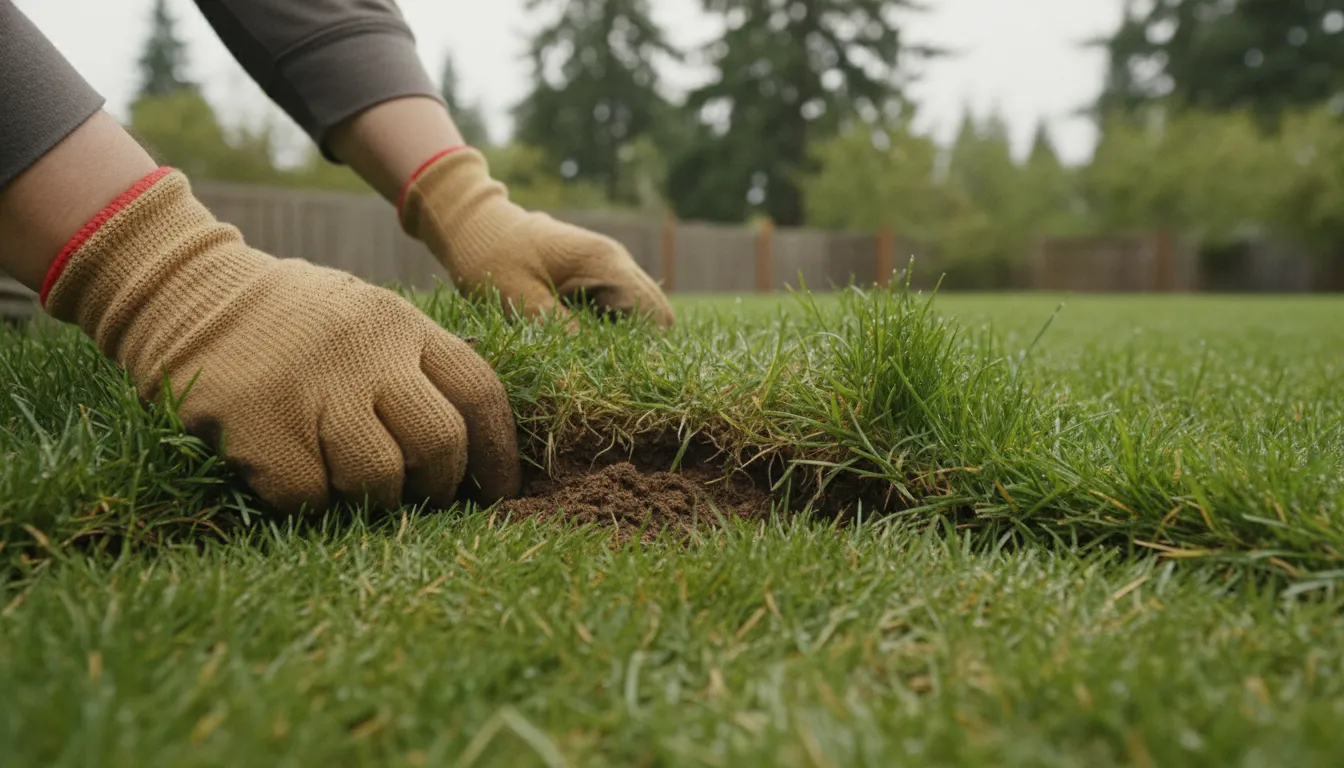
Activity also follows moisture, and UC IPM notes that surface activity slows in extreme cold, heat, or drought, and picks up after rain or watering. A drainfield that stays a little damp can look attractive for that reason. Damp soil holds worms, which does not mean the tank is leaking. It means the topsoil is a good hunting ground.
One more limit is that moles are territorial, and outside the breeding season UC IPM says you will usually find one mole per tunnel system. A long ridge across the drainfield is often one animal working a route, not a colony under the pipes. Penn State Extension makes a similar point for lawns. Expect few animals, and move a trap if the first spot goes quiet.
If you are unsure the ridge is even a mole, use the mole vs gopher guide before you buy a trap. Gophers plug holes and fan soil to one side, while moles leave the rounder mound and the long surface ridge. Trapping the wrong animal wastes a weekend and does nothing for the yard.
A soft, raised ridge and a round mound fit a mole. A crescent plug fits a gopher. Confirm the animal before you treat the whole drainfield as the problem itself.
Signs the Septic System Needs Help
Separate yard ridges from system failure before you do anything else. Oregon State University Extension lists plain warning signs. Sewage backs up into the house, or a wet, smelly spot is hard to mow. The tank is piped to a ditch, storm drain, stream, or farm tile. Any of those means the system is not treating sewage safely. A mole trap will not repair that kind of failure.
The same bulletin says using more water than the soil can absorb is the most common reason systems fail. A bigger household, a new appliance, or roof and driveway water running onto the field can force sewage to the surface. Tree roots can clog the absorption area, and driving or building on the field can shift or crush pipes and compact the soil. Those causes sit with design, water use, roots, and weight.
Penn State Extension also advises keeping heavy equipment and improper landscaping off a drainfield. Do not build sheds, decks, or patios on it. Do not park vehicles or equipment there, and keep trees and large shrubs well back so roots stay out of the pipes. Skip the rototiller, and do not aim downspouts onto the field. Those rules protect shallow pipes, and they also tell you what a mole cannot do. A mole does not compact soil the way a loaded truck does.
| What you see | More likely cause | What to do next |
|---|---|---|
| Soft ridge and a round mound. No odor. | Mole feeding tunnel in the topsoil. | Confirm it is active. Then trap the runway. |
| Crescent mound with a plugged hole. | Pocket gopher, not a mole. | Identify the animal before choosing a trap. |
| Wet, smelly soil or sewage at the surface. | Saturated or failing drainfield. | Call a licensed septic professional. |
| Backup into drains or toilets. | Tank, line, or field problem. | Stop extra water use. Get a diagnosis. |
| Tire tracks, a new shed, or sunken pipes. | Weight or construction damage. | Keep equipment off. Have the field inspected. |
The U.S. EPA says your local health or environmental department usually holds the permit and the as-built drawing. That drawing shows where the tank and field sit. If you do not have it, ask the permitting office before you dig, drive stakes, or guess where the lines are. A professional can locate the tank. You should not probe the field with a shovel to satisfy your curiosity.
Smell, soggy sewage, or a backup means call a septic pro. A dry ridge with a round mound can wait for a tunnel check.
What to Check Before You Trap
Trapping belongs only after the system looks stable. If toilets flush and the yard over the field is not wet or foul, you can inspect the ridge. Do the inspection on foot. Leave the mower, the truck, and the tiller off the field entirely.
- Find the drainfield on your as-built drawing, or ask the local permitting office if you do not have one.
- Walk the grass. Mark fresh ridges that collapse under your foot, and skip runs that are already firm.
- Note the mound shape. Round fits a mole. A crescent plug fits a gopher.
- Check for odor, soggy sewage, or gurgling drains. If any of those show up, stop and call a septic professional.
- Keep vehicles, play structures, and deep digging off the field while you decide on a trap.
CINCH traps are mechanical. They do not use bait or chemicals, and they are built to work in the tunnel the animal already travels. That matters on a drainfield. Michigan State University Extension answered a homeowner who found a mole in a septic field. The reply advised old-fashioned mole traps. Chemicals were not worth the risk to other soil life when a non-chemical method would do. Killing grubs or worms across the field is the wrong first move. Those animals are the mole's food, and the soil still has a job to do.
You still should not treat the drainfield like an open lawn project. Do not excavate a long trench to see the pipes, and do not flood the ridge to chase the mole out. Extra water is one of the loads Oregon State says a field cannot take when the soil is already saturated. A narrow check of a surface ridge is enough to learn whether the run is active.
If the ridge is active and the field is dry, the next step is placement in that run, not a spray and not a guess at pipe depth. The how CINCH traps work page walks through spotting the tunnel, setting the trap in the run, and checking back without tearing up the yard. Read that page before you open a hole wider than the trap needs.
Confirm a dry field and an active ridge first. Then use a mechanical trap in the tunnel. Leave chemicals, tilling, and vehicles off the drainfield.
Related products

Where Tunnel Depth Fits and Where It Does Not
Depth questions come up because people fear the mole is "down on the pipes." Shallow feeding ridges are the sign you can see. Deeper permanent runs exist, but this article does not measure them or tell you how far down your laterals sit. That measurement belongs to your as-built plan and, if you need it, a septic contractor.
Our separate guide on how deep mole tunnels are covers typical feeding runs and deeper nesting chambers. Use it if you want the depth ranges. Do not use it as a map of your septic field. Pipe depth varies with the original design, the soil, and whether the field is a standard trench or a mound. Guessing from a general tunnel number can lead you to dig where you should not.
The same boundary applies to trap setup. Finding the active runway is its own skill, and we already cover it in the guide to active mole tunnels. This page only needs the field test: the ridge collapses, the mound is round, and the grass is not wet with sewage. Full setting steps stay on the how-to pages, including how to set CINCH traps.
If mounds keep appearing and you are not sure the animal is a mole at all, read what a mole is. Moles are insect-eaters, not rodents, which is why poison grain and gopher bait are the wrong tool. UC IPM is clear that rodents, not moles, cause most chewed roots and bulbs. A drainfield with chewed lines is a different problem from a drainfield with a surface ridge.
Use depth and runway guides for the animal. Use your septic drawing for the pipes. Do not treat those two measurements as the same map.
What Trapping Can and Cannot Repair
A trap can remove the animal using the ridge, but it cannot reseal a pipe, pump a tank, or restore a field that is already saturated. Oregon State says failure is a health hazard that should be corrected promptly, and a trained sanitarian should diagnose the cause. If that is your situation, trapping is optional cleanup after the system is safe, not the repair.
When the system is fine and the ridge is the complaint, trapping is the dependable control, and UC IPM calls trapping the most dependable method of mole control. Penn State Extension says the same for lawns and warns against dumping household chemicals, gum, or debris into burrows, and on a drainfield that warning is stronger. Anything you pour into a run can move toward the same soil that is supposed to treat wastewater from the house.
CINCH has built steel mole and gopher traps in Oregon since 1909, with a mechanical design made for the tunnel rather than for surface repellents. The traps are reusable and backed by a lifetime warranty. Orders ship from Portland with $10 flat-rate shipping in the United States. Active and former military members can use the 10% military discount. None of that changes the septic rule. The trap addresses the mole. It does not fix the system.
If you want help choosing a mole trap versus a gopher trap, use the mole and gopher quiz. It asks about mound shape and how you use the property. For a drainfield, answer from the ridge and mound you can see. Do not answer from a guess that the pipes are broken.
After a catch, press the ridge back into place and watch for a new run. One quiet week does not rebuild turf, but it tells you the active route stopped. If a wet spot or odor shows up later, that is no longer a trapping question. Call the local health department or a licensed septic contractor and keep equipment off the field until they locate the lines.
Trapping stops the mole that is lifting the turf. It does not repair a septic system. Smell, backup, or soggy sewage still need a licensed diagnosis.
A Simple Plan for the Next Week
Give the yard seven days of watching before you widen the project. On day one, mark every soft ridge with a small flag you can push in by hand. Skip any area that is wet, sunken, or foul. On day two, step the same ridges again, because fresh runs collapse a second time and old runs stay firm. That repeat test is the whole "is it active" check most properties need.
If the field stays dry and a ridge keeps collapsing, set a mechanical trap in that run and follow the setting page. Check it daily so you are not leaving a catch in warm weather. And if nothing trips in a couple of days, move the trap to the next soft ridge. Penn State Extension's lawn advice fits here: be patient, and shift the trap when the first spot goes quiet. You are chasing one territorial animal, not baiting a wide area.
Parallel to that, protect the field the way the extensions describe. Point downspouts away, do not park on the grass, and do not add a shed, a playset, or a compost bin over the lines. If you do not know where the lines are, get the as-built from the permitting office before any of that work. The EPA notes that local health or environmental departments are the usual source for the drawing and the permit.
Questions about which CINCH trap fits a lawn tunnel are fine to send through the contact page. Questions about sewage at the surface are not a trap question, so take those to your local health department or a licensed septic professional. We can help you catch the mole. We cannot inspect the system or tell you it is safe.
Mark soft ridges, recheck them, and trap only the active run. Anything wet or smelly goes to a septic professional first.
When the ridge is active and the field is dry, compare mole trapping options and pick the setup that matches your yard.
Frequently Asked Questions
Quick answer: Moles usually raise surface turf rather than damage septic lines; wet, smelly soil or backups need a septic professional.
Will a mole collapse a septic pipe?
That is unlikely. Moles lift shallow turf while they hunt insects. Extension guidance on crushed drainfield pipes points to vehicles, equipment, and tilling, not moles. If you suspect a broken line, have a septic professional locate it.
Can I use grub killer on a drainfield to starve moles?
Skip it. A Michigan State University Extension reply about a mole in a septic field recommended traps instead of chemicals, because chemicals are not worth the harm to other soil life. Traps work in the tunnel without treating the field.
Are mole mounds the same as a failing drainfield?
No. A round mound and a soft ridge without odor fit mole activity. A wet, smelly patch, sewage at the surface, or a backup into the house fits a system problem. Those need a trained diagnosis, not a trap.
Should I dig up the ridge to find the pipes?
No. Digging and rototilling can hit shallow lines. Use your as-built drawing or ask the local permitting office where the field sits. Only press the ridge by foot to see if it is still active.
Do CINCH traps fix septic damage?
No. A CINCH trap can catch the mole using an active runway. It cannot repair a tank, a crushed line, or a saturated field. Use it only after you know the sign is a tunnel, not sewage.