

Fresh ridges across a lawn or garden can make Washington mole control feel urgent, but setting a trap in the wrong place wastes time. First confirm that the damage is from a mole, then locate a runway the animal is still using. A well-placed in-tunnel trap targets the route the mole travels instead of treating the surface signs alone.
Ask Cinch about choosing a mole-trapping approach
This guide explains how to distinguish mole activity from gopher damage, test for an active run, select a suitable trap, and monitor it. The steps apply to a small residential lawn as well as a larger garden edge; adjust the number and placement of traps to the area and the evidence you find.
What does Washington mole control require before trapping?
Start by identifying the animal rather than assuming every mound or raised strip comes from a mole. Moles make raised surface ridges as they travel through shallow tunnels and may push up rounded mounds of soil. Pocket gophers usually leave distinct soil mounds beside plugged tunnel openings. The pattern can vary with soil and site conditions, so use several clues rather than one mound.
Look at the damage over a few days. A mole runway may appear as a continuous, raised line through turf or a garden, while gopher activity often includes fresh soil piled around a burrow entrance. Moles feed mainly on soil invertebrates, while gophers feed on plant material and can pull roots or plants into their tunnels. If a plant has disappeared or been clipped below ground, investigate for gophers before selecting a mole trap.
- Raised, winding ridges: often indicate a shallow mole runway in turf.
- Distinct mounds with a plugged opening nearby: are a clue to investigate for pocket gophers.
- Chewed roots or missing plants: point toward plant-feeding activity and warrant a closer look.
- Old, dry soil: may be inactive; fresh disturbance is more useful evidence.
Washington properties differ widely. A city lawn, a wooded edge, a vegetable bed, and pasture can all show different patterns. Don't assume the same animal is responsible throughout a large property. Follow each fresh trail and note where it runs, where it branches, and whether new soil appears after you flatten or gently press a section.
When the signs are ambiguous, avoid choosing equipment based on a quiz result or a single photo. Compare the visible evidence with a reliable identification guide, or ask a knowledgeable local professional. Cinch also has a guide to common mole and gopher questions that can help you think through the differences.
In short, identify the pest from its overall damage pattern before choosing a trap; mole runways and gopher burrows call for different approaches.
How can you find an active mole run?
A fresh-looking tunnel is a useful lead, not proof that a mole is still using it. Moles make both shallow feeding routes and deeper travel routes, and a visible ridge can stop being active. Testing a few likely runs helps narrow down where to place a trap.
- Choose several fresh sections. Look for runs with recently lifted soil or a ridge that appears to have changed. Prioritize a straight section that is easy to reach and inspect.
- Press down a short stretch. Use your hand or foot to flatten a small portion of each candidate runway. Don't collapse a long section or damage a garden bed just to test it.
- Mark the spots. Use a small marker or note the location so you can return to the same places. Keep the marks visible but out of the way of mowing and foot traffic.
- Check again later. If the flattened section has been pushed up or repaired, the route is more likely to be in use. If it stays flat, test another run rather than placing the trap there automatically.
Recheck at a consistent interval and keep notes. A simple yard sketch can record the date, the run tested, and what changed. This is especially useful if several ridges cross a lawn or if you are managing activity near a garden, irrigation line, or fence. It prevents you from repeatedly checking the same inactive patch.
Use care around buried utilities, irrigation, and landscape lighting. Don't dig blindly where lines may be present. If the run crosses a planting area, avoid crushing valuable roots while exposing just enough of the tunnel for the trap setup described by its manufacturer. Children and pets should be kept away from the test area and any equipment while it is being handled or set.
Kansas State University Extension describes identifying active runs as part of mole trapping and recommends testing runs rather than relying on appearance alone. Its mole-trapping guidance is a useful reference for the basic test-and-confirm principle. The Golf Course Superintendents Association of America also describes flattening runs and returning later to see where activity resumes in its mole-control discussion.
A run that responds after you press it is a better trap location than a ridge selected by appearance alone.
Where should you place a trap in a Washington yard?
Once you have confirmed activity, pick a straight segment that gives the trap a stable position and leaves room to install it as directed. A trap works by intercepting the animal in its tunnel. The goal is to make the route the animal already uses meet the trap correctly, not to place equipment randomly on top of a mound.
Choose a spot that is easy to revisit and away from routine foot traffic. If there are several active runs, begin with the clearest one near the damage you want to protect. A run along a lawn edge or garden boundary may be easier to inspect than one through dense roots or under a structure. Avoid a place where runoff, loose soil, or regular watering could disturb the setup.
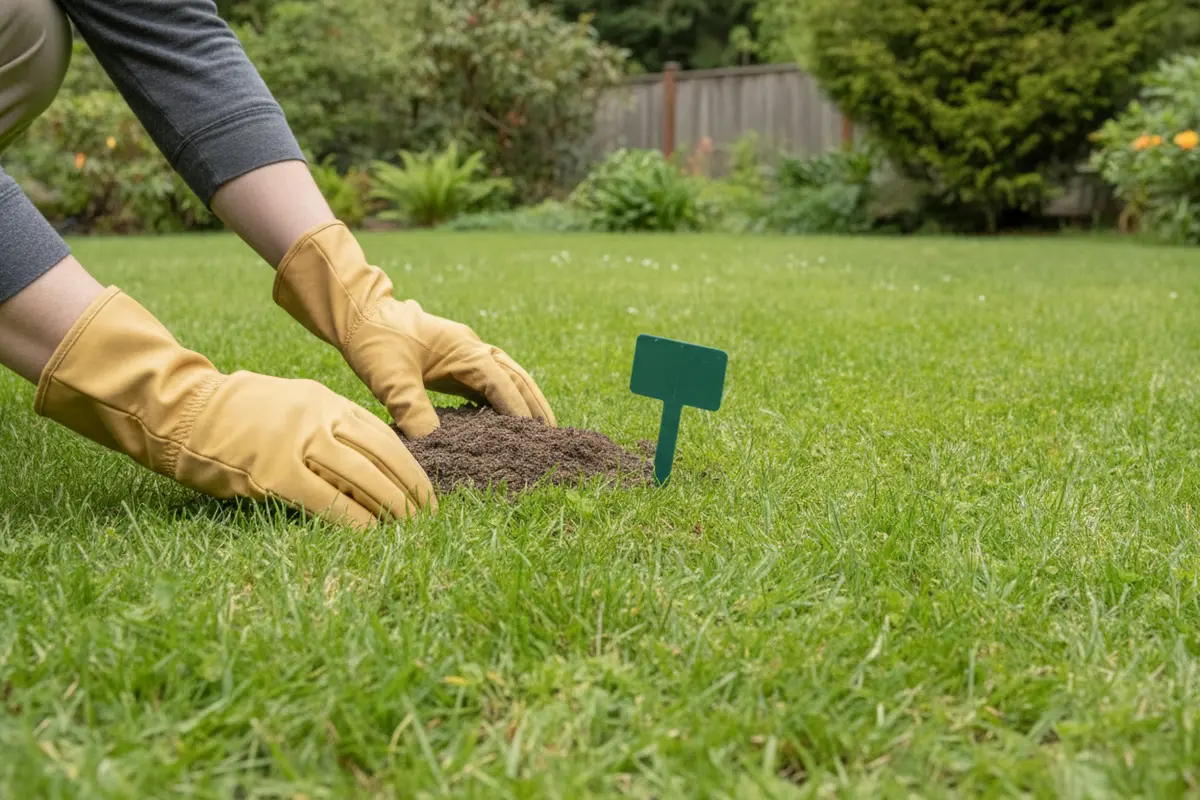
Expose only the amount of tunnel needed for the product's instructions, and keep the passage shape as intact as possible. The exact opening and set procedure differ by trap design, so follow the directions for the model in hand. Cinch's overview of how its in-tunnel traps work explains why alignment with the animal's route matters. Do not improvise a setup that leaves part of the trap above ground; the trap belongs within the tunnel system as directed.
Place a cover over the exposed area only if the trap instructions call for it and the cover will not interfere with the mechanism. Keep the location discreet but findable. A marker placed a short distance away can help you return without touching or disturbing the equipment. Follow the product's safety guidance and local rules, and keep children and pets away from the set.
It can be tempting to set several traps along every visible ridge. That makes it harder to tell which runs are active and increases the chance of poor placement. Start with confirmed routes. If the first location shows no activity, reassess the run, installation, and timing before expanding to another confirmed route.
Set the trap where an active, usable tunnel meets the manufacturer's placement instructions, and keep the setup safely within that tunnel system.
Which trap or kit fits the job?
Choose a trap made for moles and appropriate for the tunnel and working conditions. A device intended for gophers is not automatically a substitute: the tunnel shapes and placement needs differ. Compare how the trap is installed, how easily you can inspect it, and whether it suits the size and access of the active run. A kit can be convenient if you need the trap and setup tools together; a trap alone may make sense if you already have the needed equipment.
| Situation | What to look for | Practical next step |
|---|---|---|
| One confirmed run in a small lawn | A mole trap that fits the tunnel and can be checked easily | Set one trap according to its directions and monitor the marked spot |
| Several active runs near a garden | A manageable plan for more than one confirmed route, with safe access | Prioritize the runs nearest the damage and track each location separately |
| You lack setup tools or are new to trapping | A compatible kit with clear instructions for the trap model | Review the setup steps before opening the tunnel |
| Signs suggest gophers, not moles | A gopher-specific trap and placement guidance | Pause the mole setup and check a gopher guide first |
Trap size and tunnel fit matter, but the best choice is not simply the largest or most complicated option. Follow product directions for the run and model, and avoid forcing a trap into a passage it does not fit. You can review Cinch mole and gopher trap options and the mole kit details before deciding what you need. For broader product guidance, see the beginner's guide to Cinch Traps.
Cinch is a fourth-generation, family-owned manufacturer making traps in Oregon, and its in-tunnel design is intended for placement in the animal's travel route. The traps are built for repeated use and backed by a lifetime warranty. Those features can matter when recurring activity makes a disposable or one-use approach less appealing. Consider the whole ownership picture, correct placement, reuse, care, and replacement accessories, rather than judging a trap on initial setup alone.
For commercial properties or acreage, the right number of traps depends on the number of confirmed active runs and how often someone can check them. Do not spread equipment over a large area without a monitoring plan. A professional may be a better fit if activity is extensive, access is difficult, or you are unsure how to distinguish species.
Match the trap to the pest and tunnel, then compare the setup instructions and reusable value, not just the product label.
Compare available mole traps and kits
Related products

How do you set and monitor a mole trap?
Read the instructions for the specific trap before setting it. Work on a confirmed active run, prepare the tunnel carefully, and place the device in the orientation the manufacturer specifies. Keep your hands clear of moving parts and use any handling or safety steps stated in the directions. If a step is unclear, stop and review the instructions rather than guessing.
- Confirm that the selected run showed renewed activity.
- Gather the trap and any required setup tool before opening the tunnel.
- Expose and prepare only the section required by the product instructions.
- Set the trap securely in the tunnel, following the model-specific steps.
- Mark the location and record when you set it so the check is consistent.
Check the trap on a regular schedule that follows its directions and local requirements. Avoid repeatedly moving it without first assessing what happened. If it has not produced a result, check whether the run was genuinely active, whether the tunnel was disturbed, whether the trap was positioned correctly, and whether fresh activity has shifted elsewhere. A reset at the same poor location will not fix a location problem.
When you do catch an animal, handle the trap and animal only as the directions allow. Keep people and pets away, use the safe removal procedure for the model, and reset only if the run remains active and the product is in good condition. Clean and store reusable equipment as directed. For guidance on installation and care, consult the product instructions and Cinch's trap-use information.
Research and extension advice can help explain the method, but no placement guarantees a catch at a particular time. Moles move through a network of tunnels, and activity can shift. Give a properly selected and placed set a reasonable opportunity, then use new signs to guide the next decision.
Good monitoring is a repeatable routine: record the set, check it safely, and troubleshoot location or alignment before changing everything at once.
What common mistakes slow down mole control?
Many disappointing results come from a mismatch between the animal, tunnel, trap, and setup. Before concluding that trapping cannot work, review the process in order. Change one factor at a time so you can tell what helped.
- Assuming every mound is a mole sign: Recheck for gopher openings, plugged soil, and plant damage.
- Choosing an inactive run: Test several ridges and use the one that is renewed.
- Setting at a mound instead of a runway: Follow the actual route and the trap's specific placement instructions.
- Disturbing too much tunnel: Keep the passage as usable as possible while preparing only the required opening.
- Skipping the instructions: Trap models differ, so do not transfer a setup method from a different device.
- Moving the trap without checking evidence: First inspect the set and look for new activity.
Washington's changing weather can make exposed soil and lawn conditions vary. Rain, watering, mowing, or foot traffic may alter a test spot or disturb a setup. If the ground has been heavily disturbed, reassess the route and installation rather than assuming the animal has vanished. Keep a simple record of weather or yard work when it helps explain a change.
Some property owners also try repellents or other control methods. These may have different purposes and limitations from trapping. If your aim is to remove an animal using a mechanical trap, focus on active tunnel confirmation and correct placement. Cinch's article on traps, baits, and repellents offers a wider comparison of approaches.
When results stall, check identification, activity, fit, placement, and disturbance in that order before abandoning a sound plan.
How can Washington mole control become a practical plan?
A simple plan prevents guesswork and helps protect the areas that matter most. Start with the portion of the property where damage is visible, then expand only if fresh activity supports it. On a larger property, divide the area into zones such as lawn, vegetable garden, orchard edge, or pasture. Track each zone separately.
- Map the signs. Mark fresh ridges, mounds, plant damage, and likely tunnel lines.
- Identify the pest. Distinguish mole runway patterns from gopher burrow signs before choosing equipment.
- Test candidate runs. Press a few sections and return to see which are renewed.
- Set a suitable trap. Follow the specific instructions at the confirmed route.
- Monitor and adjust. Log checks, note new activity, and move only when evidence points to a better location.
- Review the area after activity stops. Repair disturbed turf or beds and continue watching for fresh signs.
This method keeps effort focused. It also helps you see whether activity is concentrated in one area or moving through multiple parts of the property. For a household, a paper sketch is enough. For a farm or commercial landscape, a shared map and check log can help everyone avoid duplicated work.
A trap is one part of a control plan, not a promise that all future activity will stop. Recheck vulnerable areas and respond to fresh evidence. If damage is extensive, the animal is uncertain, or safe access is a concern, consult a local pest-control professional who can evaluate the site.
Ready to choose a product after confirming the signs? Compare the available trap and kit options, or contact Cinch with a question about selecting an approach for the tunnel you found.
Make the plan evidence-led: identify, confirm, place, monitor, and reassess only when new signs call for it.
Frequently asked questions
How long should I wait before checking a mole trap?
Follow the instructions for the specific trap and check it on the schedule they recommend. Traps are typically set and left for a day rather than expected to work in minutes. If there is no result, inspect the run and placement before deciding what to change.
Can I use a gopher trap for a mole?
Do not assume the two are interchangeable. Moles and pocket gophers create different tunnel patterns and require the appropriate trap and placement method. Identify the animal first, then use directions for a trap designed for that pest.
Should I set a trap in every visible ridge?
No. Test a few likely runs and begin with those that show renewed activity. Targeting confirmed routes makes the setup easier to monitor and helps avoid wasting effort in old tunnels.
What if the mole stops using the run I tested?
Look for fresh ridges or repaired test spots nearby and test a different route. Tunnel activity can shift, so a newly active section may be a better choice than repeatedly resetting an unchanged location.
Is a trap reusable?
Some mechanical traps are designed for repeated use. Follow the product's instructions for removal, cleaning, inspection, and storage. Cinch describes its traps as reusable and offers a lifetime warranty; review the applicable product information for details.
For Washington mole control, the dependable starting point is a correctly identified pest and a tested, active tunnel, not guesswork about a mound.
Confirm the animal, test the run, and choose a trap that fits the tunnel and your ability to monitor it. A careful, repeatable process gives you a clear next step when fresh activity appears.