

When a customer walks into a nursery with fresh mounds, damaged roots, or a lawn that keeps sinking, the first challenge is not choosing a product. It is figuring out what animal is traveling beneath the soil and whether the recommended trap fits that situation. For nursery teams, why nurseries carry Cinch Traps comes down to giving customers a practical next step: a reusable mechanical tool, clear setup guidance, and a product suited to the pest and tunnel.
Nurseries carry Cinch Traps because they can help staff connect a customer's visible mole or gopher damage with a straightforward. Reusable trapping solution, without relying on vague recommendations or unsupported performance promises.
That customer-fit conversation starts with the problem in front of you. Once staff understand what the customer is seeing and how the animal moves. They can recommend the right type of trap with greater confidence and explain why it belongs in that particular situation.
Why Nurseries Carry Cinch Traps for Customer Fit
Nursery customers are often already looking at the damage. A homeowner may be protecting a lawn, garden, landscape planting, or young plants from an animal that has become difficult to identify and manage. That makes a nursery a useful place to connect the visible problem with a practical next step. Rather than treating every mound, tunnel, or damaged plant as the same issue.
Cinch Traps makes mechanical traps for mole and gopher control, with products manufactured in Oregon since 1909. That product focus gives nursery staff a clear educational role: help the customer identify the pest, understand where it travels, and select equipment that fits the tunnel. The goal is not to promise a result. It is to help a customer leave with a product that makes sense for the problem described.
Match the customer problem to the animal
Moles and gophers do not create the same kind of problem, and the trap choice should reflect that difference. A customer who cannot explain whether the damage comes from a mole or gopher may need a few simple identification questions before choosing a trap. Staff can also ask whether the customer is seeing fresh soil, raised runs, plant damage, or signs of activity near a particular area. That conversation is more useful than pointing every shopper toward one general-purpose item.
Cinch's catalog includes mole and gopher traps in multiple sizes, as well as kits that combine traps with setup and instructional accessories. Those options can support different levels of customer experience. A confident property owner may want a trap and clear sizing guidance. While someone frustrated by remedies that did not work may value a kit and more help understanding setup. Product selection should remain tied to the customer's description and the tunnel, not to an assumed budget or an unverified promise.
Give shoppers a practical path forward
The fit continues after the sale. DIY property owners generally want a solution they can set up themselves, with understandable instructions and enough size guidance to avoid a poor match. A nursery can direct customers to the Cinch Traps retailer resources for access and product context, while businesses evaluating broader availability can review the Cinch Traps distributor program. Neither replaces a thoughtful pest-identification conversation, but both give staff a clear next step when a customer needs more information.
Nurseries carry Cinch Traps because the products let staff match a customer's mole or gopher problem, tunnel, and do-it-yourself needs with focused mechanical trap options and practical guidance.
What Damage Are Nursery Customers Trying to Solve?
Nursery customers usually arrive with a visible problem, not a pest name. A plant is declining, a bed has fresh soil pushed up, or an irrigation line has stopped working. In a nursery or garden center, the useful first step is to connect that symptom to the kind of underground activity causing it.
Pocket gophers are a serious concern for growers because they feed on plant roots. The University of California Integrated Pest Management program notes that a single gopher can ruin a garden quickly and that gnawing may damage irrigation lines and sprinkler systems. Those risks matter in planted beds, production areas, and recently installed landscapes where one animal can disrupt both plant health and routine watering. UC IPM's pocket gopher guidance recommends early detection as part of limiting damage.
The setting itself can be a clue. The University of Idaho lists perennial crop production areas, including tree nurseries, orchards, and vineyards, among habitats where pocket gophers create problems. That makes root disturbance and irrigation risk especially relevant to nursery customers rather than abstract concerns. University of Idaho's gopher resource provides the habitat and behavior context staff can use when discussing the issue.
Moles create a different customer conversation. They primarily move through soil in search of prey, leaving raised runs and rounded mounds, while gophers live underground and feed on roots. A damaged plant or mound alone does not identify the pest. Ask what the customer has seen, where the fresh soil is appearing, and whether plants or irrigation have been affected. That distinction helps avoid treating every underground problem as the same one.
- Look for fresh soil and note whether the mound is rounded or fan-shaped.
- Ask whether roots, nursery stock, or irrigation lines show damage.
- Confirm where the newest activity appears before discussing trap placement.
Nursery customers are trying to protect roots, irrigation, and the appearance of their landscape. So the right recommendation starts by separating gopher damage from mole activity and confirming where the animal is still moving.
How Can Staff Identify the Pest Before Recommending a Trap?
A quick, consistent diagnosis helps staff recommend the right trap instead of treating every mound or damaged plant as the same problem.
- Ask what the customer actually observed. Is the concern a raised surface tunnel, fresh soil mounds, damaged roots, or gnawed irrigation? Pocket gophers feed on roots and can damage irrigation lines and sprinkler systems. While the customer may never see the animal because gophers spend almost all their time underground. Ask where the damage appeared and whether new signs are still appearing.
- Look for fresh activity. Have the customer inspect the newest mound rather than an old, weathered pile. Fresh gopher mounds indicate an active gopher, and one gopher can create several mounds in a day. This gives the customer a better starting point for finding an active tunnel than choosing a trap based only on a past mound.
- Check the mound pattern. Gopher mounds are generally half circles of loose dirt with a plugged hole offset to one side. Mole mounds are circular, with the plug in the middle. These patterns are useful clues, but staff should present them as identification guidance rather than a guarantee from one glance.
- Confirm the problem before discussing fit. If the signs point to a mole, direct the customer to identify moles versus gophers before selecting a product. If the signs point to a gopher, explain that retail guidance should match the trap type and size to the tunnel. The University of Idaho lists tree nurseries among habitats where pocket gophers cause problems, making this distinction especially relevant for nursery customers.
- Recommend the next practical step. Ask the customer to follow the product instructions and focus on the active travel route. UC IPM identifies traps as one management measure for gopher problems. Staff can then point the customer toward the appropriate Cinch trap or kit without promising a guaranteed result.
In short, staff should identify the pest from fresh activity and mound shape first. Then guide the customer toward a trap type and tunnel fit that match the evidence.
How Do You Match Trap Size to the Tunnel?
Trap fit starts with identification, not guesswork. A customer describing raised ridges and surface runs may be dealing with moles, while fan-shaped soil mounds and plugged openings point toward pocket gophers. Staff can ask what the damage looks like, where it appears, and whether the customer has found an active tunnel before recommending a size.
| Pest | Tunnel range | Ask | Path |
|---|---|---|---|
| Mole | About 1.5, 2.25, or 3 inches | Raised runs or feeding tunnels? | Review a mole trap and instructions. |
| Gopher | About 2.25, 3, or 3.5 inches | Fresh mounds and plugged openings? | Review a gopher trap or kit. |
These dimensions are approximate fit guidance, not guarantees. Soil can collapse, tunnel openings can vary, and a customer may measure an inactive or damaged section. The goal is to connect the pest, tunnel, and product category clearly, then direct the customer to the Cinch trap and kit selection for the current options. Cinch's catalog lists mole and gopher traps in multiple sizes, along with kits that combine traps with setup and instructional accessories.
Match the trap to the identified pest and the approximate active-tunnel diameter, while treating every listed dimension as guidance rather than a promise of exact fit.
What Should a Nursery Keep Ready for First-Time Buyers?
A practical starter assortment helps staff respond when a customer arrives with fresh mounds, damaged plants, or a tunnel they cannot identify. Begin with both mole and gopher options in the common tunnel-size ranges, rather than treating every underground pest problem as the same. Cinch Traps offers multiple trap sizes for each pest, along with kits that pair traps with setup accessories.
For a first-time buyer, a basic kit can be an easier starting point than selecting every accessory separately. Mole kits include two traps and flags. Gopher kits include multiple traps and setup accessories. Deluxe kits add gloves, a tunnel-clearing tool, maintenance spray, and instructional materials for customers who want more of the setup process in one package. These are product-fit choices, not promises of a particular result.
Give staff a simple conversation guide
- Ask whether the customer is seeing raised surface runs and mounds, or distinct soil mounds and damaged roots.
- Confirm which pest they believe is present before recommending a mole or gopher trap.
- Discuss the approximate tunnel size and direct the buyer to the matching trap option.
- Explain that correct placement in an active tunnel matters more than setting a trap beside random damage.
- Point customers to the instructions, sizing guidance, troubleshooting, and maintenance information available with Cinch support materials.
Staff do not need to diagnose every property problem at the counter. They can help customers identify the likely pest, choose a sensible starting size, and understand the basic setup. When a business wants more information about carrying the line, its retailer options for Cinch Traps provide a focused next step. Customers who need access through a business channel can also review the business-channel distributor information.
For questions that go beyond a quick product-fit conversation, send buyers to answers to mole and gopher questions. That gives them a place to review identification and trapping basics after they leave the nursery.
Shop Cinch Traps and kits for the right starting point.
Nurseries can support first-time buyers with a focused mix of mole and gopher sizes, basic and deluxe kits, and clear guidance on pest identification, tunnel fit, and setup.
How Do Cinch Traps Support a Practical, Low-Friction Recommendation?
For a nursery employee, a useful recommendation should be easy to explain and realistic for the customer to carry out. Mechanical trapping keeps the conversation focused on the actual problem: identify the pest, find an active tunnel, choose the appropriate trap, and follow the setup instructions. That gives staff a clear path without asking them to make broad promises about results.
The approach also fits the settings where customers often notice damage first. The University of Idaho lists tree nurseries among the perennial crop areas where pocket gophers can cause problems, along with orchards, vineyards, and alfalfa production. That does not mean every mound indicates the same pest or that one product fits every situation. It does support a practical conversation about identification and tunnel location before recommending equipment. University of Idaho guidance on pocket gophers can give staff a reliable reference when those questions come up.
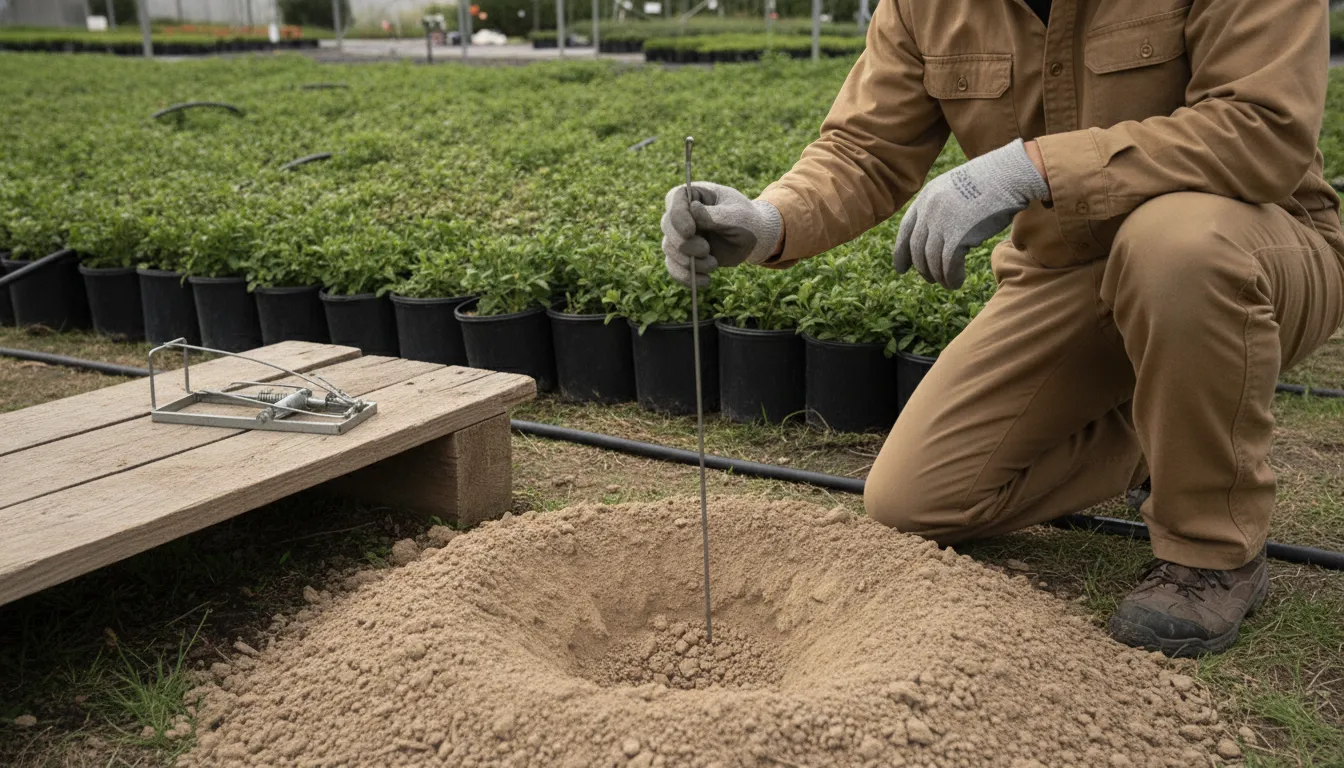
Durable equipment with practical support
Cinch Traps manufactures mechanical traps for mole and gopher control and has made traps in Oregon since 1909. That heritage is useful supporting proof, but the immediate customer benefit is simpler: the product is built for repeated use rather than a single application. Cinch materials describe the traps as galvanized steel and include a lifetime warranty. Staff can present those facts accurately while leaving the customer to decide which model matches the pest and tunnel.
The recommendation is less intimidating when the product is backed by usable guidance. Cinch support materials include instructions, sizing guidance, troubleshooting, and maintenance information. Those resources help a first-time buyer understand setup and give experienced growers a reference for routine care. They also make it easier for nursery staff to answer practical questions without improvising technical directions or claiming universal superiority.
A bounded research reference strengthens that conversation. The University of Idaho habitat information shows why gopher control can matter to nursery operators, while the product guidance explains how to use the tool. Neither source promises a guaranteed outcome. Together, they support a responsible recommendation based on setting, pest identification, and correct placement.
- Identify the pest before selecting the trap.
- Match the trap to the active tunnel and use the included guidance.
- Use support materials for sizing, troubleshooting, and maintenance.
In short, Cinch Traps offer nurseries a low-friction recommendation: a reusable galvanized-steel mechanical tool. Clear support materials, and Oregon manufacturing heritage, backed by carefully bounded guidance rather than exaggerated promises.
Frequently Asked Questions
How can staff tell whether a customer has moles or gophers?
Ask what the customer sees on the surface and whether the damage includes roots or plants. Gopher mounds are typically half circles with a plugged opening offset to one side, while mole mounds are round with a plug in the center. Fresh gopher mounds are a useful sign that activity is current. When the signs are unclear, use the mole versus gopher guide before recommending a trap.
How should a customer choose the right trap size?
Match the trap to the active tunnel rather than choosing by animal name alone. Mole options are designed for approximately 1.5-inch, 2.25-inch, and 3-inch tunnels, while gopher options correspond approximately to 2.25-inch, 3-inch, and 3.5-inch tunnels. These are fit guidelines, not exact measurement guarantees. Ask the customer to locate a fresh, active tunnel and compare its size with the product guidance.
Should a first-time buyer choose a trap or a kit?
A single trap may suit a customer who already has the needed tools and knows where the animal is traveling. A kit can simplify the first setup by grouping traps with relevant accessories. Mole kits include two traps and flags, while gopher kits include multiple traps and setup accessories. Deluxe versions add items such as gloves, a tunnel-clearing tool, maintenance spray, and instructional materials.
What setup help should nursery staff provide?
Keep the recommendation practical: confirm the pest, identify a fresh active tunnel, select the appropriate trap type and approximate size, and point the customer to the instructions. Cinch support materials also cover sizing, troubleshooting, and maintenance, so customers have a reference after they leave the store. Avoid promising a guaranteed result; the quality of placement depends on finding the route the animal is using.
What should the customer do next?
Have the customer inspect the property for fresh activity, note whether the signs fit a mole or gopher, and choose the matching trap or kit. If they are ready to compare available options, direct them to shop Cinch traps and kits and review the product instructions before setup.
Nursery staff can make the recommendation easier by identifying the pest, matching approximate tunnel fit, explaining the kit options, and directing customers to reliable setup resources.
Ready to help customers choose the right mole or gopher setup? Shop Cinch traps and kits for the next step.