

Fresh ridges can make a clay lawn look as if it needs to be dug up. If you are asking how to get rid of moles in lawn, start by confirming the animal, finding a route that is still active, and setting a suitable trap in the underground passage. In clay, the key is to open only the section you need and keep the tunnel clean and usable.
Get help choosing a mole-trap setup
How can you tell if moles are causing the lawn damage?
Before choosing a control method, make sure the signs point to a mole. Moles travel through soil as they search for food, and their movement can push up winding ridges in turf. Gophers can also disturb lawns, but their soil piles and burrow signs differ. A trap intended for one animal is not automatically right for the other.
Walk the affected area and note the pattern rather than focusing on one dramatic bump. Look for connected raised lines, freshly lifted turf, and loose soil that has not settled. A single mound or old ridge does not prove that a mole is using the area now. Photograph or mark a few locations so you can compare them later.
- Look for a connected, winding ridge rather than treating every pile as proof of a mole.
- Check whether turf has lifted recently and soil looks freshly disturbed.
- Notice where lines join or cross, and record the newest changes.
- Do not trap until the signs fit the pest you intend to manage.
When evidence is unclear, compare the pattern with Cinch’s mole and gopher identification guide. If the signs suggest a gopher, pause and use pest-specific equipment and directions instead of adapting a mole setup. Identification prevents unnecessary disturbance and helps direct the next step.
Confirm the animal before choosing a trap; mole and gopher signs call for different equipment and placement.
Why does clay soil make a trap setup harder?
Clay changes with moisture, and that affects how neatly a tunnel can be exposed. Wet clay sticks to tools and smears across the opening. Tunnel walls may slump when uncovered. Very dry clay can break into hard chunks, leaving a ragged cavity instead of a clear travel path.
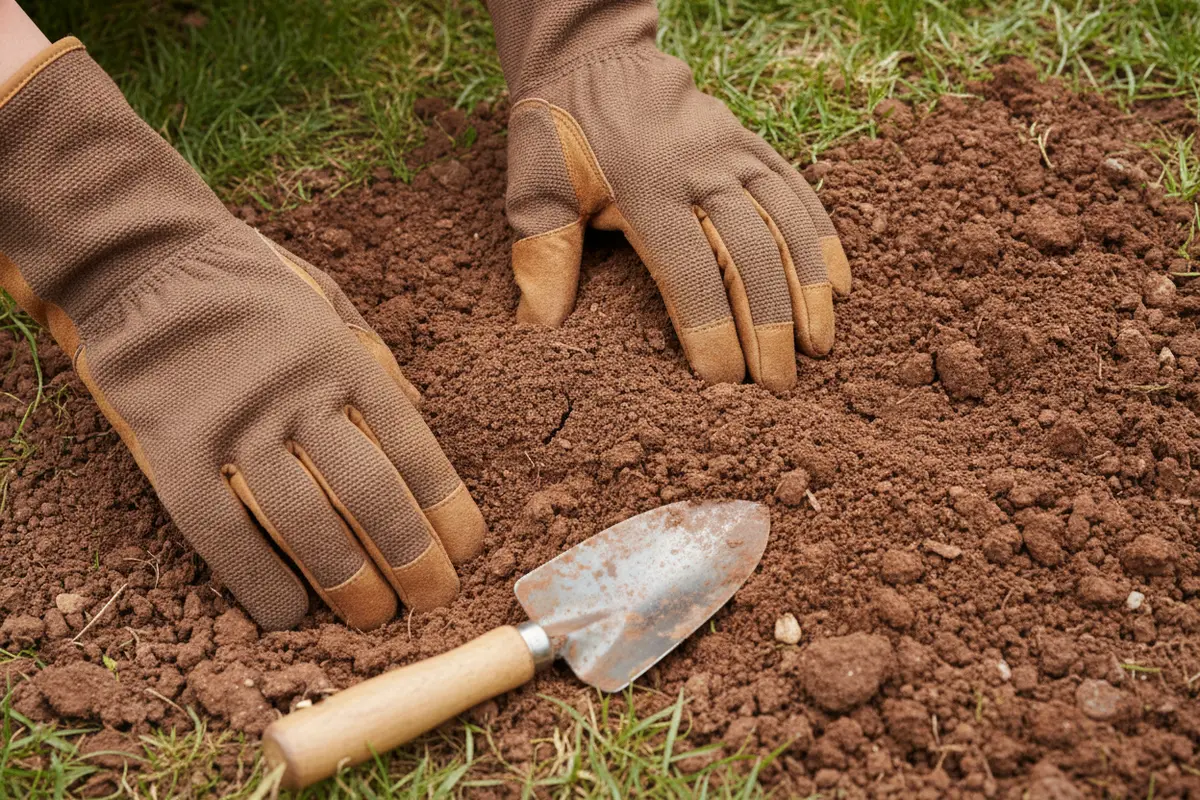
The aim is not to excavate a large chamber. You need a short, straight section of a confirmed route, open enough to seat the trap as its manufacturer directs. Choose a time when soil holds its shape but is not rock-hard. Use a small trowel, lift manageable pieces, and keep the opening close to the dimensions needed for your model. If the sides crumble or slump, pause rather than forcing a set into an unstable tunnel.
| Soil condition | Setup risk | Practical response |
|---|---|---|
| Wet and sticky | Clay smears; the passage may slump or fill. | Wait for more workable soil and make a short, controlled opening. |
| Very dry and hard | Clods break away and the opening becomes ragged. | Loosen carefully; do not widen the route just to force a fit. |
| Moist and shapeable | The passage is easier to expose but can still be disturbed. | Clear loose soil and preserve a straight path. |
| Roots or stones present | Debris can obstruct the tunnel or placement. | Use a nearby usable section of active runway. |
Keep displaced turf and soil nearby so you can restore the lawn, but do not pack soil into the passage. Avoid watering the opening at the last moment: extra water can make clay sticky and undermine the tunnel. Waiting for workable conditions is often less disruptive than repeated digging.
Clay can disguise activity. A pressed ridge may stay firm in dry ground even when old, while rain or foot traffic can alter a ridge whether or not a mole has revisited it. Judge soil condition alongside signs of change.
Work clay when it is shapeable, keep the opening small, and protect the tunnel from smearing, collapse, and debris.
How do you find an active mole runway?
A visible ridge may be old or abandoned, so do not set a trap simply because a line is easy to see. Pick a fresh-looking, connected ridge and flatten a short section with your foot or a flat tool. Mark it and return later to see whether it has been repaired or disturbed again. Renewed change is a better reason to investigate than ridge height or length alone.
- Choose a fresh, connected ridge rather than an isolated old mound.
- Flatten a short section and mark its location.
- Return later and look for a repaired or newly disturbed section.
- If renewed activity is plausible, probe gently to locate the tunnel below.
- Expose only the short section needed to assess and place a trap.
Use more than one clue when possible. Compare the flattened test with neighboring ridges and look for recent movement. Rain, mowing, irrigation, and foot traffic can change a lawn’s appearance. If the result is ambiguous, test another likely route instead of digging into the first one.
Probe carefully rather than digging randomly. You are trying to locate the passage beneath the ridge, not search the whole lawn. Once found, clear only enough soil to see whether the passage is straight and usable. If it bends sharply, collapses, or contains debris, move to another confirmed active section.
Choose an underground route rather than a superficial ridge that is easy to reach but shows no current use. UC IPM advises placing a scissor-jaw trap in a mole’s main underground tunnel and opening soil with a small tool; see its mole management guidance. For Cinch’s overview of the in-tunnel approach, read how the trapping method works. Follow the instructions for the model you own because designs differ.
Keep a brief record of date, location, and what changed. On a lawn with crossing ridges, notes show which routes are active and prevent repeat digging in an unchanged spot.
Let renewed disturbance guide you to a likely active runway, then expose only enough of it to make a clean set.
Which mole trap setup suits a clay lawn?
For confirmed mole activity, use a trap designed for placement in an underground runway. A surface repellent or bait does not put a mechanical trap in the passage where the animal travels. Select a trap that fits the route and can be seated according to its directions; one size or model will not suit every tunnel.
Once you have selected a straight, active section, remove loose soil without crushing the passage. Keep roots, clay clods, and stones away from the mechanism. Align and set the trap exactly as directed, and check that it is stable rather than tilted or resting on a soft clump. Do not alter a mechanism or force it into a route that is too small or damaged.
Cinch describes its traps as reusable, professional-grade products made in Oregon by a fourth-generation family-owned company. A durable trap’s value comes from repeated use and proper care, not just the first setup. Review the Cinch mole trap product information and step-by-step setup guide before you begin.
- Match the trap to the animal. A mole setup is not a substitute for a gopher trap.
- Match placement to behavior. Set in a confirmed underground runway, not beside a mound.
- Check fit. Review product directions and do not force a trap into an unsuitable opening.
- Keep the passage clear. Remove loose clay and debris that could obstruct the mechanism.
- Follow the specific instructions. Safety and checking steps vary by model.
Size references can help compare options. See medium trap details, large trap details, and XL trap details. If the tunnel is too narrow, collapsed, or awkwardly shaped, select another active section rather than carving a large cavity around the trap.
In clay, the best setup fits a confirmed, clear runway and can be set exactly as its model instructions specify.
Related products


Weather-resistant construction for outdoor use
View productHow do you place the trap without damaging the tunnel?
Start at a marked section that showed renewed activity, then uncover a short length of tunnel. Remove soil in small pieces instead of levering up a wide slab of turf. Keep the tunnel’s direction in view. The aim is a controlled space for the trap, not a long underground trench.
- Prepare the area. Keep children and pets away, gather the trap instructions and tools, and note the set location.
- Open a small access point. Lift turf and clay carefully with a trowel. Stop if tunnel walls slump.
- Clear the path. Remove loose soil and debris without packing material into the passage.
- Position the trap. Align and seat it as the manufacturer instructs. Do not force or modify it.
- Restore and mark the surface. Replace displaced turf as appropriate and mark the set clearly.
- Check on schedule. Follow the checking interval and safety guidance for the model.
A common mistake is making the opening larger when the trap does not sit neatly. That can damage the route and create a cavity that is harder to stabilize. Remove only material that blocks intended placement. If a root, stone, or collapsed wall prevents a clean fit, stop and prepare a nearby section with evidence of activity.
Loose clay left in the tunnel can obstruct the route or interfere with the set. Check the passage visually, but do not scrape until it becomes an unnatural chamber. A straight, tidy opening matters more than an oversized hole. The process is manageable: identify the animal, find the active route, expose a small section, set as directed, and monitor responsibly.
Keep setup controlled: open a short section, clear the route, follow the model instructions, and mark the set.
What should you do if a trap misses?
A miss does not automatically mean the trap is unsuitable. Recheck the process before buying something different or digging another large hole. Ask whether the signs identified a mole, whether the route was active, whether the tunnel stayed open, and whether the trap was aligned and seated as directed. Clay-related problems often begin with a compromised opening.
- No fresh activity: Choose another connected ridge and repeat the activity check.
- Collapsed or smeared tunnel: Wait for workable soil or prepare a clean section nearby.
- Loose clay or debris: Clear the passage carefully and review the model directions.
- Uncertain animal: Revisit identification before choosing equipment or a new location.
- Poor fit: Do not force it; check product guidance and use a suitable route.
Give the set the checking interval stated by its manufacturer. Do not rely on a generic time if your model gives specific directions. When inspecting it, follow safety guidance and avoid unnecessary handling of the mechanism.
Record the set date, location, soil condition, and what you find at each check. If a location repeatedly shows no new disturbance, stop reopening it. If fresh ridges appear elsewhere, test those instead. For troubleshooting, compare your process with the mole and gopher FAQs or mole-trap setup guide. You can also ask Cinch about product setup; include your model, soil condition, and what the runway looked like.
If a trap misses, reassess identification, runway activity, soil stability, and alignment before changing the whole approach.
How can you protect the lawn and keep the set safe?
Clay lawns can take time to recover from unnecessary digging. Keep test openings small, avoid repeatedly disturbing inactive routes, and replace displaced turf and soil when appropriate. Watch for fresh signs elsewhere instead of assuming every raised line is part of one active route. A focused plan can limit lawn damage and wasted effort.
Mark each set location clearly and tell household members it is there. Keep children and pets away from set traps, and follow the full safety directions supplied with the product. Do not leave a set where someone could handle it or step on it unknowingly. On a shared or frequently used lawn, choose a place that can remain undisturbed and be checked responsibly.
Monitoring matters as much as placement. Record when you set the trap and check it according to its directions. Once the problem is addressed, restore the surface and continue watching for new signs. If fresh damage appears elsewhere, repeat identification and activity checks instead of moving a trap blindly from one old ridge to another.
Reusable equipment can serve for future activity when maintained and handled as directed. Check the care information before storing it, and keep it in a condition ready for another confirmed problem.
Limit lawn disruption and protect people and pets by keeping openings small, recording set locations, and following safety instructions.
Frequently asked questions about moles in clay lawns
Does clay soil prevent you from using a mole trap?
No. Clay may make it harder to expose a clean runway, but it does not by itself rule out trapping. Work when soil is manageable, keep the opening controlled, and use the trap according to its instructions.
Should you set a trap beside a molehill?
Not based on the mound alone. Look for a connected route and test whether it is active. Set in the underground passage as directed, rather than beside a soil pile without confirming a usable runway.
How soon should you check a mole trap?
Follow the checking interval and method supplied for your trap model. Mark the location, check responsibly, and keep people and pets away from the set.
What if the tunnel caves in while you are setting the trap?
Do not force a trap into a collapsed passage. Remove loose soil gently only if you can restore a clear opening. Otherwise, stop and choose a nearby section of the active route or return when the clay is more workable.
What if you cannot tell whether the pest is a mole or a gopher?
Compare the damage pattern with a reliable identification resource before choosing equipment. Mole and gopher control use different equipment and placement, so pause until you know which animal is responsible.
Compare Cinch mole trap details
Choose a practical next step for your lawn
If you have confirmed mole activity, use a trap designed for the underground route and follow setup and safety directions closely. Review the mole trap information when comparing equipment, or revisit the in-tunnel method overview before setting it.
With careful identification, active-runway testing, and a controlled opening, you can address mole activity in clay without digging up the entire lawn.