

If fresh soil mounds are appearing across your lawn or garden, you may be asking how to get rid of gophers in yard areas without wasting time on methods that do not reach the animal. Start by confirming the pest, then find a recently used tunnel and choose a control method suited to the damage and location.
Get help choosing your next step
Gophers live mostly underground, so surface clues matter. Their feeding and burrowing can disturb roots, irrigation lines, and turf. A systematic approach is more useful than treating every mound as a separate problem: identify the animal, map active activity, act at the travel route, and check whether the evidence changes.
How can you tell if gophers are causing the yard damage?
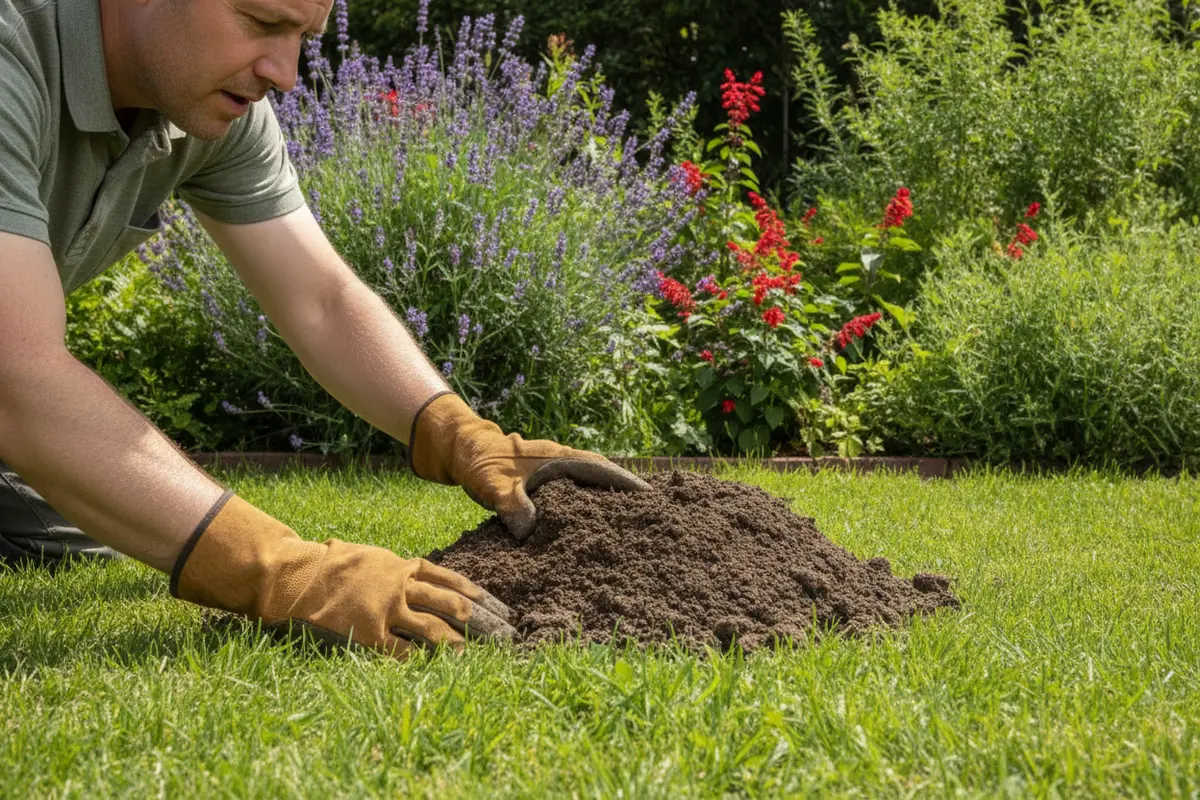
Look at the shape and pattern of the soil disturbance before selecting a treatment. Pocket gophers push soil out of underground tunnels and leave mounds. A mound often has a roughly fan-shaped or crescent-like outline, with the plugged opening off to one side. The exact appearance varies with soil, moisture, and how recently the animal worked. A succession of fresh mounds is a stronger clue than one old pile of soil.
Moles also move soil, but their signs often include raised surface ridges or shallow runs, along with rounded mounds. Moles feed mainly on soil invertebrates; gophers feed on plants and roots. A damaged vegetable bed, clipped roots, or pulled-down plants near fresh mounds may fit gopher activity, while winding ridges through turf may point toward moles. Neither clue alone is a guarantee, so look for a pattern and inspect the soil.
- Note the mound shape: Look for repeated, fresh piles rather than relying on one weathered mound.
- Check the nearby plants: Wilting or disappearing plants can signal root disturbance, but drought, disease, and other causes can look similar.
- Look for surface ridges: Long raised runs are more commonly associated with moles than with gophers.
- Track where new soil appears: Mark a mound’s location and date, then see whether fresh soil shows up nearby.
Do not begin by buying a trap for the wrong animal. A mole-focused trap and a gopher-focused trap are designed for different tunnel situations. Cinch’s mole and gopher FAQ can help you compare the signs, and the gopher diet guide explains why plant damage can accompany burrowing.
Confirm the likely pest from several clues before choosing a control method; gopher mounds and feeding damage differ from the ridges often associated with moles.
What should you do first when you find fresh gopher mounds?
Begin with a simple yard survey. Walk the damaged area and record where you see mounds, plant loss, or disturbed soil. Take a photo or mark locations with a small flag placed safely away from play areas and walkways. This creates a baseline and helps you avoid repeatedly treating old, inactive signs.
Next, consider what needs protection. A small garden bed may call for a different plan from a large lawn, orchard, or pasture. Note buried irrigation, utility lines, valuable plants, pets, and places where children play. Before probing or digging, be certain you know where underground utilities are located and follow local requirements for safe digging. Do not put a tool into the ground where a line may be present.
Make a short activity log with the date, location, and what changed. Fresh soil after you level or mark an older mound can help distinguish new activity from an old burrow. Avoid flooding or blindly collapsing tunnels: water can damage soil or plants, and a disturbed tunnel may not tell you where the active route is. Likewise, repeated surface cleanup alone does not remove the animal; it only hides the evidence temporarily.
- Photograph or mark the newest mound cluster.
- Identify vulnerable plants, turf, irrigation, and areas used by children or pets.
- Check local utility-marking guidance before any probing or excavation.
- Revisit the area to see whether fresh soil or new plant damage appears.
For broader wildlife-damage information, consult the USDA Animal and Plant Health Inspection Service. Use that resource for general context, then make choices based on the animal and conditions on your own property. If the damage is widespread, near important infrastructure, or difficult to identify, a qualified local professional may help assess the situation.
A quick survey and activity log make it easier to protect the right areas and avoid spending effort on old or misidentified damage.
How do you find an active gopher tunnel?
A trap or other direct control method is only useful when it addresses an active route. Gophers use underground tunnel systems, and a mound shows where soil came out—not necessarily the best place to act. Look for recent evidence first, then use a probe to locate a tunnel near a fresh mound. Work carefully and do not probe near known or suspected utility lines.
A purpose-built probe or narrow, sturdy rod can help you feel for a sudden drop in resistance beneath the soil. Start a short distance from a fresh mound and test the ground methodically. When the probe meets a tunnel, the soil may give way more easily. Mark the spot, then make a small opening only as needed to inspect the tunnel and follow the directions for the selected trap. Avoid making a large excavation that collapses or blocks the route.
Freshness matters. If a tunnel has been disturbed and quickly closed or repaired, that may suggest current use, but behavior and soil conditions differ. Check more than one location if the first probe point is inconclusive. Do not assume every mound belongs to a separate gopher; connected tunnels may be part of one system.
For a step-by-step explanation of tunnel placement, use Cinch’s gopher trapping and placement guide. The tunnel tool page describes the tool intended to help locate tunnels. The key principle is to place a control device where the animal travels, not simply beside a visible mound.
Probe more than one point near a fresh mound if your first attempt does not reveal a tunnel. A passage can run to one side rather than directly beneath the mound, and compacted or rocky ground can make the signal hard to read. Make small checks and cover the opening again if you are not ready to set a device. Repeatedly widening the hole can collapse the passage and make it harder to judge where the tunnel runs. If you cannot locate a stable route, pause and recheck the surface signs later rather than setting equipment in an uncertain spot.
Think of tunnel finding as a decision step, not a race to set a trap. The animal's travel route is the target; the mound is evidence that helps you search. Careful location work also helps you avoid disturbing more lawn than necessary, which matters in a finished landscape or around established roots.
Use recent signs to guide careful probing, then act on a confirmed tunnel rather than guessing from the mound alone.
Related products

Which gopher control method makes sense for a yard?
There is no single choice for every property. The right method depends on how much damage is occurring, where the active burrow runs, what you are protecting, and whether you can safely reach the tunnel. For many property owners dealing with active gopher damage, a correctly placed mechanical trap is a direct option because it targets the animal’s underground travel route. Baits and repellents are different approaches and may be subject to product labels and local rules.
| Approach | Where it acts | What to consider |
|---|---|---|
| Mechanical trap | Inside a located, active tunnel | Requires identifying the pest, finding a usable tunnel, correct placement, and follow-up checks. |
| Bait | Placed according to the product label in a tunnel or burrow | Read and follow the label; consider access by children, pets, wildlife, and non-target animals. |
| Repellent | Applied to an area or soil as directed by its label | Results and suitability depend on the product and site; it may not remove an animal already using a tunnel. |
| Exclusion or barriers | Protects a defined bed or planting area | Useful for prevention in selected spaces, but installation may require planning and digging. |
| Professional assessment | Evaluates a larger or difficult-to-manage site | Can help when the pest is uncertain, damage is extensive, or safe access is a concern. |
Mechanical trapping is not a reason to skip identification or placement. A trap set in an inactive passage may catch nothing. A device chosen for the wrong animal may not fit the tunnel or function as intended. Read the product instructions fully and follow them. Keep children and pets away from the work area while preparing, setting, and checking a trap.
Cinch makes in-tunnel traps for gophers and moles. If you have confirmed gopher activity, review the Cinch gopher trap options and compare them with the product’s setup instructions. For a starting overview of the brand’s approach, see how Cinch traps work. They are reusable and backed by a lifetime warranty, so a durable trap may offer continuing value when maintained and used as directed.
Consider the trade-offs, not just the promise on a package. A barrier can be useful when the goal is to protect a defined planting bed, but it may not address a burrow already extending beneath the lawn. A repellent is applied as directed and may suit a different objective from removing an animal from an active tunnel. A mechanical trap takes more attention at the point of setup, but it works at the route the gopher uses and can be reused when maintained according to instructions. If the damage spans multiple areas or keeps shifting, first map the activity so that the method fits the scope of the problem.
Whichever approach you consider, read labels and instructions before buying or applying it. Check whether local rules apply, and plan for the people, pets, and other animals that use the property. Avoid combining methods casually: one treatment can disturb a tunnel or change animal movement, making it harder to evaluate another. A simple plan with a clear purpose is easier to monitor than a collection of products applied at once.
Match the method to the pest, the active tunnel, and the site; a trap is most useful when correctly selected and placed underground where the gopher travels.
How do you use a gopher trap without common setup mistakes?
Start with the instructions for the exact model and size. Trap designs differ, so do not assume every device is prepared or placed the same way. If you are uncertain which model fits your situation, Cinch’s guide to choosing a Cinch trap size is a useful reference. A suitable trap should fit the tunnel and be installed in the manner the manufacturer specifies.
Common problems usually start before the trap is set. These include using a tunnel that is no longer active, opening a passage too widely, allowing loose soil to obstruct the mechanism, or leaving a gap that lets light or air enter when the setup calls for a covered tunnel. Follow the product’s instructions to prepare the tunnel and position the device. Do not improvise changes to the trap or place any part above ground if the design is intended to operate in the tunnel system.
- Wrong pest: Recheck the signs if the trap does not fit the passage or results do not match expectations.
- Wrong tunnel: Move from an old mound to a recently active route and verify the passage before setting.
- Poor fit: Use the recommended size and position; do not force a trap into a tunnel that is too small or unstable.
- Neglected follow-up: Revisit the site according to the instructions and look for fresh activity or a catch.
- Unsafe access: Keep children, pets, and bystanders away while working and while equipment is set.
Give a properly placed trap time to work and check it at sensible intervals as directed. Trapping is not an instant surface treatment; the animal must travel through the tunnel. If you see new mounds, reconsider whether the tunnel was active, whether the trap was installed correctly, or whether another route needs attention. Repeatedly resetting the same device without reviewing the evidence is unlikely to improve the plan.
Read the model-specific directions, use the right size in a confirmed active tunnel, and follow up instead of assuming a set is working.
How can you protect plants and prevent gopher damage from spreading?
Control focuses on the animal, while prevention focuses on vulnerable parts of the property. Walk the perimeter of beds, young trees, and other high-value plantings. Look for soil disturbance, plant decline, and possible routes connecting the damage. Repairing a visible hole or mound can improve the appearance of the yard, but it does not by itself stop a gopher from using the tunnel system.
For a new garden or a renovation, consider whether a physical barrier is practical for the specific planting area. Barriers need to be planned for the plant, soil, and expected root growth; an improvised shallow screen may not protect the whole root zone. Ask a local nursery or extension resource about materials and installation suited to your plants and soil. Keep irrigation lines and other buried systems in mind before digging.
After addressing an active tunnel, keep checking for fresh mounds rather than assuming one intervention has ended all activity. Record whether the same area stays quiet or whether new signs appear elsewhere. In a large yard, prioritize locations where damage threatens valuable plants, turf, or equipment. For livestock properties, disturbed ground can also create a hazard; inspect paths, water access, and frequently used areas, and take appropriate steps to keep people and animals away from unstable spots.
Healthy soil and sound watering practices can help plants recover, but they do not remove a gopher. Replace damaged plants only after you have a plan for ongoing activity, or you may lose new growth as well. A small, consistent monitoring routine is easier to maintain than trying many unrelated remedies at once.
It helps to separate immediate control from longer-term restoration. Once activity is being addressed, rake or redistribute loose soil where appropriate and watch for settling that could create a trip point. Replanting damaged areas may need to wait until the source of disturbance is under control. In a vegetable garden, inspect individual plants and soil condition before replacing them; in a lawn, note whether a new mound interrupts a sprinkler head or changes drainage. Small repairs are easier to evaluate when you can distinguish them from new burrowing.
Keep a simple map if damage appears across a larger property. Mark active clusters, protected beds, and locations already checked. This reduces repeated work and shows whether activity is concentrated or moving. It can also help a professional understand the situation if you later seek assistance. Review the map after rainfall or routine yard work, since water and mowing can disguise older surface clues.
Protect priority beds and monitor for new signs; surface repairs and healthy plants help the yard recover but do not substitute for addressing active burrows.
What should you do if the gopher damage continues?
Continued damage is a reason to reassess, not just repeat the same step. Review your activity log: Are new mounds appearing in the same cluster or in a different area? Did the suspected tunnel show signs of recent use? Was the correct trap selected and installed according to its directions? Are you certain the animal is a gopher rather than a mole or another cause of plant decline? Also check the timing of new signs. A mound that appeared after you set a trap may come from a different branch of the tunnel system, while a weathered mound may have been present before you started. Comparing dates and locations can keep you from drawing the wrong conclusion.
Set a clear review point instead of checking continually. For example, make a note of when you placed a device and return in line with its instructions. Record whether it was undisturbed, whether there is fresh soil, and whether nearby plants show new damage. If nothing has changed, decide whether the site still looks active and whether your setup needs correction. If the evidence changes, reassess the route before moving or resetting equipment. This approach makes the next decision based on what happened, rather than on frustration or guesswork.
Change one thing at a time so you can tell what helped. If identification is uncertain, compare the signs again or get local advice. If the tunnel is difficult to locate, work around buried utilities, or lies under a structure or sensitive planting, consider help from a qualified professional. A larger property may require a broader monitoring plan instead of treating one mound at a time.
Keep safety central throughout. Use tools as intended, follow all product labels and instructions, and keep children and pets clear of active work and set equipment. Avoid using any pesticide product contrary to its label or local rules. For general purchase information, you can review the Cinch trap store; if you need assistance with a product question, use the Cinch contact page.
If you decide a mechanical trap fits your situation, Cinch Traps is a fourth-generation, family-owned company making professional-grade in-tunnel traps in Oregon. Its history supports the product story, but the practical basics remain the same: correctly identify the pest, locate active travel, and follow setup instructions carefully.
When signs continue, revisit identification, tunnel activity, setup, and safety in that order before changing methods or asking for professional help.
Frequently asked questions about getting rid of gophers in a yard
Will removing the mounds get rid of the gopher?
No. Raking or filling mounds can tidy the surface, but it does not establish that the animal has left. Watch for fresh soil and address active tunnels with a suitable method.
Can I use a mole trap for a gopher?
Do not assume so. Moles and gophers use different tunnel patterns and require appropriate equipment. Confirm the pest and choose a trap designed for that animal.
Where should a gopher trap go?
Use a confirmed active tunnel and follow the instructions for the specific trap. A visible mound is a clue to investigate, not automatically the exact setting location.
Are baits or repellents always the better choice?
No method is right for every site. Consider the pest, location, label directions, possible exposure to children or pets, and whether the approach addresses an animal already using an underground route.
How do I know whether my approach is working?
Monitor for new mounds and plant damage. A quiet area over time is a more useful sign than simply flattening old soil. If fresh activity continues, review tunnel selection, placement, and identification.
The practical sequence is identify, locate, choose, set safely, and monitor; use fresh evidence to decide what to do next.
Getting rid of gophers in your yard starts with understanding the signs and working from the active tunnel outward. A careful, evidence-led plan helps protect the places you value without relying on guesswork.