

.
.
Gopher damage rarely stays confined to one mound. A burrow can extend across several hundred square feet. Feeding below ground can weaken crop roots, young trees, and irrigation lines before the damage is easy to see. On working farms, scattered trapping decisions are harder to manage than a repeatable plan built around acreage, high-value plantings, and time available for trap checks.
Review Cinch gopher traps and kits when you are ready to match equipment to your farm's active zones.
Effective gopher control for farms starts with finding active tunnel systems and matching the control method to the site. Track activity across pastures, orchards, and crop blocks instead of treating every mound as an isolated problem.
The right approach depends on what is at risk and how the ground is managed. Start by looking at why farm-scale control deserves its own strategy, then build a practical system for placement, monitoring, and follow-up.
Why farm-scale gopher control deserves a plan
Gopher activity is easier to manage when it is treated as a field operation rather than a series of isolated trap placements. Start by mapping the areas that matter most: crop rows, orchards, pasture edges, irrigation lines, access lanes, and places where livestock or equipment regularly move.
Scale changes the decision-making. A single burrow system can cover several hundred square feet, according to the University of California Integrated Pest Management Program. Gophers spend most of their time underground in tunnel systems commonly located 6 to 12 inches below the soil surface. That means a few visible mounds may represent a larger underground area, not a single point problem.
Crop value should shape the order of work. Young trees and vines deserve close attention because gophers may feed on roots and bark underground. Bark damage can girdle and kill young plants or reduce the vigor of older ones. In a pasture or hay field, the priorities may instead be keeping active areas visible, protecting equipment routes, and preventing the problem from spreading into higher-value plantings.
Use an integrated plan rather than relying on one tactic everywhere. The UC IPM program describes integrated gopher management as a combination of approaches that can include habitat modification, fumigation, toxicants, and trapping. The right mix depends on the crop, soil, access rules, labor available for checks, and any requirements governing the property.
Records make the plan useful over time. Note the date, field or zone, fresh mound locations, trap placements, checks, and observations around valuable plantings. Gophers are territorial, and a burrow system usually contains one animal. Tracking activity by zone can help you distinguish an active area from an old one and decide where attention is needed next.
Farm-scale gopher control works best as a repeatable plan. Map the acreage, prioritize valuable crops and infrastructure, choose compatible methods, and keep records that guide the next field check.
What damage can gophers cause in pastures and orchards?
Gopher damage is easy to underestimate because much of it happens below the surface. A single burrow system can extend across several hundred square feet, with main tunnels and lateral branches used for feeding and soil removal. That underground footprint can put pasture plants, crop roots, and orchard trees at risk before the visible signs look severe. University of California Integrated Pest Management describes gophers as animals that live almost entirely underground, typically 6 to 12 inches below the soil surface.
In pastures and forage fields, root damage can thin stands and leave bare or weaker patches. Gophers may also pull nearby vegetation into their tunnels, so the affected area is not always directly above a mound. In orchards, feeding around the root zone can stress young trees, while damage to roots or lower bark may not be noticed until growth declines. Burrowing can also create uneven ground and maintenance hazards for workers, equipment, and livestock moving through the property.
Crop losses are not limited to the plant itself. Mounds can interfere with mowing and harvesting, and displaced soil can contaminate forage or complicate field work. Tunnels may also affect how water moves through a managed area, making an already uneven planting or pasture harder to monitor. The practical concern is the combination of direct feeding damage and the hidden reach of the burrow system.
Why damage reports vary by property
Gopher pressure depends on the crop, soil, irrigation, acreage, and time allowed for activity to build. A California study cited estimated annual profit reductions of 5.3% to 8.8% across varied commodities. But that figure comes from Baldwin et al. (2011) and should not be treated as a forecast for every farm. Likewise, Cinch's case materials describe one 26-acre California organic orchard that lost nearly 150 young trees, while an intensive program reportedly caught 1,200 gophers in under six months. Those are case-specific examples, not promised outcomes. One customer testimonial reports 501 catches in three months with 21 traps, which is also an individual account rather than a standard expectation.
Gophers can damage farms through underground feeding, weakened roots and young trees, crop and pasture disruption. And burrow-related hazards; the scale varies, so use local signs and property conditions to guide your response.
How do farmers get rid of gophers without losing track of the work?
Farm-scale trapping works best as a repeatable field process, not a single pass through the property. Divide the ground into practical zones, confirm current activity, and record what happens at each set. That approach keeps attention on active damage near crops, irrigation, and high-value plantings instead of spreading labor evenly across acreage.
Start with a clear field plan, then choose and check each set by zone.
- Map the priority zones. Mark orchards, crop rows, pasture edges, irrigation runs, and other areas where gopher activity would create the greatest operational problem. Note livestock access and the time available for routine checks. A zone can be a block, row group, pasture section, or other unit your crew can revisit consistently.
- Confirm an active tunnel. Do not set a trap simply because an old mound is visible. Open or probe a suspected tunnel, then look for fresh activity during the follow-up check. Gophers spend most of their time underground, so the goal is to place the trap in a tunnel the animal is using now. For detailed field technique, see this guide to placing traps in active tunnels.
- Match the trap to the tunnel. Measure or assess the tunnel before selecting a trap. The fit should be snug rather than loose, while still allowing the trap to function correctly. Record the size used and the location so a replacement or additional set can be made consistently in that zone.
- Log the set. Give each trap or location a simple identifier. Record the date, zone, row or landmark, tunnel condition, trap size, and any nearby irrigation or livestock consideration. A paper field sheet, phone note, or farm-management system is enough if every person uses the same fields.
- Check on a defined schedule. Return according to the farm's labor plan and local conditions. Record whether the trap remains set, whether the tunnel shows fresh activity, and whether the surrounding crop, mound, or irrigation line has changed. If activity continues, reset or relocate within the same zone based on the evidence rather than guessing.
- Review the zone before expanding. Compare records across blocks. Keep attention on zones with fresh signs, damaged plantings, or infrastructure concerns, and document areas that remain inactive. This creates a usable history for the next round of monitoring and helps prevent missed locations when staff or seasons change.
Farmers can answer how to get rid of gophers more reliably by treating trapping as documented zone work: confirm an active tunnel. Size the set, check it, and record the next decision.
Related products


Upgraded components built for frequent, intensive use by professionals and landowners.
View productWhich control methods fit a working farm?
Farm-scale gopher management rarely comes down to one universal method. An integrated pest management approach can combine habitat modification, fumigation, toxicants, and trapping, with the mix adjusted to the crop, soil, active tunnels, labor available, and site requirements. The University of California Integrated Pest Management program also notes that gophers are highly territorial and that a burrow system usually contains one gopher. Except during breeding or while females are raising young. That biology makes the location and timing of control decisions important, but it does not make any single method automatically best.
| Method | Where it may fit | Tradeoff to plan for |
|---|---|---|
| Habitat modification | Fields or margins where vegetation and site conditions can be managed as part of regular operations. | It is a prevention and pressure-reduction measure, not a direct response to every active burrow. Changes must fit the crop plan. |
| Repellents | Situations where the operator is evaluating a non-lethal or supplemental option. | Results depend on the product, placement, and site. Treat repellents as one option to assess, not a guaranteed farm-wide solution. |
| Toxicants | Operations considering a chemical control option within their applicable product directions and management program. | Product selection, handling, placement, and site rules require careful review. They may not suit every crop or operating preference. |
| Fumigation | Specific burrow situations where the method is appropriate for the site and the operator can follow applicable directions. | It is dependent on tunnel conditions and correct application. It should be evaluated as part of a broader plan rather than assumed to replace monitoring. |
| Mechanical traps | Operators who want a direct, non-chemical control option and can identify active tunnel locations and schedule checks. | Trapping takes hands-on labor and repeatable field attention. It should not be presented as a guarantee or as proof of organic certification. |
Crop impact can help determine where to concentrate that effort. In alfalfa, damage often centers on roots and crowns and can contribute to serious stand decline and a shorter harvest life. In orchards, feeding may occur underground, so damage can remain unnoticed until a tree shows stress. Those patterns support a zone-based plan: prioritize high-value plantings and affected fields, then choose the method that your crew can apply consistently and document.
For gopher control for farms, the practical answer is usually a site-specific combination of methods. With mechanical trapping considered where direct, non-chemical control and regular field monitoring fit the operation.
How should you choose and place traps across acreage?
Farm-scale trapping works better when the field is treated as a set of manageable zones rather than one large area. Start by matching each trap to the tunnel you intend to set it in. The trap should sit snugly in the tunnel without forcing the soil around it into an awkward shape. If the fit is loose or the trap is too large, reset with a better-sized option instead of trying to compensate with extra soil.
For practical farm planning, begin with placing traps in active tunnels, then organize the work by crop value, fresh activity, and the time available for checks.
- Map the property into zones. Separate orchards, vineyards, alfalfa, pasture edges, irrigation corridors, and equipment routes. Mark fresh mounds and active tunnel openings in each zone, then assign a trap count and a check schedule that someone can realistically maintain.
- Protect the highest-value plantings first. Put priority around young trees, vines, nursery stock, and other plantings where root or bark feeding would be especially costly. Gophers may feed on tree roots and bark underground, and that damage can girdle young trees or vines or reduce the vigor of older plants. See the professional-grade gopher trapping guide for a more detailed operating perspective.
- Work outward from active zones. Once priority areas are covered, extend placement along field margins, pasture transitions, and routes where fresh activity keeps appearing. A single burrow system can cover several hundred square feet, so do not assume one visible mound represents the full area that needs attention.
- Plan around access. Keep trap locations easy to reach without creating conflicts with irrigation work, harvest traffic, or livestock movement. Record the zone, tunnel location, trap size, setup date, and next check so another team member can continue the program without guessing.
Adjust the map as conditions change. Young gophers can move out to establish their own burrow systems or occupy abandoned ones. So a quiet zone should still be checked periodically when surrounding areas show renewed activity. In irrigated settings, year-round breeding is possible, with breeding peaking in late winter or early spring. That makes repeatable zoning and records more useful than a one-time sweep.
Choose a snug tunnel fit, prioritize high-value plantings, and divide acreage into zones that your team can check consistently.
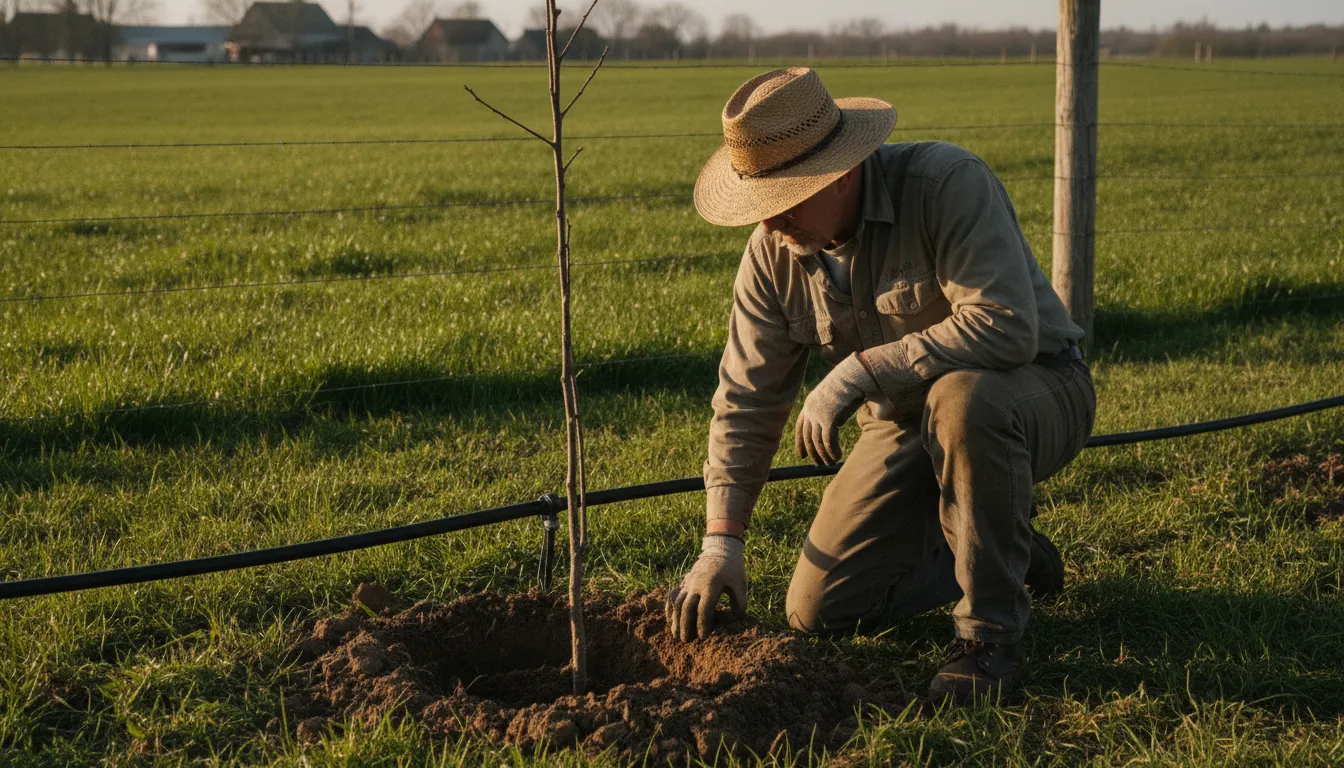
What should ranchers and orchard managers monitor after setup?
Trapping is only one part of field management. After setup, watch the areas around each trap and record what changes. Fresh activity, plant stress, irrigation problems, and access concerns can tell you where attention is needed next. For larger properties, a simple zone map keeps observations tied to a pasture, orchard row, shelterbelt, or irrigation run instead of leaving them as isolated notes.
- Fresh activity: Look for new soil disturbance, reopened areas, or other signs that activity has shifted within a zone. Do not assume a quiet spot needs no further observation.
- Trap condition: Check each trap for movement, soil, damage, or interference, and record its location and status. Follow the product instructions and your farm's safety procedures for every check.
- Root and tree stress: Inspect young trees, vines, and vulnerable plantings for changes in vigor. Gophers may feed on tree roots and bark below ground, and damage may not become evident until the tree shows signs of stress. UC IPM describes this underground tree damage and its potential effect on young and older plants.
- Irrigation: Compare expected and observed water distribution. Gophers can gnaw plastic irrigation lines, creating leaks that leave some areas overwatered and others without enough water.
- Livestock access: Check that traps and any disturbed soil remain outside livestock contact areas, and adjust your zone plan when animals or equipment move through the field.
Use a field log with the date, zone, trap location, fresh activity, plant condition, irrigation observations, and any access issue. This creates a useful record for deciding where to revisit and helps separate recurring trouble spots from one-time disturbances. It also makes handoffs easier when several people share monitoring duties.
For gopher control for farms, monitor both the trap and the surrounding production zone: fresh activity. Underground root or tree stress, irrigation performance, livestock access, and clear records all matter after setup.
When is mechanical trapping the right next step?
Mechanical trapping can fit a farm plan when the goal is targeted control in specific active areas, rather than treating an entire property without a clear reason. It works best as one part of an integrated pest management approach, alongside monitoring, habitat decisions, and other methods selected for the crop, soil, and operating conditions.
That targeted approach matters because pocket gophers are territorial. A burrow system usually contains one gopher, except during breeding or while females are raising young. Mapping fresh activity and concentrating work where damage is occurring can help a farm team use its time deliberately instead of placing traps at random. Review gopher traps and kits when you are ready to match equipment to the areas you plan to manage.
Where mechanical control may fit
Trapping may be worth considering around high-value plantings, along field edges, or in sections where gopher activity is recurring. It can also provide a non-chemical option within a broader plan. But a mechanical trap should not be presented as proof of organic certification or compliance with every production standard. Those decisions belong to the farm operator and the applicable certifier or regulator.
Construction and maintenance matter when equipment will be used repeatedly in outdoor conditions. Cinch describes its traps as handmade in Oregon from galvanized steel. That customer-provided product detail may be relevant for operators comparing equipment for ongoing field use. But it is not a promise of a particular catch rate or farm outcome.
Use the same standard you would apply to any farm input: define the problem. Identify where intervention is justified, and plan how the team will check and maintain the setup. If activity shifts, the trapping plan should shift with it. Mechanical control is most useful when it is deliberate, documented, and combined with the rest of the farm's pest-management decisions.
Mechanical trapping is the right next step when targeted control fits the farm's integrated plan, the active areas are identifiable, and the team can manage the equipment responsibly.
Frequently Asked Questions
How do farmers get rid of gophers?
Start by confirming fresh gopher activity, then locate an active tunnel and choose a control method that fits the crop, acreage, access, and schedule. Mechanical trapping is one research-based option. Oregon State University Extension recommends probing about six inches down near a fresh mound to find an active tunnel before setting a trap (Oregon State University Extension). On larger farms, keep a simple record of locations, trap checks, fresh mounds, and areas needing follow-up.
What is the most effective gopher control?
There is no single method that fits every farm. Effective planning usually starts with accurate identification and combines monitoring with methods suited to the site. Options may include habitat management, regulated toxicants or fumigation, and mechanical trapping. Consider crop sensitivity, livestock access, irrigation infrastructure, labor, and how consistently each method can be monitored. Avoid judging a method by a single result from another property, because soil, season, tunnel activity, and farm layout all affect field performance.
How do you set a gopher trap?
Find a fresh mound and probe beside it until you locate the main tunnel. Place the trap so it fits the tunnel rather than leaving a large gap, then secure and check it according to the trap instructions. Tunnel diameter can help guide trap selection. Cover or protect the opening as appropriate for the trap design, and mark the location so workers can find it during scheduled checks. Keep traps away from livestock and areas where unauthorized access is possible.
Should ranchers and orchard managers monitor gopher activity year-round?
Yes. Pocket gophers do not hibernate and can remain active throughout the year (University of Idaho Extension). Walk high-value orchard rows, pasture edges, irrigation lines, and recently disturbed areas regularly. In orchards, watch for tree stress because underground feeding damage may not be visible until a tree is already affected (UC Statewide Integrated Pest Management Program).
Build a farm gopher-control plan
Review Cinch gopher traps and kits for a setup that fits your active tunnels, property zones, and monitoring plan.