

Moles and gophers can leave a lawn or garden looking damaged before you ever see the animal responsible. The right response starts with identifying the pest, locating an active tunnel, and choosing a mechanical trap that fits instead of reaching for a broad chemical solution.
Shop mechanical mole and gopher traps in the Cinch Traps store.
Non toxic mole and gopher control uses direct mechanical capture rather than poison, gas bombs, or repellent chemicals. It is a practical approach when you want to address active tunnel activity while keeping the method focused on the pest and the trap placement.
Before selecting a trap, look at the evidence on the ground. Moles and gophers create different signs, use tunnels differently, and require different trap fits. Once you know which animal is present, the setup becomes much more straightforward.
What Does Non Toxic Mole and Gopher Control Mean?
Non toxic mole and gopher control means addressing the animal with a direct mechanical method rather than introducing poison, gas, or repellent chemicals into the control process. In practical terms, that usually means identifying the active tunnel, selecting a trap made for the animal and tunnel size, and placing it where the animal is moving. The goal is direct capture, not simply trying to make the property less appealing.
Shop mechanical mole and gopher traps when you are ready to match the trap to the pest and its tunnel.
That definition matters because "non toxic" does not mean every situation is automatically risk-free. A trap is still a physical device that should be handled, placed, and monitored according to its instructions. It also does not promise that every placement will work immediately. Correct identification, an active tunnel, a properly fitted trap, and regular observation all affect the outcome.
Mechanical capture versus repellents
A mechanical trap acts at the tunnel. A repellent takes a different approach by attempting to make an area unpleasant enough that the animal leaves or avoids it. Those methods should not be treated as interchangeable. UC Agriculture and Natural Resources reports that plants such as castor bean and garlic have not been proven effective in research trials for protecting plantings from moles. Voles, or gophers. It also reports that castor-oil repellents have shown some repellency for eastern U.S. moles, while effectiveness in California is unknown. Other repellents have not proven effective for protecting gardens or plantings from these pests.
Repellents can also be difficult to use as a damage-control strategy. They may need to be applied before damage occurs, and some products may not be labeled for edible plants. Those limitations do not make every repellent product identical. They do explain why direct capture is a clearer choice for readers who want to remove an active mole or gopher rather than redirect it.
Why the animal must be identified first
Moles and gophers live underground, but they are different animals with different feeding habits and tunnel patterns. UC Integrated Pest Management describes trapping as the most dependable method of mole control, but the trap still needs to correspond to the pest present. A mole's underground activity is not the same problem as a gopher's plant-root damage. Choosing a device before diagnosing the damage can lead to poor placement or an unsuitable fit.
Think of non toxic control as a method, not a guarantee. Use observation to find active movement and a correctly sized mechanical trap. Avoid assuming that any setup guarantees a result.
Non toxic mole and gopher control is direct mechanical capture without poison or repellent chemicals in the control method. The most practical next step is to identify the pest and active tunnel before choosing and setting a properly fitted trap.
How Can You Tell a Mole From a Gopher?
Start with the damage pattern, not the animal's name. Moles and pocket gophers both spend most of their time underground, but they create different signs and feed in different ways. Identifying the pest first helps you choose a trap that matches the tunnel rather than setting the wrong tool in the right-looking spot.
Mole mounds tend to have circular margins. Gopher mounds are more often crescent-shaped or horseshoe-shaped, with a plug pushed off to one side. That offset plug is a useful clue because it reflects how the gopher closes the tunnel opening. The University of California Integrated Pest Management notes this distinction in its guidance on mole and gopher identification.
- Mole signs: generally circular mounds and raised surface ridges from shallow tunnel activity.
- Gopher signs: crescent or horseshoe-shaped mounds, usually with an offset soil plug.
- Feeding damage: moles pursue grubs, insects, and earthworms, while gophers use their large incisors to gnaw plant taproots.
- Tunnel depth: gopher tunnels are commonly 6 to 12 inches below ground.
Look at the plants around the disturbance, too. If the main problem is raised soil and disrupted roots without clear chewing damage, a mole may be responsible. If plants are being pulled underground or their taproots show signs of gnawing, a gopher is more likely. These observations are not a substitute for checking the tunnel itself, but they can narrow the diagnosis before you set a trap.
For a closer visual comparison, use this guide to tell moles from gophers. Once you have a likely identification, inspect the tunnel opening and select a trap designed for that animal. A mole trap and a gopher trap are not interchangeable simply because both pests live below the surface. The most useful non toxic mole and gopher control plan begins with matching the trap to the species and the tunnel dimensions.
In short, circular mounds and insect-feeding activity point toward moles, while crescent or horseshoe mounds with an offset plug and gnawed plant roots point toward gophers. Confirm the signs before choosing a mechanical trap.
How Do You Find an Active Tunnel?
A trap works best when it is placed in a tunnel the animal is still using, not simply in the most obvious mound. Start by looking for several signs together: fresh soil, a raised path, and activity that returns after you disturb the area. Mounds and surface tunnels are recognized indicators of mole presence, but an individual sign can be old or inactive. Take a few minutes to map the pattern before opening the soil.
- Mark the newest signs. Walk the affected area and note mounds with loose, moist-looking soil and ridges that appear recently raised. Surface tunnels form when a mole pushes through the soil, leaving a visible ridge. Older soil may settle, dry, or become obscured by grass. If damage is concentrated along a fence, walkway, garden edge, or other consistent route, mark that route rather than choosing a mound at random.
- Check for renewed activity. Gently flatten a short section of a suspected ridge with your hand or shoe, or lightly press down a small part of the tunnel. Leave the rest undisturbed, then check it later. A raised section that is restored suggests recent use, but a quiet section does not prove the tunnel is abandoned. Moles remain active throughout the year, although visible surface activity can slow during extreme cold, heat, or drought. Activity is often greatest after rainfall or watering, so those conditions can make signs easier to evaluate. See the UC IPM guidance on mole activity for the source details.
- Follow the tunnel before clearing it. Trace the ridge to find a straight, usable section rather than placing a trap at the center of a mound. Permanent tunnels are usually about 2 inches in diameter and 8 to 12 inches below the surface. But these are approximate dimensions, not a template for every property or animal. Feeding tunnels near the surface may be shallower, and soil conditions can change their shape. Open only enough soil to identify the passage and keep the route recognizable.
- Confirm the animal before choosing equipment. A tunnel alone does not identify the pest. Mole mounds and gopher mounds have different typical patterns, and the right trap depends on which animal is present. If the signs point to a gopher, do not assume a mole tunnel measurement or trap will fit. Diagnosis should come before placement, especially in areas where both animals may occur.
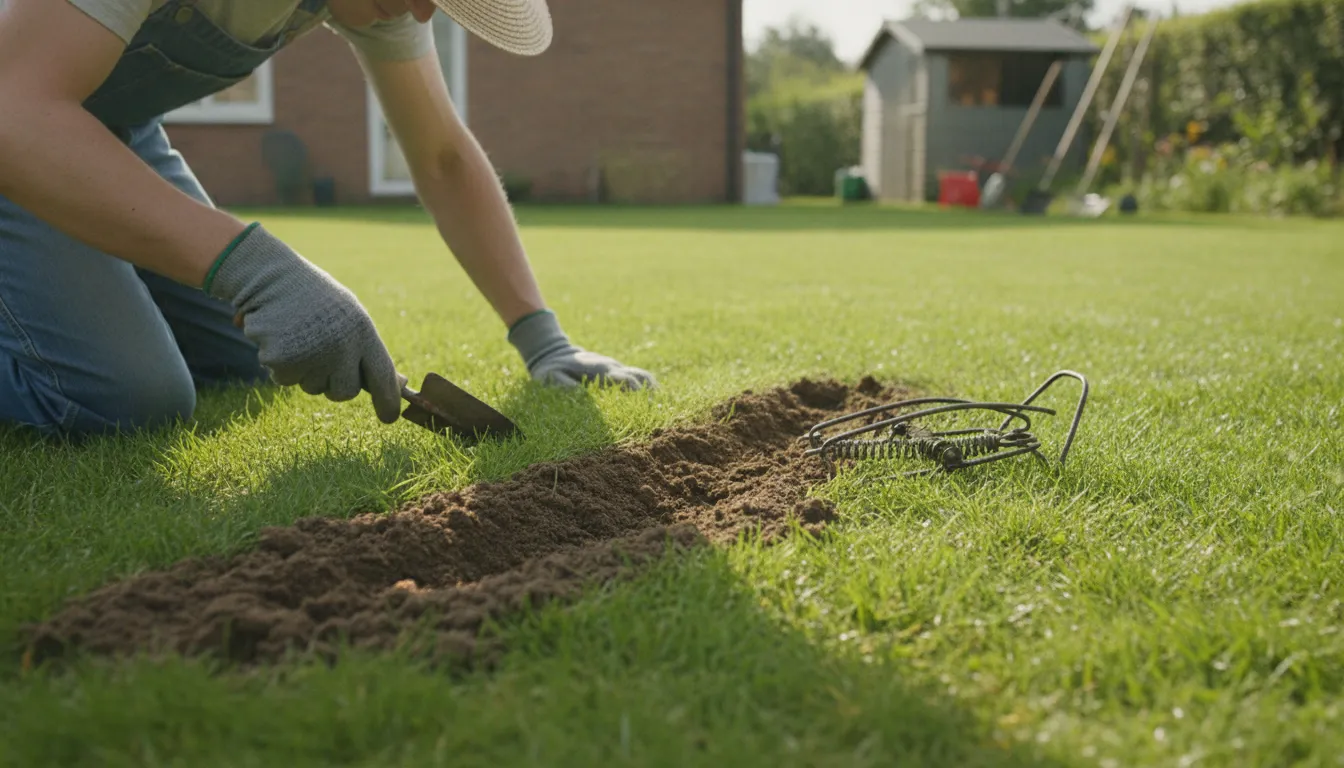
Use the clearest active section you can find, then preserve its direction and approximate size while preparing the placement area. Avoid treating every fresh mound as a separate animal or assuming that a quiet tunnel is permanently unused. Observation is useful because it turns a broad damage pattern into one specific location that can be checked and monitored.
Answer: Find an active tunnel by marking fresh mounds and raised ridges. Check for renewed movement after light disturbance or watering, then confirm whether the pest is a mole or gopher before selecting a usable section.
Which Trap Size Fits the Tunnel?
Trap selection starts with the tunnel, not a guess based on the animal's name. A trap should sit snugly in the passage so the mechanism is aligned with the route the animal is already using. Too much open space can make placement less precise, while forcing an oversized trap into a narrow tunnel can disturb the soil and change the tunnel's shape.
Cinch lists approximate size ranges for both mole and gopher traps. These ranges are a practical starting point, but they are not rigid measurements. Cinch traps are handmade, so individual dimensions may vary by up to one quarter inch. Measure the tunnel you have uncovered, then choose the closest size that fits without excessive room around the trap.
| Pest | Approximate sizes | How to use the range |
|---|---|---|
| Mole | 1.5, 2.25, or 3 inches | Match the trap to the tunnel opening and aim for a snug fit. |
| Gopher | 2.25, 3, or 3.5 inches | Choose the closest size for the active gopher tunnel without compressing the passage. |
Choose the pest-specific trap first
Moles and gophers use underground tunnels, but they are different animals with different tunnel patterns and trap requirements. If the evidence points to a mole, review the reusable mechanical mole trap sizes. If you are dealing with a gopher, compare the options for a mechanical gopher trap instead. Using the right trap family narrows the sizing decision before you make a final fit check.
Check the fit in the active tunnel
Expose only enough of the tunnel to assess its width and direction. The trap should align with the passage rather than sit at an angle or leave a large gap along the sides. Avoid widening the tunnel simply to accommodate a larger model. A close, natural fit is the goal, with the surrounding soil left as undisturbed as practical. Because handmade dimensions can vary, treat the listed sizes as approximate guidance and inspect the actual trap against the tunnel during setup.
Choose the mole or gopher trap family first, then select the approximate size that fits the active tunnel snugly. The listed sizes are useful ranges, not guarantees of an exact measurement, because handmade traps may vary by up to one quarter inch.
How Should You Set and Monitor a Mechanical Trap?
A mechanical trap works best when it meets the animal in an active runway rather than in a random hole or fresh mound. Start with the tunnel evidence you have already gathered, then work carefully enough to preserve the tunnel's direction and shape. The goal is a close fit that gives the animal a clear route through the trap without leaving a large gap around it.
- Choose an active section of runway. Look for a tunnel that has been used recently, based on fresh soil movement, a raised ridge, or a reopened passage. For moles, permanent tunnels are often about 2 inches wide and 8 to 12 inches below the surface, but the tunnel you find may vary. For gophers, tunnels are commonly 6 to 12 inches below ground. Match the trap to the animal and the tunnel, not simply to the size of the mound.
- Open only as much soil as necessary. Clear the runway enough to place the trap, while keeping the surrounding walls and alignment intact. Avoid collapsing the passage or widening it substantially. A snug fit helps prevent the animal from passing around the trap, while unnecessary disturbance can change the route you are trying to intercept.
- Position the trap in line with travel. Follow the product instructions for your specific trap. Keep the working parts centered in the runway and make sure the entrance and exit are not blocked by loose soil, roots, or stones. If the trap does not sit naturally in the tunnel, stop and reassess the size or location rather than forcing it into place.
- Secure and mark the set. Place the trap as directed, then restore the surrounding soil carefully. Use the supplied marker or another visible reminder where appropriate, especially if the trap is set in a lawn, garden, pasture, or work area. Keep people and animals away from the set according to the manufacturer's instructions.
- Check the set regularly. Inspect it on a consistent schedule and after conditions change, such as rain, watering, or soil disturbance. Follow the product directions for checking, resetting, handling, and maintenance. If the tunnel is repeatedly bypassed, recheck the diagnosis, alignment, fit, and activity rather than assuming the trap has failed.
Choose the right mechanical trap for your tunnel before you set it.
Good monitoring is part of the setup, not an afterthought. Note where the trap was placed and what you observe at each inspection. A disturbed runway, a collapsed opening, or a new mound nearby can tell you that the location needs another look. The best placement may require patience: preserve the route, make the fit snug, and use the manufacturer's instructions as the final authority for that model.
For practical, non toxic mole and gopher control, set a correctly sized mechanical trap in an active tunnel. Preserve its alignment, disturb as little surrounding soil as possible, and check the set according to the product instructions.
What Are the Limits of Repellents and Home Remedies?
Repellents and home remedies can sound appealing because they seem less involved than locating a tunnel and setting a trap. The limitation is that a familiar ingredient is not automatically a proven control method. For a practical, non-toxic approach, it helps to separate what has been tested from what is simply repeated as garden advice.
Research trials have not proven several commonly suggested plant remedies effective for protecting plantings from moles, voles, or gophers. That includes castor bean, garlic, and Euphorbia lathyrus. Castor-oil repellents have shown some repellency for eastern U.S. moles, but their effectiveness against moles in California is unknown. Results in one region should not be treated as a guarantee in another. See the University of California Agriculture and Natural Resources guidance for the evidence and limitations: research on mole, vole, and gopher control.
Timing creates another weakness. Repellents generally need to be applied before damage occurs, so they are better understood as a preventive attempt than a direct response to an active tunnel or mound. Some products may also not be labeled for use on edible plants. Always read the product label for the specific site, crop, application method, and restrictions. Do not assume that a product described as natural or non-toxic is suitable for every garden.
Direct mechanical capture addresses a different problem. Instead of trying to change how an animal responds to a smell or taste, a properly selected trap is placed in an active tunnel. That makes the process more observable: identify the animal, find current activity, choose the correct trap type and size, then monitor the setup. It still requires accurate identification and careful placement, and no method guarantees an immediate result. However, it avoids adding a repellent treatment to soil or plantings.
For this reason, direct capture is often the more straightforward choice when the goal is to respond to confirmed mole or gopher activity without poison or repellent chemicals. The method depends on matching the trap to the animal and its tunnel, not on hoping a broad home remedy will work everywhere.
Repellents and home remedies have limited, region-dependent evidence and may need advance application. A correctly identified pest and a properly placed mechanical trap offer a more direct chemical-free response to active tunnel activity.
Why Choose Cinch Traps for a Chemical-Free Approach?
For homeowners who want non toxic mole and gopher control. A mechanical trap offers a direct way to address the animal in its active tunnel without adding poison or repellent chemicals to the control method. The approach still depends on correct identification, tunnel placement, and choosing a trap that fits. No trap can compensate for setting the wrong size in an inactive tunnel.
Cinch Traps has made mechanical traps from galvanized steel in Oregon since 1909. That long operating history is relevant if you want equipment built around a focused job rather than a general-purpose product. You can learn about Cinch Traps' trapping experience, manufacturing background, and the company's continued focus on mole and gopher control.
Choose the trap for the animal and tunnel
Cinch lists approximate mole trap sizes of 1.5, 2.25, and 3 inches. Approximate gopher sizes are 2.25, 3, and 3.5 inches. The correct choice should be based on the animal you have identified and the tunnel dimensions, not simply on the size of the damage above ground. Traps should fit snugly, while handmade dimensions may vary by up to one quarter inch. Measure and inspect the tunnel before choosing whenever possible.
If you are preparing for more than one setting, mole kits include two traps and flags. Deluxe kits add gloves, a tunnel-clearing tool, maintenance spray, and instructional materials. Those components can make the setup process more organized, particularly when you are working through several active locations. Review the current options at the Cinch Traps store and select the mole or gopher configuration that matches your findings.
What the reported validation means
Cinch reports that its traps have received number-one rankings in studies by five universities. The company also reports that the USDA National Wildlife Research Center described the CINCH Trap as the "all-around best performer." These are customer-reported validation statements. They are not a guarantee that every site, soil type, or setup will produce the same result.
Use those statements as part of your product research, then apply the practical fundamentals: identify the pest. Locate an active tunnel, choose a snug fit, and monitor the setting.
Cinch Traps combines Oregon-made galvanized-steel construction, purpose-specific mole and gopher sizes, and kits for organized setup. It is a practical mechanical option when the trap is matched to the animal and active tunnel.
Frequently Asked Questions
What is the most practical way to control moles and gophers without poison?
Start by identifying the animal, locating an active tunnel, and using a mechanical trap sized for that tunnel. Direct capture avoids adding poison or repellent chemicals to the control method. For moles, trapping is described by UC IPM as the most dependable control method: UC IPM guidance.
How can I tell whether I have a mole or a gopher?
Look at both the mound and the damage. Mole mounds tend to be circular, while gopher mounds are often crescent or horseshoe shaped with an offset plug. Moles primarily pursue grubs and earthworms, while gophers use their incisors to gnaw plant roots. Those differences matter because the animals use different tunnels and require different traps.
Where should I place a mechanical trap?
Place it in a tunnel that shows current activity rather than in an old, collapsed passage. Fresh mounds, raised surface ridges, and recently disturbed soil can help you choose a location. Permanent mole tunnels are usually about 2 inches wide and 8 to 12 inches below the surface, while gopher tunnels are commonly 6 to 12 inches deep. Sources: UC IPM and UC ANR.
How do I choose the right trap size?
Measure the tunnel and choose a trap that fits snugly without forcing it into place. Cinch mole sizes are approximately 1.5, 2.25, and 3 inches; gopher sizes are approximately 2.25, 3, and 3.5 inches. Handmade dimensions can vary, so compare the trap with the actual tunnel and follow the product instructions before setting it.
Where can I find the appropriate trap or kit?
Use the Cinch Traps store to compare mechanical mole and gopher traps, sizes, and available kits. Choose the product category that matches the animal you identified, then review the included instructions and equipment before setting the trap.
Choose a Non-Toxic Trap for Your Yard
Once you have identified the animal and found a tunnel it is actively using, the next step is choosing equipment that matches the job. A properly sized mechanical trap gives you a direct, practical control method without adding poison or repellent chemicals to the tunnel. Follow the product instructions, place the trap carefully, and monitor the set rather than guessing whether a treatment worked.
Shop Cinch mole and gopher traps and kits to compare the available options and choose the size that matches your tunnel.
Cinch Traps offers separate mole and gopher options because the animals use different tunnel systems and require different trap dimensions. If you are still unsure which product fits your situation, return to the identification steps above before ordering. The goal is a focused setup, not a shelf full of products that do not match the animal or the tunnel.
For non toxic mole and gopher control, start with correct identification, an active tunnel, and a mechanical trap sized to fit it.