

Arizona gopher control starts with the mound, not a surface product. Pocket gophers live mostly in soil and feed on roots underground. Confirm the animal and locate the active tunnel before setting a trap.
Find the Right Trap for your confirmed tunnel before you start digging.
Effective Arizona gopher control begins with identifying pocket-gopher signs, probing for a live tunnel, and using a properly placed mechanical trap. University of Arizona guidance describes trapping as an excellent method and advises against toxicants in residential areas. Read the extension guidance.
Once you know what the mound and tunnel pattern are telling you. The next decision is straightforward: determine whether the activity is current and where the main passage runs.
What Does Arizona Gopher Control Need to Address?
Effective control starts with identifying the animal behind the damage. Pocket gophers spend most of their lives in soil. So the clearest clues are usually underground feeding damage. disturbed soil, and plants that decline without an obvious above-ground pest. They feed on roots they encounter below ground and may pull plants into a burrow from underneath. That can leave a homeowner looking at a wilted plant, damaged roots, or a disrupted irrigation line and assuming the cause without confirming it.
Arizona has three pocket gopher species. The University of Arizona Cooperative Extension describes adults as 5 to 7 inches long without the tail, with a large head, powerful front legs, and long claws. Those traits fit an animal built for digging, not one that regularly travels across the open yard. The same guidance notes that pocket gophers spend little time above ground. Which is why waiting to spot the animal itself is an unreliable way to diagnose the problem. See how the Cinch method works before choosing a control method.
Look for a pattern, not one isolated symptom
A single mound or struggling plant does not prove that a pocket gopher is active. Look for several clues in the same area: soil disturbance connected to a buried tunnel, repeated plant damage, or fresh disruption near roots and irrigation. Pocket gophers are plant feeders, and surface feeding may occur about a body length from a burrow opening. So the visible damage may not sit directly over the tunnel.
Arizona pocket gophers are active year-round and may use burrow systems covering 200 to 2,000 square feet. Feeding burrows are typically 6 to 12 inches deep. That behavior explains why a yard can show recurring damage even when no gopher is visible. It also means the next step is not to scatter a product across the surface. Confirm the active tunnel first, then place a mechanical trap where the animal naturally travels.
Arizona gopher control should address confirmed underground activity, root damage, and the tunnel system causing it. Rather than treating every mound or declining plant as proof of a gopher.
How Can You Confirm an Active Gopher Tunnel?
A mound tells you that soil moved, not necessarily that a gopher is still using the tunnel. Before placing equipment, look for the freshest disturbance and confirm the passage below it. Pocket gophers remain active year-round, and their burrow systems can cover 200 to 2,000 square feet, so one abandoned mound does not represent the whole system. The University of Arizona notes that feeding burrows are commonly 6 to 12 inches below the surface.
- Start with the newest-looking mound. Walk the affected area and compare several mounds. Choose one with loose, freshly disturbed soil and a clear plug or opening. Older soil may be dry, crusted, settled, or overgrown. Do not assume every mound is active, especially after irrigation, landscaping, or weather has disturbed the ground.
- Probe beside the mound. Use a sturdy probe, rod, or long screwdriver to test the soil around the mound rather than pushing straight down through the pile. The goal is to locate the main tunnel, where the probe drops into a softer void. Arizona Cooperative Extension recommends using a probe to locate the burrow. Work carefully around buried irrigation lines and utility areas.
- Expose enough tunnel to verify the route. Once you feel the void, remove soil carefully until you can see the tunnel and determine its direction. The California Department of Pesticide Regulation describes a similar process: find a fresh mound, probe for the tunnel, uncover it, and then secure and cover the trap setup. This confirmation step helps prevent placing a trap in loose fill or a side pocket.
- Set equipment in the travel path and monitor it. If the tunnel is continuous, position one trap toward each direction of travel, then cover the opening so light and airflow do not change the passage. Mark the location and check the trap the following day. If there is no activity. Check again within one to two days and move the setup to a newly confirmed tunnel rather than repeatedly resetting the same inactive spot. For more detail, see the broader gopher tunnel guide.
The reliable way to confirm an active gopher tunnel is to start with a fresh mound. Probe for a real tunnel, uncover the travel route, and monitor the setup instead of treating every mound as active.
Why Is Trapping a Practical Arizona Control Method?
Gophers spend most of their time below ground, so the most useful control method works where the animal actually travels. University of Arizona Cooperative Extension rates trapping as an excellent method for gopher control. A properly placed mechanical trap can address the active animal in its tunnel. It is not a guarantee that every placement succeeds on the first attempt or that a yard will stay gopher-free.
Other methods have important limits in a residential yard. The same Arizona guidance says flooding is rarely effective for residential areas. Water may not reach the full burrow system, and forcing large amounts of water into a yard can create its own problems. The guidance also does not recommend toxicants for residential areas because of secondary poisoning concerns. For homeowners who want to avoid poison around a lived-in yard, mechanical trapping offers a more controlled approach.
What about repellents and sonic devices?
Repellents and sonic devices are often marketed as ways to make gophers leave without digging or setting traps. The cited University of Arizona material gives a more cautious answer: it lists repellents as ineffective and says sonic devices are not effective. Property owners may describe products differently. These options should not be treated as dependable substitutes for finding an active tunnel and setting a trap.
A practical plan starts with confirmation, then uses a mechanical trap in the tunnel, followed by regular checks and relocation if there is no activity. For more detail on why the method works where gophers travel, read about mechanical gopher trapping.
In Arizona yards, trapping is a practical, controlled method because it targets gophers in active tunnels. While flooding is rarely effective residentially and toxicants, repellents, and sonic devices have specific limits in the cited extension guidance.
How Do You Set a Gopher Trap in an Arizona Yard?
Once you have confirmed a fresh mound and located the active tunnel, work carefully and keep the setup focused on that underground travel route. The University of Arizona recommends probing for the main tunnel. The California Department of Pesticide Regulation outlines a similar process of finding a fresh mound, uncovering the tunnel, securing the trap, and checking it afterward.
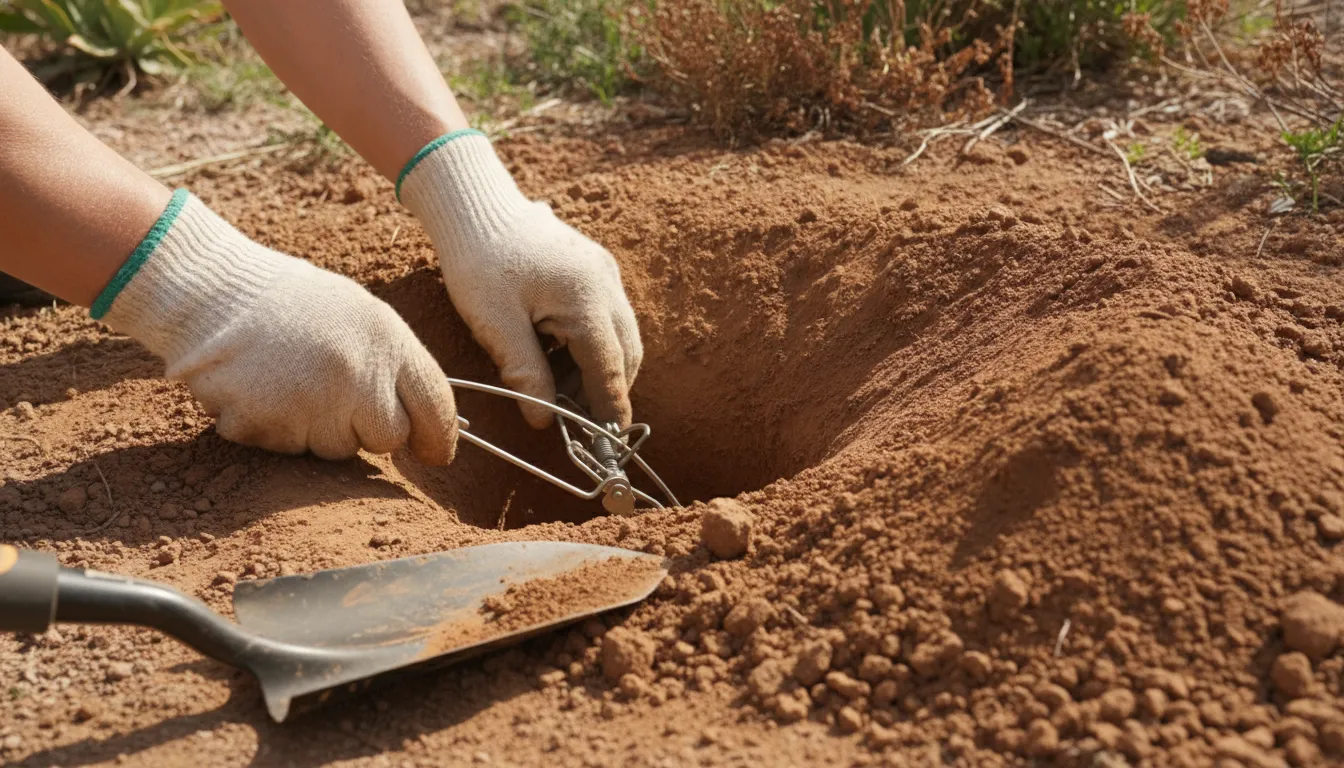
- Find fresh activity. Start with a recently formed mound rather than an old, weathered pile. Push a probe into the soil around the mound until you identify the main tunnel. A fresh, active route gives the trap a better chance of intercepting the gopher. If the soil collapses into an old or blocked passage, move to another fresh mound.
- Open the tunnel. Use a shovel or hand tool to dig down at the probe location and expose enough of the tunnel for the trap to sit correctly. Avoid enlarging the opening more than necessary. The California DPR process specifically includes digging an opening and uncovering the tunnel before placing the trap: see the agency's trapping steps.
- Place traps in both directions. Set one trap facing each way along the main tunnel. This covers movement from either side instead of assuming which direction the gopher will approach. Follow the trap manufacturer's instructions for arming and placement, and do not bait the trap unless its instructions specifically require it. Arizona Extension guidance says baiting traps is not recommended.
- Secure, cover, and mark the setup. Tie or otherwise secure the traps so they stay in position. Cover the opening to limit airflow and restore a dark, tunnel-like environment. Mark the location clearly with a stake or other visible marker so you can find it again and keep children, pets, and equipment away from the trap.
- Check the traps on schedule. Inspect them the following day, then continue checking every one to two days while the setup remains active. Use care when approaching and handling any trap. If there is no activity, reset the trap in a different location rather than leaving it indefinitely in an unproductive tunnel.
For a more detailed equipment-and-placement walkthrough, use the complete gopher tunnel trap guide. The goal is not to disturb every mound in the yard. It is to identify a current travel path, make a controlled opening, and maintain a safe, visible follow-up routine.
In an Arizona yard, set a gopher trap at a fresh, probed tunnel, place traps in both directions. Secure and cover them, mark the location, and check every one to two days. Reset elsewhere when the tunnel shows no activity.
Related products

Which Cinch Trap or Kit Fits the Tunnel?
Trap selection starts with the tunnel, not a guess based on the size of the mound. After you locate an active passage, use a probe or measuring tool to estimate the tunnel diameter. Measure the open travel route where the trap will sit, since a filled, collapsed, or unusually wide section can give you a misleading reading.
The customer knowledge base lists three gopher-trap size ranges. Treat these as starting guidance only, and confirm the current size details, included equipment, and setup instructions on the linked product page before ordering.
| Observed tunnel condition. | Starting equipment choice. | What to confirm. |
|---|---|---|
| About 2.25 inches in diameter. | Small Cinch gopher trap. | Current dimensions and fit on the product page. |
| About 3 inches in diameter. | Medium Cinch gopher trap. | Current dimensions and fit on the product page. |
| About 3.5 inches in diameter. | Large Cinch gopher trap. | Current dimensions and fit on the product page. |
| Several active openings or a larger trapping project. | Cinch Gopher Kit. | Current trap count and kit contents. |
If you are handling one confirmed tunnel, start with the trap that matches its measured diameter. If you need to work several openings, a kit may be more practical, but the number and type of included tools can change. Check the current Cinch gopher trap and store pages for the details that apply when you are ready to choose.
Shop Gopher Traps after you measure the active tunnel and confirm the current product details.
Match the trap to the measured active tunnel, then confirm current product dimensions and kit contents on the linked Cinch page before purchasing.
How Can You Protect Gardens and Irrigation After Trapping?
Trapping addresses the gopher using an active tunnel, but it is not a promise that another gopher will never move into the yard. After removing a trap, walk the area and look for fresh mounds, settling soil, wilted plants, or irrigation leaks. Pocket gophers feed below ground and may chew poly water lines or drip irrigation, so damage can appear before the plant above it fails.
Protect vulnerable planting areas
Exclusion is useful where it fits the garden design. The University of Arizona guidance describes hardware cloth installed about two feet underground and one foot above ground. with the lower edge extending six inches outward from the planting area. This approach can help shield a contained bed or small root zone, although it is not a practical barrier for every landscape. Close gaps around gates, corners, and utility penetrations, since an opening can undermine an otherwise continuous barrier.
Protection also includes reducing the conditions that make damage easy to miss. Inspect the base of shrubs and young trees, check root crops and other plants growing over known tunnel lines, and keep weeds under control. Arizona guidance lists destroying burrows, removing food sources where appropriate, and thoughtful plant selection as cultural controls. These steps support trapping, but they do not replace checking for new activity.
Check irrigation before repairing tunnels
Run each nearby drip zone or irrigation line and watch for wet spots, pressure changes, broken emitters, or water flowing into a void. Repair damaged poly tubing before collapsing or filling a tunnel, then test the zone again. Mark buried lines before digging so garden repairs do not create a second problem.
Once you have confirmed that a tunnel is abandoned, restore the soil and monitor the area rather than assuming the work is permanent. A new mound or renewed plant damage means the follow-up plan needs another inspection and, if necessary, a trap set in fresh activity.
Protect gardens after trapping by combining practical exclusion, irrigation checks, cultural cleanup, and continued monitoring. These measures reduce opportunities for damage, but regular inspections remain part of responsible Arizona gopher control.
How Can You Build a Practical Arizona Gopher Control Plan?
Gopher control works better as a repeatable inspection routine than as a one-time response to a mound. Pocket gophers remain active year-round and can work at any hour, so an Arizona yard may show new activity in any season. Once you identify a fresh mound or another sign, inspect the nearby soil for an active tunnel rather than setting a trap at random.
After placing a trap in the confirmed tunnel, check it within 1 to 2 days. The next step depends on what you find:
- Trap activity: Remove the trap carefully, inspect the area for additional fresh signs, and continue checking nearby tunnels.
- No activity: Reset the trap in a different section of the active tunnel system. A quiet location may not be the route the gopher is currently using.
- New mound elsewhere: Treat it as a new inspection point. Probe for a connected active tunnel before resetting equipment.
Keep the routine focused on evidence. Walk garden beds, lawn edges, planting areas, and irrigation runs when you are already doing regular yard work. Look for fresh soil, raised runs, wilting plants, or damage below ground. Once an area is no longer producing new signs, collapse abandoned tunnels and address vulnerable plant or irrigation areas as appropriate. If activity returns, begin the inspection and trap-check cycle again.
This regional guidance is for Arizona homeowners managing pocket gopher signs on their own property. It does not represent a local pest-control service or claim that every yard has the same conditions. For product selection, match the trap to the confirmed tunnel and use the manufacturer's instructions.
A practical Arizona gopher control plan is a year-round loop: inspect fresh signs, confirm the active tunnel. Check traps every 1 to 2 days, reset when needed, and keep monitoring for new activity.
Frequently Asked Questions
What is the most effective gopher control?
For a home garden, targeted trapping is a practical first choice when you confirm an active tunnel. Use a probe to find the main tunnel, place traps in the direction of travel, cover the opening, and check them regularly. The University of Arizona rates trapping highly and does not recommend toxicants for residential areas: University of Arizona guidance.
How do farmers get rid of gophers?
Farmers and homeowners use the same basic process: identify fresh activity, locate the active tunnel, set a mechanical trap, and monitor the area. Larger properties may require a repeatable inspection and reset routine because pocket gophers remain active year-round. Protect vulnerable plants and irrigation lines while you work through the active tunnel network.
What smell do gophers hate the most?
There is no single smell that reliably solves a gopher problem. Odor-based repellents may be temporary or inconsistent, especially when an animal is already using an established tunnel. Focus first on confirming activity and trapping the animal in the tunnel. Flooding is also rarely effective in residential areas, according to the University of Arizona.
Do coffee grounds keep gophers away?
Coffee grounds are a common home remedy, but they should not replace a confirmed control method. They may add organic material to soil, yet there is no reliable basis for treating them as a dependable gopher barrier. If you see fresh mounds, probe for the active tunnel and use a properly placed mechanical trap instead.
For Arizona gopher control questions, start with confirmed tunnel activity and a monitored mechanical trapping plan rather than an unproven scent or household remedy.
Ready to match your confirmed tunnel with the right equipment? Shop Cinch traps and kits for current product details.
Article structured data is generated by the scrub step.