Rounded mounds of dirt and raised ridges in your lawn are clear signs that moles are digging through your yard. These subterranean pests search for earthworms in moist soil, but their tunnels quickly ruin beautiful turf and expose plant roots to dry air. Finding a reliable method for Oregon mole control is the only way to save your lawn and garden from serious, ongoing damage.
For effective oregon mole control, landowners must identify the pest species and place mechanical traps inside active runway tunnels. The Townsend’s mole is the largest species in the state and causes the most severe damage to lawns and pastures west of the Cascades. You can tell moles apart from pocket gophers because moles create rounded soil mounds and raised surface ridges, while gophers build crescent-shaped mounds. Excavating the soil and setting durable steel traps in active main runs is the most reliable, non-toxic way to stop tunneling and prevent plant root damage. Trapping provides a quick, humane solution without using dangerous chemical baits.
Before you can place your traps, you need to understand which underground digger is causing the problems on your property. Knowing the specific animal helps you choose the best tools to stop them. Let us look at the Mole Species You’ll Find in Oregon to help you spot the culprit.
Mole Species You’ll Find in Oregon
Oregon properties host unique underground pests that can quickly ruin lawns, gardens, and pastures. Knowing which species of mole you are dealing with is the first step in reclaiming your yard. In Oregon, three main mole species can build extensive tunnel systems, while one smaller relative remains mostly harmless.
Townsend’s Mole
The Townsend’s mole is the largest mole species in Oregon and causes the most significant damage to lawns, gardens, and croplands. These dark, velvety pests grow to a length of six to nine inches. They excel at digging, pushing up large, heavy mounds of dirt that interfere with lawn mowing and ruin turfgrass. Because of their size, they move large amounts of soil and can quickly disrupt home gardens and agricultural fields alike.
Coast Mole
The Coast mole is another common species that shares much of the same habitat range in Oregon. This species is roughly half the size of the Townsend’s mole but behaves in a similar way. They dig similar systems of tunnels and leave frustrating mounds of dirt across your yard. If you live in western Oregon, it is highly likely that both Coast moles and Townsend’s moles are active beneath your lawn.
Broad-Footed Mole
The Broad-footed mole is found throughout much of Oregon, particularly in the Klamath Basin. These moles prefer areas that are not extremely dry, making the moist regions of south-central Oregon an ideal home. Like their northern relatives, they dig tunnels that can damage plant roots, though they are less common in the northernmost parts of the state.
Shrew-Mole
The Shrew-mole is also present in the coastal lowlands of Oregon, but it is not considered a pest for gardeners or farmers. This tiny animal is much smaller than other moles and does not build large underground runways. Because they do not destroy plant roots or leave massive dirt mounds, they are harmless to home landscapes.
Ideal Soil Conditions
All of these species thrive in the wet, fertile soils west of the Cascades. These rich soils support huge numbers of earthworms and grubs, which make up the main diet of these insect-eating pests. When you notice fresh mounds of dirt, checking for signs of mole activity can help you plan your next step for effective oregon mole control.
How to Identify Mole Activity on Your Oregon Property
Spotting underground pests on your land can be tricky. In the Willamette Valley especially, homeowners often encounter both moles and gophers, and telling them apart is the first step toward reclaiming your yard. You can find key signs of mole activity by looking closely at the soil surface.
Recognizing Mounds and Ridges
The shape of the dirt piles on your lawn is a clear clue. Oregon State University Extension experts point out that gophers build mounds shaped like a crescent or horseshoe. In contrast, moles produce rounded, volcano-shaped mounds. Moles also dig close to the surface, leaving long, raised ridges of soil across your turf as they hunt for worms.
How Underground Tunnels Harm Your Plants
Mole tunnels can cause serious damage to your garden and lawn. These underground paths do not just look bad; they can harm your plants when runways create paths around roots. In western Oregon yards, Townsend’s moles can also expose shallow-rooted shrubs and plants to drying and insect pests. Soil mounds also frustrate homeowners and interfere with mowing by clogging or damaging blades.
Oregon’s Climate and Seasonal Mole Activity
Oregon’s distinct climate plays a direct role in underground pest activity. Moles thrive in the moist, fertile soils found west of the Cascades in Oregon and Washington, where damp earth supports a large population of earthworms and larvae (Oregon State University Extension). In regions like the coastal lowlands and the Willamette Valley, soil moisture remains high for most of the year. This stable moisture allows moles to find food easily and tunnel near the surface. In contrast, the Klamath Basin in south-central Oregon has drier soil, which changes how moles behave as the seasons change.
When Peak Tunneling Occurs
While moles are active year-round in Oregon’s mild climate, their surface tunneling peaks during the wet spring and fall seasons. Mole tunneling activity is generally more prevalent in moist soils where earthworms and insect larvae are abundant (Oregon State University Extension). When rain softens the ground, earthworms migrate close to the surface. Moles follow their food source upward, creating visible ridges and fresh dirt mounds in lawns and fields. Learning the timing of these cycles helps property owners plan the best time to trap moles before lawns sustain heavy damage.
How Dry and Cold Seasons Shift Activity
During the dry summer months and cold winter periods, moles do not disappear. Instead, they shift their habits. When the topsoil dries out in July and August, or freezes during cold winter snaps, earthworms move deeper into the earth. Moles use their sensitive snout and tail as an early warning system to find food and detect threats in these deep zones (Oregon State University Extension). They dig deep runways down where the soil remains warm and damp. Because these tunnels are far below the grass roots, homeowners see fewer new mounds on the surface, even though the pests are still active below.
Step-by-Step Guide to Trapping Moles in Oregon
Trapping is the most reliable way to handle mole pests on your property. To get rid of these underground diggers, you must know how they move and behave. Effective setting mole traps in main runways requires a clear, systematic approach. Following a proven sequence will save you time and protect your lawn from further damage.
Find and Test the Tunnel System
First, you must locate the paths the moles use to travel. Look for raised ridges and fresh mounds of dirt in your yard. Once you find a potential path, you need to verify that a mole is currently using it. You can do this by identifying active mole tunnels through a simple test. Gently tamp down a small section of the raised ridge and wait twenty-four hours. If the mole has pushed the soil back up, you have found an active runway that is perfect for a trap.
Expose the Run and Set Your Trap
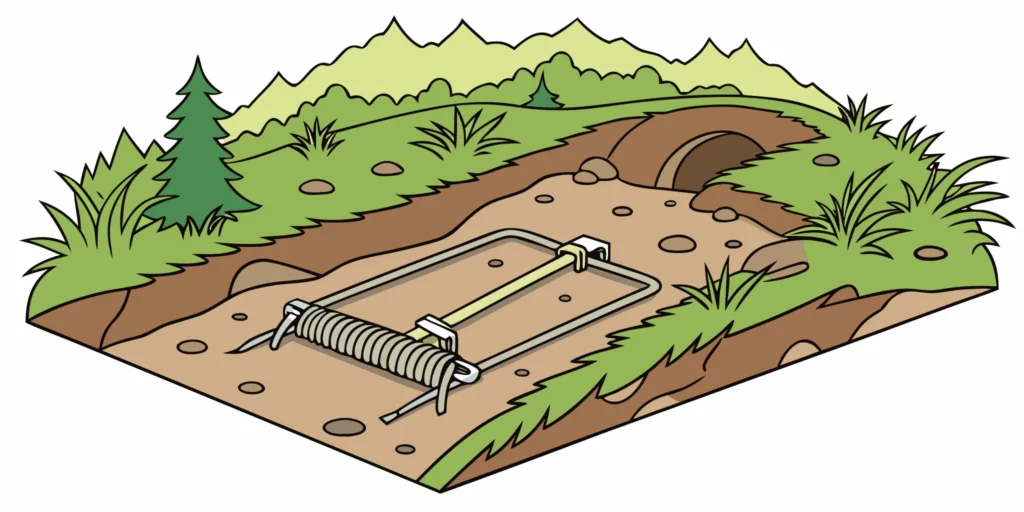
Next, you must prepare the tunnel for the trap. Use a trowel to dig down and expose the run, which is usually six to eight inches deep. Clear away any loose dirt from the tunnel floor so the path is open. The mole has broad front feet with outwardly turned palms and strong nails that are highly adapted for digging through soil. Because of this anatomy, the mole will quickly detect and push through any loose soil blockages in its path. Set a specialized Cinch trap that matches the width of the active tunnel. Slide the trap jaws directly into the open run, ensuring a snug fit against the tunnel sides.
- Locate active runways: Find fresh dirt mounds or raised ridges where moles travel.
- Tamp and test: Flatten a short section of the tunnel. Check the next day to see if it is pushed up.
- Dig to open the run: Use a garden trowel to dig six to eight inches deep to reach the main tunnel.
- Set the trap: Position a properly sized Cinch trap with the jaws aligned in the center of the run.
- Block out all light: Cover the open hole with an empty bucket or board to keep the tunnel dark.
- Check daily: Inspect your trap each morning. Move it to a new active spot if you do not catch the mole within forty-eight hours.
Keep the Tunnel Dark
Moles are highly sensitive to changes in their environment. They have tiny eyes and no external ears, relying on their sensitive snouts and tails to navigate in total darkness. If light leaks into the open excavation, the mole will sense the change, stop, and dig a new path around your trap. To prevent this, always place a bucket, tub, or heavy board over your digging site to block out all light. Pack some loose soil around the edges of your cover to seal any cracks. If you do not catch the mole within forty-eight hours, relocate your gear to another active tunnel.
Why Cinch Traps Are the Best Choice for Oregon Homeowners
When you need to stop yard damage, choosing the best tool is key to success. Oregon lawns and gardens face unique soil and climate conditions. Because our wet weather keeps soil soft, pests can dig and multiply fast. Homeowners must choose a solution that is safe, cheap, and proven to work.
To find the right method for choosing the best mole trap, you can compare traps to poisons, baits, or professional services. Some methods cost too much, while others fail to catch pests or put pets at risk. The table below shows how these choices stack up for homeowners in the Pacific Northwest.
| Method | Cost | Effectiveness | Oregon-Made | Safety |
|---|---|---|---|---|
| Cinch Traps | $24.99 per trap | Excellent | Yes | High (with covers) |
| Poison & Baits | $15 – $40 (reoccurring) | Poor | No | Low (risks pets) |
| Other Trap Brands | $15 – $30 | Medium | No | Medium |
| Exterminator Service | $150 – $400+ | High | No | High |
Proven by Local Universities
You do not have to guess if a trap will work. Local school studies show which tools get the best results. Our heavy metal traps are ranked number one for pest control by Oregon State University and four other major universities. In these tests, our tools beat out other methods because they are built to fit the tunnel shape perfectly and trigger fast.
The National Wildlife Standard
Federal wildlife experts also trust this design. The USDA National Wildlife Research Center named our trap the all-around best performer. Our traps have a quick-kill jaw that ends pest problems fast and humanely. Each trap costs $24.99 and is backed by a lifetime warranty, which means you only buy it once to protect your lawn for years.
Made in Oregon Since 1909
Our tools are built close to home. We have manufactured our traps by hand in Beaverton, Oregon since 1909. For 116 years, we have sourced local parts to build high-quality gear. Every order ships from our local shop with flat rate shipping, so you get your tools fast and can start trapping right away.
Oregon homeowners dealing with Townsend’s or Coast moles find the Deluxe Mole Kit particularly effective, as it includes the tunnel prep tool needed for the loose, moist soils common west of the Cascades.
Oregon Mole Control Regulations and Safety Tips
When you deal with lawn damage, you must know the local laws before you act. In Oregon, moles are classified as pests. This means you do not need a special permit to trap or remove them from your own land. Still, some local cities or counties can have their own rules on pest control. It is always wise to check with local offices first. The Oregon State University Extension Service provides research-based information to help people find and manage these yard pests safely. Understanding local oregon mole control rules is the first step to a clear yard.
Pet Safety and Non-Toxic Trapping
Many homeowners worry about their dogs and cats when they set traps. Trapping is the best way to stop moles because it does not use toxic chemicals. To keep your pets safe, you should always place a heavy cover over the trap site. A simple plastic bucket, a wood milk crate, or a wire screen works well. This cover keeps curious pets and local wildlife from touching the device. It also blocks out light, which makes the tunnel feel safer to the mole.
The Danger of Rodent Poisons
Some people try to use chemical baits to solve their yard problems. However, moles are not rodents. They belong to the order Insectivora, which means they are insect eaters that feed on earthworms and soil bugs. Because they do not eat plants or seeds, most standard rodent poisons do not work on them. If you use chemical baits, you are wasting time and putting other animals at risk.
Protecting Local Owls and Hawks
Choosing a quick-kill trap is a great way to protect local birds of prey. When a mole eats chemical bait, it does not die right away. A weak, poisoned mole is easy prey for owls, hawks, and foxes. If these predators eat the poisoned prey, they can get sick or die from secondary poisoning. Trapping has no chemical side effects. It keeps the local food chain safe while solving your lawn issues.
Eco-Friendly Lawn Care
Trapping fits perfectly into an Integrated Pest Management plan. It is clean, safe for organic farms, and keeps harmful chemicals out of the soil west of the Cascades. By choosing a mechanical solution, you protect the health of your soil, your pets, and the local wildlife. You get a clear lawn without the risks of chemical sprays or baits.
Frequently Asked Questions
What is the most effective method for Oregon mole control?
According to Oregon State University Extension, trapping is the most effective way to manage mole damage. Traps physically catch the pest in active tunnels, which stops them from digging more mounds. This direct approach works much better than home remedies, baits, or chemical repellents that rarely provide lasting results.
Is zinc phosphide used for mole control in Oregon?
Yes, zinc phosphide is a registered pesticide for mole control in Oregon. However, Northwest Center for Pesticide Free Ecology reports that trapping is a safer, non-toxic choice for home lawns. Zinc phosphide baits can pose serious risks to pets and wildlife if they dig up or eat the treated bait underground.
When is the best time for mole control on Oregon properties?
The best time to trap moles is during the spring and fall when the soil is damp and earthworms are active near the surface. Moles dig most of their shallow tunnels during these wet seasons west of the Cascades. Active digging makes it much easier to find their main runways and set your traps.
Are moles and gophers controlled differently in Oregon?
Yes, they need different trap styles and placements because of their habits. As Oregon State University Extension explains, moles eat insects and earthworms while pocket gophers eat plant roots. Gophers build crescent-shaped soil mounds, whereas moles build round, volcanic-shaped mounds. Because their food and tunnels differ, you must target them with traps built for each specific pest.
Ready to Get Started with Oregon Mole Control?
Ignoring active mole mounds on your lawn will quickly lead to deeper tunnel systems and ruined grass. Taking action now prevents serious damage to your garden roots and keeps your Oregon soil stable and safe before the next rainy season begins. Do not let these underground pests destroy your beautiful yard. You can stop the frustration of daily lawn damage today by choosing a fast, clean, and reliable trapping solution that gets the job done right the first time. We handmade every trap here in Oregon with high quality steel to ensure it stands up to heavy soil.
Ready to get started? Shop Cinch Traps for Oregon mole control to protect your yard, get flat rate shipping, and restore your property today.