

If you are looking for the best way to get rid of moles, start with the tunnel rather than a random remedy. Confirm that the activity is fresh, make sure you are dealing with a mole instead of a gopher or vole, and place a properly sized mechanical trap in the animal's active runway. That location-first approach gives you a clear next step without disturbing every part of a lawn or garden bed.
Shop CINCH mole traps and kits
Below is a practical process for property owners who want to understand the signs, choose a method, and monitor the result. It also explains what traps can and cannot solve, so you can make a decision based on the damage you actually see.
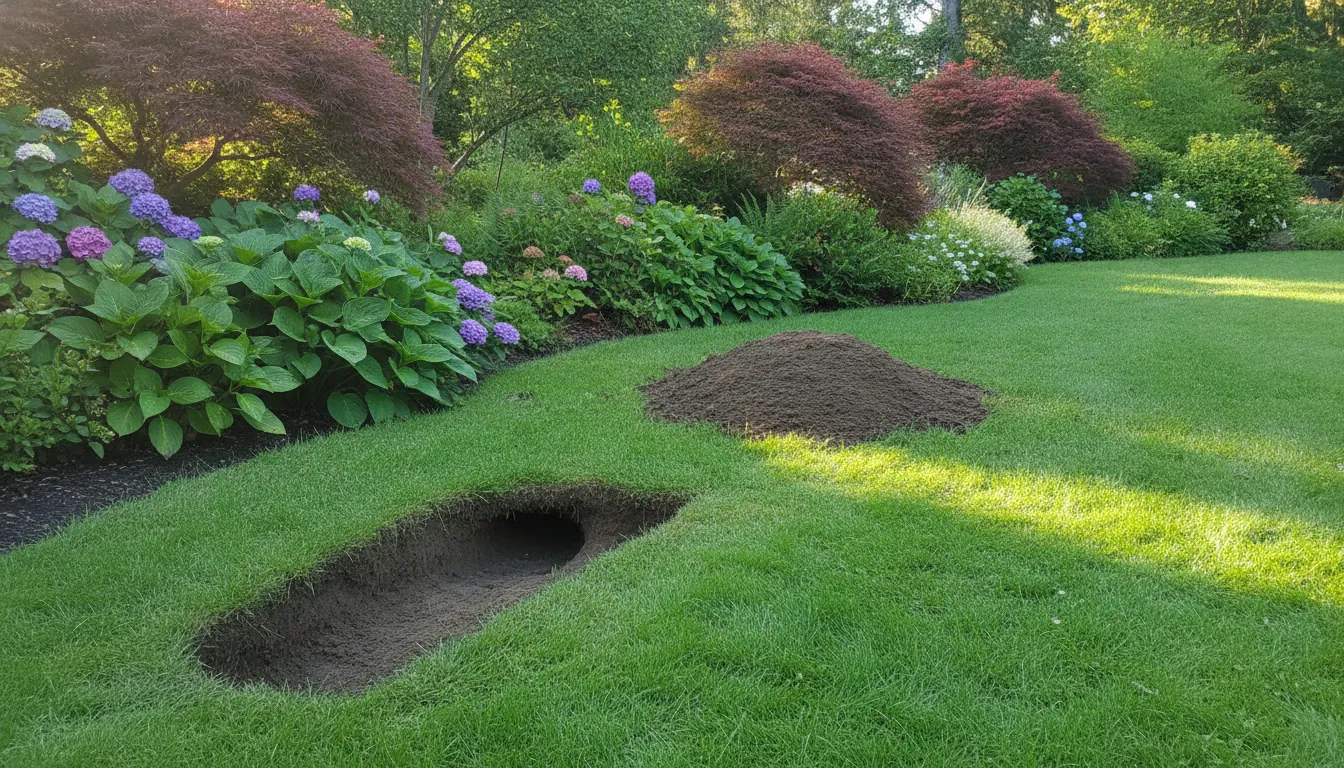
What is the best way to get rid of moles?
For an established mole problem, the most useful first-line response is to confirm an active surface runway and set a mechanical trap directly in that runway. University of Minnesota Extension describes trapping as an effective way to control moles and emphasizes that traps must be placed in active tunnels. The point is not to cover the yard with traps. It is to identify the route the mole is using now and make that location the focus of your response.
This approach works best when three conditions are met:
- The raised line or disturbed soil is recent enough to test.
- The signs match a mole rather than a gopher, vole, or another animal.
- The trap is sized, positioned, armed, and monitored according to its instructions.
Repellents, home remedies, and waiting for the animal to leave may sound simple, but they do not give you the same location-specific feedback. A quiet patch may simply mean that the mole changed routes. A trap placed in an inactive tunnel can also appear to fail when the real problem is placement. Confirming activity first removes much of that guesswork.
First, make sure the damage is from a mole
Moles and gophers live underground, but they leave different clues and may require different trap placement. Moles are commonly associated with raised surface runways and small, roughly conical soil mounds. Their tunnels are often close to the surface as they search for food. Gophers typically create more conspicuous fan- or crescent-shaped mounds and may pull plants or roots underground. Voles can leave narrow runways in grass and chew vegetation near the surface.
Before buying a trap, compare the signs with a reliable identification guide such as the CINCH guide to gopher holes versus mole holes. Correct identification matters because a mole trap set in a gopher burrow is unlikely to address the problem, and a plant-feeding pest may be causing damage that a mole-control plan cannot solve.
| Sign | More consistent with | What to do next |
|---|---|---|
| Raised ridges just below the lawn surface | Mole activity | Test a short section for fresh repair, then focus on the active runway. |
| Conical mound with no obvious open hole | Mole activity | Inspect nearby surface runs rather than setting only on the mound. |
| Fan-shaped mound or pulled-down plants | Gopher activity | Use a gopher-specific identification and trapping approach. |
| Narrow surface paths with chewed stems or bulbs | Vole or other small-rodent activity | Look for gnawing and consult a pest or extension resource before choosing a mole trap. |
Signs are clues, not a perfect population count. If the damage is unclear, take a photo of the mound or runway and compare it with an extension resource before placing any trap.
How to find an active mole tunnel
A mole can use some surface tunnels repeatedly and leave others behind. Freshness is therefore more useful than the size of a mound. Walk the property and mark the newest raised lines, especially where they cross a lawn or run along the edge of a garden bed.
- Choose a short, raised section. Select a section of surface tunnel that is easy to reach and safe to monitor. Avoid relying on an old, dried-out mound by itself.
- Press the tunnel down. Gently compress a short section of the raised soil or turf. Do not collapse a long stretch of the runway.
- Recheck it within 24 hours. If the soil or turf has been pushed back up, the tunnel is active enough to consider for trap placement. If it stays flat, test another recent-looking section.
- Note the direction of travel. A runway may connect several disturbed areas. Knowing how it runs helps you place the trap squarely in the path rather than beside it.
University of Minnesota Extension recommends concentrating on surface feeding tunnels rather than setting a trap only on a molehill. That distinction is important: the mound tells you that soil was excavated, while a repaired runway gives you stronger evidence that the animal is using that route.
Choose a trap that fits the job
Once you have confirmed a mole and an active runway, choose a mechanical option that matches the tunnel and your experience level. A single trap can make sense when you are replacing a unit or addressing one clearly defined runway. A kit can be more convenient when you want two traps, flags, and setup materials together.
CINCH Traps offers individual mole traps as well as a Mole Kit and a Deluxe Mole Kit. Check the current product details and select the size that corresponds to the tunnel width. The goal is a stable fit in the runway, not the largest trap available.
- Choose a single trap when you already have the accessories you need or are replacing one trap.
- Choose the Mole Kit when you want a straightforward two-trap setup with basic materials.
- Choose the Deluxe Mole Kit when you want additional setup and maintenance supplies included for a more complete first-time setup.
Read the product instructions before arming anything. A mechanical trap can cause injury if handled carelessly, so keep hands, children, and pets away from the setup area and treat every armed trap as live.
Related products

Set the trap in the active runway
The exact steps depend on the trap design. For a CINCH Trap, the company's setup guide explains a four-step process: expose the runway, set the trigger, position the trap with the trigger plate centered in the tunnel, and arm it while keeping the frame stable.
- Expose enough of the runway. Clear loose soil carefully so the trap can sit in the tunnel without crushing the sides. A clean opening makes alignment easier.
- Prepare the trigger safely. Hold the trap by its frame and follow the safety-hook instructions. Keep your fingers away from the active jaw and trigger path.
- Center the trap. Place the trap directly in the runway. It should sit naturally in the tunnel, with the trigger plate where the mole is likely to pass.
- Stabilize and arm it. Confirm that the trap is steady and that nothing is blocking the mechanism. Remove the safety catch only when your hands and body are clear.
- Mark the location. Use a flag or another visible marker so nobody accidentally steps into the installation area and so you can find it during checks.
For some tunnel systems, two traps facing opposite directions can improve coverage because a mole may approach from either direction. Use the product instructions and the shape of the runway to decide whether that setup makes sense. More traps are not automatically better if they are placed in inactive or poorly aligned tunnels.
Monitor the trap and the surrounding area
Check the installation regularly, at least once every 24 hours unless the product instructions or local rules require something different. Monitoring tells you whether the trap has fired, whether the runway is still active, and whether the setup remains stable. If the trap has not fired after a reasonable interval, revisit the fundamentals before assuming the method does not work:
- Was the tunnel actually repaired after you pressed it down?
- Is the trap centered in the runway rather than beside it?
- Is the trap anchored securely in soil that can hold it?
- Is debris, a root, or a collapsed tunnel interfering with the trigger?
- Could the signs belong to a gopher, vole, or another animal?
The CINCH explanation of how its traps work describes the visible set bar as an indicator that the trap has activated. Follow the instructions for checking, resetting, and handling the trap. If you find a live animal or are uncomfortable handling the situation, contact a qualified local wildlife or pest professional instead of improvising.
What methods are less reliable for an active mole problem?
There is no single product that fits every property, and some situations call for professional help. Still, it helps to understand the limits of common approaches:
| Approach | Potential limitation | When it may make sense |
|---|---|---|
| Waiting for the mole to leave | Activity can shift, and another animal may use suitable ground later. | Only when damage is minor and fresh activity is not confirmed. |
| Repellent or home remedy | Results can be inconsistent, and the active runway may remain untreated. | As a supplemental choice after checking product directions and local restrictions. |
| Trap on an old mound | The mound may not show where the mole is currently traveling. | Use the mound to locate nearby runs, then test the run itself. |
| Trap in an active runway | Requires correct identification, placement, safety, and monitoring. | The focused mechanical response for a confirmed mole runway. |
| Professional service | May cost more than a DIY approach. | Useful for extensive damage, repeated failure, difficult access, or safety concerns. |
Avoid making broad promises about any method. The practical test is whether the response matches the animal, the active location, and the property owner's ability to set and monitor it safely. For a broader overview of the product line, visit the CINCH mole trap collection.
How to protect a garden bed without damaging plants
Moles primarily use underground tunnels, while the plants themselves may be damaged by a different animal. Before digging near a bed, identify whether you are seeing raised soil, chewed roots, missing plants, or surface feeding. If the mole runway passes beside the bed, place the trap in the runway rather than disturbing the planting area unnecessarily.
Work carefully around irrigation lines, buried cables, edging, and established roots. Keep cleared soil contained so it does not smother plants, and repair the opening after the trapping process is complete. A location-first setup is useful here because it limits the area you need to open and gives you a clear reason for each placement decision.
If your priority is a reusable, mechanical solution, learn more about CINCH's mole-control guidance and compare the available sizes before ordering. The right choice is the one you can place correctly, monitor consistently, and use safely on your property.
A simple decision checklist
Use this checklist before you buy or set a trap:
- Have you confirmed the signs are from a mole?
- Have you tested a raised surface tunnel and seen it repaired?
- Can you reach the runway without creating a hazard for people, pets, plants, or utilities?
- Have you selected the correct trap size and read its instructions?
- Can you check the trap at least daily and respond safely if it activates?
- Do you know what you will do if the signs continue after the first placement?
If the answer to each question is yes, you have a defensible next step: focus on the active runway, install the mechanical trap carefully, and monitor the result. If any answer is no, pause and resolve that uncertainty first. Correct identification and placement are more valuable than adding more traps at random.
Bottom line
The best way to get rid of moles is usually not a yard-wide treatment. It is a measured response: identify the animal, confirm a fresh active runway, select a suitable mechanical trap, position it correctly, and check it regularly. That process helps protect lawns and garden beds while keeping the decision tied to evidence you can see on your property.
Read the CINCH Trap setup guide before you place a trap
For independent background on identifying active tunnels and trapping, see the University of Minnesota Extension guide to trapping moles. For product-specific help, review the instructions included with your trap and contact a qualified professional when the problem is extensive or unsafe to handle yourself.