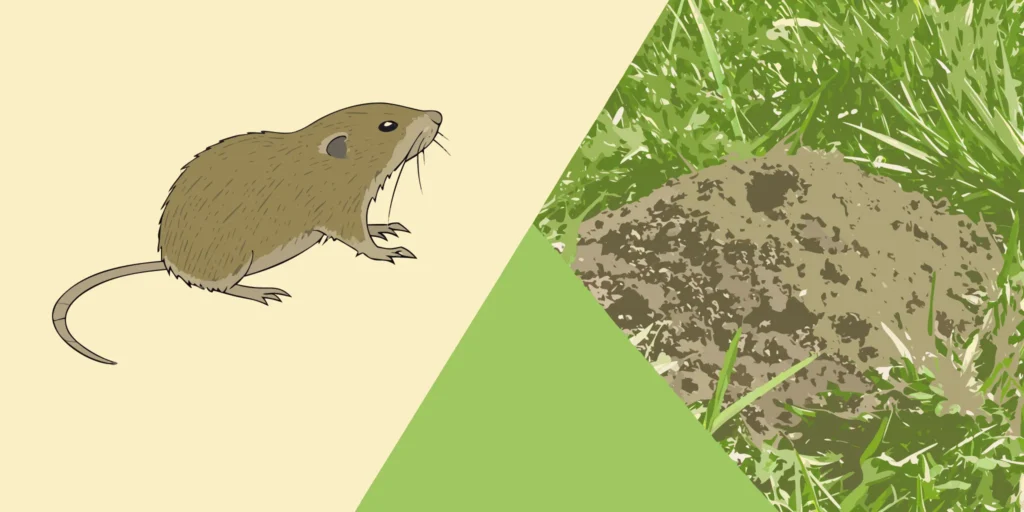
Fan-shaped soil piles point to gophers, while raised lawn ridges usually expose moles. Reading these surface clues correctly keeps you from targeting the wrong underground pest.
Gopher holes are usually hidden beneath plugged, fan-shaped or heart-shaped soil mounds. Loose dirt is pushed mainly to one side rather than centered above the tunnel.
Mole holes sit below round, volcano-like mounds. Nearby shallow tunnels often create raised ridges that zigzag across the lawn. According to the University of Wisconsin, gopher tunnels stay hidden from the surface, while mole tunnels appear as raised ridges.
Gophers feed on plants and roots, while moles hunt worms, grubs, and insects. Damaged plants can add another useful clue. Check mound shape, plug position, nearby ridges, and plant damage together. One clue alone can mislead you after rain, mowing, or foot traffic.
The fastest diagnosis comes from comparing several signs instead of judging one pile of dirt. Start with the core visual clues covered in “Gopher holes vs. mole holes at a glance,” then inspect each fresh mound before choosing a control method. Here’s how.
Gopher holes vs. mole holes at a glance
Start with the shape of the fresh soil, not the open hole. Gophers usually seal their entrance, so a visible opening may be absent. Moles can also leave closed mounds, but their soil and surface tunnels form a different pattern.
Mound shape and soil placement
Gopher holes usually appear beside a fan-shaped or heart-shaped mound. The soil spreads mainly to one side because the gopher pushes it from a sloped tunnel. Utah State University Extension also describes fan-shaped gopher mounds as a key surface sign.
A molehill looks more round and centered. Fresh soil rises through a vertical shaft, which can create circular ripple marks like a small volcano. The opening is often hard to see after the animal finishes digging.
| Sign | Gopher activity | Mole activity |
|---|---|---|
| Mound shape | Fan or heart shaped | Round and volcano shaped |
| Opening | Usually plugged with soil | Often closed beneath the mound |
| Soil placement | Pushed mostly to one side | Pushed up around the center |
| Surface ridges | Usually absent | Often easy to see |
| Plant damage | Chewed roots and missing plants | Raised or loosened turf |
Surface ridges and tunnel clues
Raised, winding ridges across a lawn point to moles. Their shallow feeding tunnels lift the grass and soil above them. Gopher tunnels stay below the surface, so the yard usually shows separate mounds without connecting ridges.
Do not judge by one worn mound. Rain, mowing, and foot traffic can blur its shape. Instead, compare several fresh signs and follow a clear process for identifying mole versus gopher tunnels.
Plant damage near the mound
Nearby plant damage can confirm the visual clues. Gophers eat plant material and can chew roots or strip bark from trees. Moles feed on insects, grubs, and worms rather than roots. The University of Wisconsin Extension explains this key difference.
A plant that vanishes or wilts beside a fan-shaped mound suggests gopher activity. A raised strip of turf with no chewed roots suggests a mole. Check both the mound and nearby damage before choosing which tunnel to inspect.
What do gopher holes look like?
Gopher holes usually appear as fan, crescent, or heart-shaped piles of loose soil. The open end of the fan points away from the burrow entrance. Unlike a simple open hole, the entrance is often hard to see because the gopher seals it with soil.
The mound and plugged entrance
Look near one edge of the mound for a round, soil-filled plug. It sits off-center because a gopher pushes dirt sideways from a sloped tunnel. University of Wisconsin guidance confirms that gopher mounds tend to be heart or fan-shaped, with the hole usually plugged.
A gopher mound does not need a visible opening to be active. Avoid judging one sign alone. Instead, check the mound shape, the off-center plug, and nearby plant damage together before deciding what made it.
What lies below the mound
The surface mound is only the spoil pile from a larger tunnel system below. Gopher tunnels do not usually form the raised surface ridges linked with mole activity. This makes identifying mole versus gopher tunnels easier when both pests live in your area.
The main tunnel may sit well below the mound rather than directly under its center. Colorado State University describes pocket gopher tunnels as 2.5 to 3.5 inches wide. It also places them within the top 4 to 18 inches of soil.
Signs of fresh gopher activity
Start with mounds that look newly formed rather than worn flat by rain, feet, or yard work. Loose soil and a clear fan shape make the mound easier to inspect. Still, appearance alone cannot prove when the gopher last used that tunnel.
Check the area again after leaving existing mounds undisturbed. New soil piles show where recent digging occurred, while unchanged old mounds offer less useful guidance. Also watch for plants that wilt, vanish, or loosen near the mound.
Root damage adds useful context because pocket gophers feed on roots and other plants. They can also harm trees by chewing roots and stripping bark, according to Utah State University guidance. A fan-shaped mound beside damaged vegetation is stronger evidence than either sign by itself.
What do mole holes and tunnels look like?
Raised surface ridges
Mole activity often appears as a winding ridge that lifts the grass and soil. The ridge may run across a lawn without showing an open hole. It marks a shallow feeding tunnel where a mole searches for worms, grubs, and insects.
These raised paths are one of the clearest ways to separate mole signs from gopher holes. According to the University of Wisconsin mole identification guide, mole tunnels form visible ridges, while gopher tunnels stay hidden below the surface. A ridge may feel soft underfoot because the soil beneath it has been loosened.
Round, volcano-like molehills
Moles also leave round piles of loose dirt called molehills. Each pile forms as a mole pushes soil upward through a vertical shaft. The fresh earth may show circular ripple marks, giving the mound a volcano-like shape. The opening often sits near the center, though loose soil can hide it.
Do not assume that damaged plants beside a molehill were eaten by the mole. Moles hunt insects and worms instead of feeding on plant roots. Their digging can disturb roots or lift turf. Plants may still suffer from the tunnel itself.
Mole signs compared with gopher signs
Shape is the fastest field clue. A molehill is usually round and centered over a vertical shaft. A pocket gopher pushes dirt from a slanted side tunnel, creating a fan-shaped or heart-shaped mound. Its entrance is commonly plugged with soil.
Look beyond one mound before choosing a control method. Several raised surface ridges point toward moles, while scattered fan-shaped mounds point toward pocket gophers. Cinch Traps’ guide to identifying mole versus gopher tunnels explains how to trace active runs before setting a trap.
A clean, open hole is not the best clue for either animal. Loose dirt can cover a mole shaft, and a gopher often seals its entrance. Check the mound shape, nearby ridges, and plant damage together. Chewed roots suggest gophers. Disturbed turf above soil rich in insects is more consistent with moles.
How to identify the pest in your yard
Before choosing a trap, inspect the whole damaged area. One mound alone can mislead you, but several fresh signs often reveal the pest. Focus on new soil, recent plant damage, and tunnels that appear repaired. Older damage may remain visible after the animal has moved elsewhere.
A five-step yard inspection
Map the fresh soil. Walk the yard and mark each new mound before moving any dirt. Gopher holes often sit beside fan-shaped or heart-shaped mounds. Mole hills tend to look round, with soil pushed up like a small volcano. Compare mounds from the same part of the yard.
Check the mound shape. Stand above each mound and note where most of the loose soil lies. A one-sided fan points toward a gopher. A round mound with ripple-like rings points toward a mole. This University of Wisconsin guide to mole and gopher signs shows both patterns.
Find the plugged opening. Look near the flat edge of a fan-shaped mound for a soil plug. Gophers usually close their entrance after pushing dirt outside. Do not reach into an open hole. Instead, use a probe or small shovel to trace the tunnel from the surface.
Read the surface ridges and plants. Raised ridges that snake across the lawn are a strong mole sign. Gopher tunnels usually stay hidden below the surface. Chewed roots, damaged shrubs, or plants pulled below ground also support a gopher diagnosis. See our guide to identifying mole versus gopher tunnels for a closer look at ridges.
Confirm an active tunnel. Choose a fresh mound or ridge, then open a small part of the tunnel with a probe or shovel. Loosely cover the spot and check it later. A repaired or replugged opening shows current activity. Keep children and pets away while the tunnel is open.
What the signs mean
A fan-shaped mound, plugged opening, hidden tunnel, and root damage together point to a gopher. Round hills and long surface ridges point to a mole. Compare several signs before you select a trap. Place the trap only after you know which pest made the active tunnel.
If the evidence is mixed, inspect another fresh area rather than guessing. Weather, mowing, and foot traffic can blur mound shapes or flatten ridges. The mole and gopher information hub can help you check your diagnosis before setting a mechanical trap.
How gopher and mole damage differs
Root damage versus surface disruption
Gopher damage often starts below the plants you want to protect. Pocket gophers eat grasses, shrubs, and roots. They can also strip bark and chew tree roots, according to Utah State University Extension. Wilting plants or a shrub that suddenly feels loose may point to feeding below ground.
Moles create a different problem. They feed on insects, grubs, and worms rather than plant roots. Their shallow travel tunnels can lift turf into long, raised ridges. Those ridges may leave soil uneven, loosen grass roots, and create rough spots beneath a mower.
Mounds, ridges, and yard systems
Gopher holes and tunnels usually stay hidden beneath the surface. What you see is excavated soil, often in a fan-shaped mound with a plugged opening. Use the mound shape and nearby plant damage when distinguishing between gopher holes and other yard problems.
Mole tunnels are easier to trace because shallow runs appear as raised surface ridges. A deeper mole tunnel may also produce a round, volcano-like mound. Check both types of activity near sprinkler lines, drip tubing, and valve boxes. Mark the area first, then inspect the irrigation system for exposed parts or leaks.
Why active tunnels matter
Fresh signs help show where the animal is working now. Look for newly pushed, soft soil or a ridge that returns after being pressed down. An old tunnel may remain visible long after the animal moves elsewhere. Acting there can waste time and leave the active route untouched.
Correct identification also guides the next step. A surface ridge calls for a mole-focused approach, while fan-shaped soil beside a plugged opening points toward gopher activity. Review this guide to identifying mole versus gopher tunnels before choosing a tunnel or repairing the lawn.
Choose the right trap after identifying the holes
The mound tells you which animal made the tunnel, and that answer should guide your trap choice. Cinch makes separate mechanical traps for moles and gophers because each pest moves through the soil in a different way. Match the trap to the pest before you disturb the active tunnel.
Match the trap to the mound
Choose a gopher trap when you find fan-shaped or heart-shaped mounds with a plugged opening. Utah State University notes that pocket gophers build underground burrows and leave fan-shaped soil mounds at the surface. Their main tunnels stay below ground, so raised surface ridges usually point elsewhere. For a complete trapping solution, consider the deluxe gopher kit..
For confirmed gopher holes, use the dedicated gopher trap rather than a general-purpose device. Choose the mole model when the yard shows raised ridges or round, volcano-like hills. The separate designs help place the mechanical trap where the target animal travels.
A simple mechanical setup
Once you know the pest, locate a fresh and active tunnel before setting the trap. Cinch uses a four-step setup process that keeps the job direct and easy to repeat. Follow the model’s directions closely, since correct tunnel placement matters more than setting a trap near any visible mound.
The trap controls the pest through a mechanical action, without chemical pesticides or poisons. That makes it a practical fit for people who want chemical-free control around lawns, gardens, farms, and landscaped areas. After setting it, check the trap as directed and watch for fresh soil nearby.
If new gopher holes appear, do not assume the first tunnel was the only active route. Pocket gophers tend to live alone in their tunnel systems, but one yard may show activity in more than one area. Recheck the mound shape, find the active run, and reset the correct trap.
Built for repeat use
Cinch traps are handmade in Oregon for repeat use and come with a lifetime warranty. The approach is university-proven, while the direct manufacturing model supports steady quality. For mole activity, the dedicated mole trap provides the matching option instead of forcing one trap to handle both pests.
Durability matters because a lasting control plan often takes more than one set. Keep the trap clean, follow its setup directions, and move it when signs show that activity has shifted. Choosing the correct model first makes each later step clearer and avoids treating the wrong tunnel.
Should you fill gopher holes right away?
Check for active digging first
Do not rush to level fresh gopher holes before you know whether the burrow is active. Filling a surface opening may improve the yard for a short time. It does not remove a gopher that is still digging below ground.
Look for new mounds or soil that appears after you clear an area. Pocket gophers build underground burrows and leave fan-shaped mounds of dug soil at the surface. New soil can show that activity is still present, while an unchanged area may be ready for repair.
Confirm the pest before planning control or repairs. The shape and placement of disturbed soil can help with identifying mole and gopher holes. Moles often leave raised surface ridges, while gopher tunnels are usually hidden below the surface.
Restore the area after control
Once signs of active digging stop, restore the damaged spots in a way that fits the site. Start by raking loose mound soil across nearby low areas. Remove rocks, roots, or other debris that could make the repaired surface uneven.
- Use clean soil to fill open pits or low spots, then press it down in light layers.
- Keep added soil level with the nearby ground so water does not collect in a deep dip.
- Replace grass seed, sod, mulch, or plants as needed for the damaged area.
- Mark repaired spots so you can notice fresh soil or sinking ground during later checks.
Use care around irrigation lines, tree roots, garden beds, and slopes. Avoid forcing tools deep into a tunnel when buried pipes or cables may be nearby. If the ground has a large void or keeps sinking, pause the repair and get help from a qualified local professional.
Watch for fresh gopher holes
Check the repaired area over the next several days. A fresh mound, reopened plug, or new patch of loose soil may point to more digging. If signs return, address the active gopher before repeating the same yard repair.
Leave stable, unused tunnels alone unless they cause a clear surface problem. Digging up the full burrow system can create more damage than the original mound. Focus on safe footing, even soil, and signs that help you spot renewed activity early.
Frequently Asked Questions
What do gopher holes look like?
A gopher hole usually sits beside a heart- or fan-shaped mound, with loose soil pushed mainly to one side. The opening is often plugged with soil rather than left exposed. According to University of Wisconsin Extension, this shape results from soil pushed through a slanted shaft.
How can you tell the difference between gopher holes and mole holes?
Look at both the mound and the nearby ground. Gopher mounds are usually fan-shaped, with a plugged opening near one edge. Molehills are generally round and may show circular ripple marks. Moles also create raised surface ridges, while gopher tunnels usually remain hidden below the surface, according to University of Wisconsin Extension.
How do you effectively fill in gopher holes?
First, confirm that the gopher activity has stopped, because an active animal may reopen filled holes or create new mounds. Remove loose soil, add clean topsoil in layers, and gently compact each layer to reduce settling. Finish level with the surrounding ground, then reseed or repair the surface. Monitor the area for fresh fan-shaped mounds.
Are gopher holes dangerous to your lawn?
Yes, gopher burrows and mounds can damage a lawn by disturbing roots, burying grass, and leaving uneven ground. Pocket gophers also feed on grasses, shrubs, and roots. They can harm trees by chewing roots and stripping bark, according to Utah State University Extension. Fresh mounds are a sign to inspect the area promptly.
Ready to Stop Mole or Gopher Damage Today?
Misidentifying the pest can lead you to place the wrong trap while fresh tunnels and mounds continue to appear. Acting now lets you target the active tunnel system before the signs spread across more of your lawn or garden. Once you know whether a mole or gopher is responsible, you can choose a purpose-built mechanical trap and start control with confidence.
Ready to act on what you found? Shop the right trap for your identified pest, then follow its setup directions to begin addressing active tunnel damage. Contact Cinch Traps if you need help confirming which model fits the signs in your yard and planning your next step.