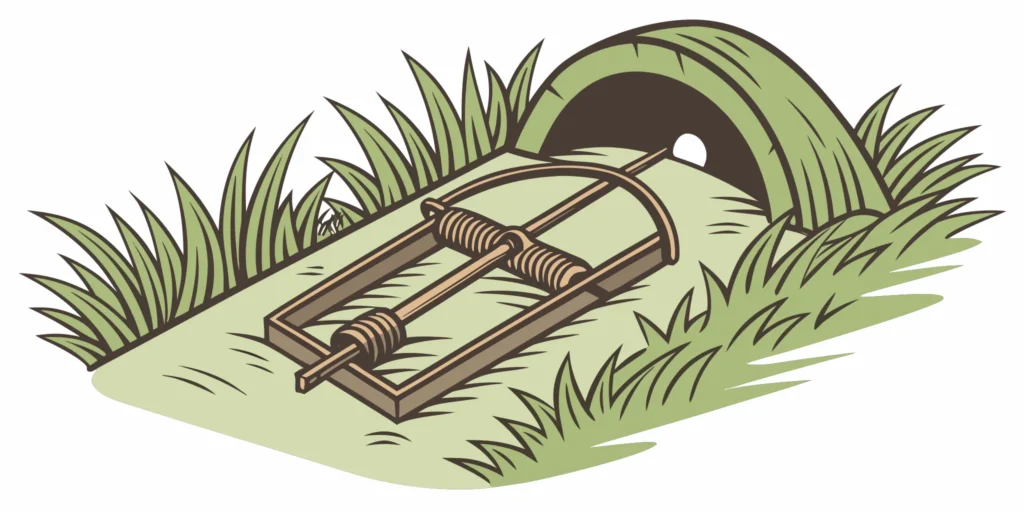
Since 1909, Cinch Traps has handcrafted the most effective mole traps in America from a small shop in Beaverton, Oregon. What started with founder Don Sprague’s determination to solve a persistent farm problem grew into a legacy that has protected millions of lawns. Gardens, farms, and commercial properties across the United States. Shop Cinch Traps today and get flat rate shipping on every order.
When it comes to proven pest control, Cinch Traps 100 years mole control experience stands apart from every competitor. Founded by Don Sprague in 1909, Cinch Traps has operated continuously for over a century, manufacturing traps from American galvanized steel in Oregon. The company’s traps have ranked #1 in university studies at Oregon State University. UC Santa Cruz, University of Michigan, University of California, and University of Nevada, plus the USDA. Every Cinch trap carries a lifetime warranty backed by a century of refinement and a 4-step setup that makes mole control accessible to homeowners and professionals alike.
The story behind those years is worth knowing because it explains why a trap design from the early 1900s remains the preferred choice of pest control experts. Landscapers, and homeowners today.
Cinch Traps 100 Years Mole Control: How Don Sprague Built a Legacy
Don Sprague did not set out to become a legend in pest control. He saw a problem on his Oregon property that no existing tool could solve, and he built the solution himself. That was 1909, when American agriculture relied on horses, hand tools, and generations of passed-down knowledge. Moles were wrecking crops and pastures, and the available traps were flimsy, unreliable, and prone to failing at the worst moment.
Sprague, a farmer and tinkerer with a sharp eye for mechanical design, began shaping and testing his own trap design from galvanized steel. He worked on it until the mechanism tripped consistently, held firm underground, and dispatched moles quickly. The design worked so well that neighbors asked for copies, and within a few years Sprague was making traps full time.
What made Sprague’s trap different came down to three things:
- The steel: Thick American galvanized steel that would not rust or warp in wet soil.
- The spring: Enough force to work in any soil condition, from sandy loam to packed clay.
- The trigger: Sensitive enough to catch moles but sturdy enough to avoid false trips from passing earth movement.
These same three qualities define Cinch Traps today. The company still uses American galvanized steel. The spring and trigger mechanisms follow the same proven principles that Sprague established in that Oregon workshop. Pick up a Cinch trap today and you are holding a direct descendant of the first traps that Don Sprague handed to his neighbors more than a century ago. As the company puts it: if it is not stamped CINCH, then it is not the original.
Sprague also set a standard for customer relationships that the company still follows. Every trap carries a lifetime warranty, not because the company expects failures. But because Sprague believed a product sold to a neighbor should be guaranteed as long as the neighbor needed it.
The Cinch Traps Difference: American Craftsmanship Since 1909
The pest control industry is full of products that have come and gone over the past century. Plastic traps that crack in the sun. Complex contraptions with a dozen moving parts. Electronic devices that promise to repel moles with sound waves and deliver nothing but disappointed customers. Cinch Traps has outlasted them all, and the reason comes down to materials, proof, and commitment.
Materials: American Galvanized Steel
Cinch traps are handcrafted in Oregon from American galvanized steel. That choice matters for two reasons. Galvanized steel resists corrosion so the trap can stay buried in damp soil for years and still function. And American steel meets consistent quality standards that imported steel often does not. Every trap is assembled by hand, inspected, and tested before it ships. The company has never outsourced production to an overseas factory or switched to cheaper materials to cut costs.
Proof: Ranked #1 by Five Universities and the USDA
Cinch Traps has been tested against competitors in university studies more than any other mole trap brand. The results are consistent across every study. Cinch traps ranked #1 at Oregon State University, UC Santa Cruz, University of Michigan, University of California, and University of Nevada. The USDA also ranked Cinch traps as the most effective option available. These are not paid endorsements or marketing claims. University researchers independently tested multiple trap brands under controlled conditions and published the results. No other mole trap manufacturer can match that record of verified, third-party performance data.
Commitment: Lifetime Warranty and Simple Setup
Every Cinch trap comes with a lifetime warranty. If it ever breaks, the company replaces it at no charge. That level of confidence is only possible because the traps so rarely fail. Setting up a Cinch trap takes four simple steps:
- Find an active mole tunnel by looking for fresh soil ridges or raised surface runs.
- Open the trap jaws by pressing down on the spring levers until they lock into place.
- Place the trap into the tunnel with the jaws centered in the active run.
- Step on the setting levers to release the safety and arm the trap.
A Brief History of Mole Control and Trapping
Moles have been frustrating property owners for as long as people have maintained lawns and farms. Understanding the history of mole control helps explain why the right trap design matters so much.
Here is what you need to know about moles and the history of trapping them:
- Moles are not rodents. They are insect-eating mammals in the family Talpidae, built entirely for life underground with powerful front claws. A cylindrical body, and an extremely sensitive snout for finding earthworms, grubs, and insects. The tunnels and molehills are the side effects of constant foraging. As one University of California guide notes, “contrary to popular belief, moles are not part of the rodent family.”
- Professional molecatchers have existed for centuries. The trade dates back to Roman times when landowners employed specialists to protect fields and gardens. It peaked in England during the 19th century, when the demand for moleskins created a thriving industry.
- Trapping is still the most dependable method. Modern traps like Cinch have refined century-old design principles into a tool that works faster, sets easier, and lasts longer than any historical equivalent.
University of California research confirms that “trapping is the most dependable method of mole control,” making it the preferred approach for homeowners, landscapers, and pest control professionals. If you want to explore regional strategies, check the Oregon Mole Control Guide for local tips.
How Modern Mole Traps Compare to Historical Methods
The methods people have used to control moles have changed dramatically over the centuries. Trapping outperforms every other approach for long-term, effective mole control. The comparison below shows how each method stacks up.
| Method | Effectiveness | Safety | Ease of Use | Longevity |
|---|---|---|---|---|
| Modern Steel Trap (Cinch) | Highest. Ranked #1 by 5 universities and USDA. | Safe. Mechanical only, no chemicals. Stays underground. | Very easy. 4-step setup in under 2 minutes. | Decades. Lifetime warranty. Galvanized steel resists rust. |
| Skin-Based Trapping (pre-1940s) | Moderate. Required experience and daily trap checks. | Low risk. Mechanical, but traps often poor quality. | Hard. Required knowledge of mole runs and daily resetting. | Short. Traps rusted or broke within a season. |
| Poison Baits | Low to moderate. Moles are picky eaters and avoid unfamiliar food. | Risky. Toxic to pets, children, and beneficial soil life. | Mixed. Easy to place but needs repeated applications. | Temporary. Degrades in soil and requires reapplication. |
| Gas Bombs / Fumigants | Low. Moles seal tunnel sections quickly. | High risk. Flammable, toxic fumes. | Moderate. Requires tunnel I.D. and proper sealing. | One-time. No residual effect. |
| Ultrasonic Repellents | Near zero. No scientific evidence supports effectiveness. | Safe, but wastes time and money. | Easy. Just stick in the ground. | Device-dependent. Usually fails within months. |
| Natural Repellents (castor oil, plants) | Low. May deter moles temporarily. | Safe. Non-toxic. | Easy. Spray or sprinkle on affected areas. | Temporary. Needs weekly reapplication. |
The key difference between Cinch Traps and every other method comes down to understanding mole behavior. Because moles are highly territorial, a single well-placed trap in an active tunnel can solve the entire problem. You just need to find the active runway and set a Cinch trap. The decades of refinement behind the design ensure it works the first time.
Why Over a Century of Experience Matters for Your Property
When a company has been in business for over a century, the experience accumulates in ways that a startup or brand-name competitor cannot replicate. Every year of operation adds more field data, more customer feedback, and more refinement to the product. A century of hands-on testing means the trap design has been stress-verified against nearly every condition American property owners encounter.
What this experience delivers for you:
- Testing across every American soil type and climate. Cinch traps have been set in Oregon clay, Florida sand, Michigan loam, Texas hardpan, and California hillsides. They have been tested against Eastern moles, Western moles, star-nosed moles, and every species in between.
- Professional-grade reliability. Pest control professionals need equipment that works on the first set, every time, across multiple job sites. That is why so many professionals and nurseries carry Cinch traps.
- A lifetime warranty that means something. The company backs every unit because decades of field data confirm the traps rarely fail.
Nurseries and garden centers stock Cinch traps for a straightforward reason. When a customer walks in with a mole problem, the nursery needs to recommend a solution that will actually solve it. Recommending a product that fails reflects badly on the business. That is why Cinch is building a growing network of professional landscapers who rely on the same design year after year.
Frequently Asked Questions
Why is Cinch Traps 100 years of mole control experience important?
Cinch Traps has over a century of mole control experience because the company has made traps in Beaverton, Oregon since 1909. Over 116 years, these tools have been tested in clay, sand, and loam soils across America. Every unit is made from American galvanized steel and comes with a lifetime warranty to guarantee its strength.
How do you set a Cinch mole trap?
Setting a Cinch trap takes four quick steps. First, find an active mole tunnel. Second, open the trap jaws. Third, place the steel trap into the tunnel. Finally, step on the lever to set it. You can see the full 4-step setup guide. This quick process makes it easy for any homeowner to clear pests in under two minutes.
Is trapping more reliable than mole poison?
Yes, trapping is the most reliable way to solve a mole problem. University studies show that traps work far better than poison baits or gas bombs. According to University of California research, trapping is the most dependable method of mole control. Poisons are risky for pets and children, while gas and ultrasonic devices often fail.
Does Cinch Traps offer flat rate shipping?
Yes, Cinch Traps offers flat rate shipping on every order. You can purchase traps on the main site or visit the Cinch Traps Etsy shop for other buying options. Every trap is handmade in Oregon and ships directly to your door.
Ready to Put a Century of Experience to Work on Your Property
Ready to put over a century of mole control experience to work on your property? Cinch Traps has been the trusted choice of homeowners, landscapers, and pest control professionals since 1909. Every trap is handcrafted from American galvanized steel in Oregon, backed by a lifetime warranty, and proven effective by independent university research. Shop Cinch Traps online today and get flat rate shipping on your order.