

A gopher trap for compacted soil still needs to sit in an active runway, but firm ground can make that runway harder to uncover and work around. The fix is not to force the tool or guess at a mound. Confirm the pest, locate a tunnel the gopher is using, and open only enough soil to place the trap securely.
Ask Cinch Traps for help choosing a gopher trap
Below, you will find practical checks for compacted ground, a comparison of conditions and options, and a placement process that keeps the tunnel—not the surface mound—at the center of the job. For product details, see the Cinch gopher trap.
What does compacted soil change when trapping gophers?
Compacted soil changes the work involved in exposing a tunnel. It may take more effort to cut into the ground, clear loose soil from the runway, and make an opening that fits a trap without collapsing the sides. It does not tell you whether a gopher is present or whether a particular tunnel is active. Those are separate questions, and they matter more than how hard the surface feels.
Compaction can have several causes: repeated foot or vehicle traffic, a dry spell, heavy equipment, or a naturally dense soil texture. The surface may be firm while the tunnel below is open, or the ground may be packed down around an old, unused run. Do not treat resistance from a shovel as proof that you have found an occupied tunnel.
Start by looking for fresh signs in the area. Gopher mounds are typically associated with soil pushed up from underground activity, but one mound alone cannot tell you which passage is in use now. Look at the pattern and freshness of the soil, then inspect the likely route. If the signs could belong to a mole instead, pause and identify the animal before choosing equipment. A gopher and a mole have different habits and call for different trapping plans. Cinch's mole and gopher FAQs offer a starting point for sorting out the difference.
Firmness is a worksite condition, not a trap-selection shortcut. The right response is to make a controlled opening, avoid damaging or crushing the runway, and choose a trap that can be positioned and secured as intended. If the ground is too hard to make a clean opening safely, wait for more workable conditions rather than levering or hammering blindly.
Compacted soil makes tunnel access tougher, but only fresh activity and correct pest identification tell you where trapping makes sense.
How can you tell whether the tunnel is active?
Before digging into hard ground, narrow down the area that deserves attention. Gophers travel through a connected underground system, but not every section is in use at the same time. A mound marks activity at some point; it does not guarantee that the nearest tunnel is the best place for a trap today.
Look for recent changes rather than relying on an old map of the yard. Freshly disturbed soil, a newly formed mound, or a visible change along a known run can help you decide where to investigate. Keep track of the locations and dates. If new signs appear in the same area, that is more useful than repeatedly opening random spots.
- Note the location and appearance of each fresh mound or disturbed patch.
- Check the same area again after a reasonable interval for new changes.
- Prioritize a section connected to recent activity rather than the most convenient patch of ground.
- Use a hand tool carefully to probe or expose a likely runway; stop if you cannot distinguish a tunnel from a void or damaged soil.
When soil is compacted, careful probing can help prevent a large, unnecessary excavation. Make a small test opening and assess what is actually there. If you meet an intact tunnel, expose only the space needed to position the trap. If the opening is empty, collapsed, or clearly not a runway, refill or stabilize the area as appropriate and investigate another likely location.
A tunnel that was active last week may not be the best choice now. Gophers can shift activity within their systems. If the first placement produces no result, check whether the runway was active and whether the trap was positioned correctly before concluding that the ground or product is the problem. The steps in this gopher trap placement guide can help you revisit the process.
Let current signs guide the excavation: a small, deliberate check is better than setting a trap beside an old mound by guesswork.
How should you open a tunnel in firm ground?
Work slowly and keep the opening as narrow as practical. The aim is to uncover enough of the runway to place the trap in line with the animal's travel, not to dig a broad trench. A broad hole takes longer to restore and can disturb more of the tunnel system than necessary.
- Choose the likely run. Use recent activity and the tunnel layout to select a test location. Avoid choosing solely because the soil there is easier to reach.
- Clear the surface carefully. Remove turf or crusted soil in manageable pieces. Keep track of the material so you can close the opening neatly later.
- Expose the runway. Use a suitable hand tool and remove soil in small amounts. Do not drive a tool into the ground with force where the tunnel may be.
- Check the opening. Confirm that you have found an actual passage and that it is large and intact enough for the intended placement.
- Set and secure the trap according to its instructions. Keep the trap aligned with the tunnel and do not improvise a placement that leaves parts exposed or unstable.
- Restore the surface and check the site. Keep the area orderly, follow the product instructions for monitoring, and make sure people and pets cannot interfere with the setup.
When the ground is dry and difficult to cut, a period of natural rain or ordinary watering may make the top layer easier to work later. Do not flood the tunnel or saturate the area to the point that the runway collapses. The goal is manageable soil, not a waterlogged excavation. Conditions vary by soil type, drainage, and weather, so use your judgment and the trap's instructions.
Before you dig, take a moment to plan the opening. Identify a safe place to put removed turf and soil so it will not fall back into the runway. Keep the tool shallow until you know where the passage is, and remove only enough material to see its direction. If the tunnel runs across your opening rather than along it, reassess the spot instead of twisting the trap into an awkward angle. A clean, narrow work area gives you a better chance of preserving the tunnel and returning the surface to a tidy condition.
Also consider how you will monitor the set before you begin. Follow the instructions supplied with the trap for setting, checking, and handling it. Do not assume a compacted surface means the animal will travel at a particular depth, and do not bury or cover parts of the device contrary to its directions. If the product cannot be seated in the runway as intended, close the test opening and try a more suitable section rather than improvising.
If the opening crumbles as you work, stop and reshape the access rather than pushing a trap into loose debris. A stable, aligned position matters. Cinch's overview of how the traps work can help clarify the in-tunnel approach before you begin.
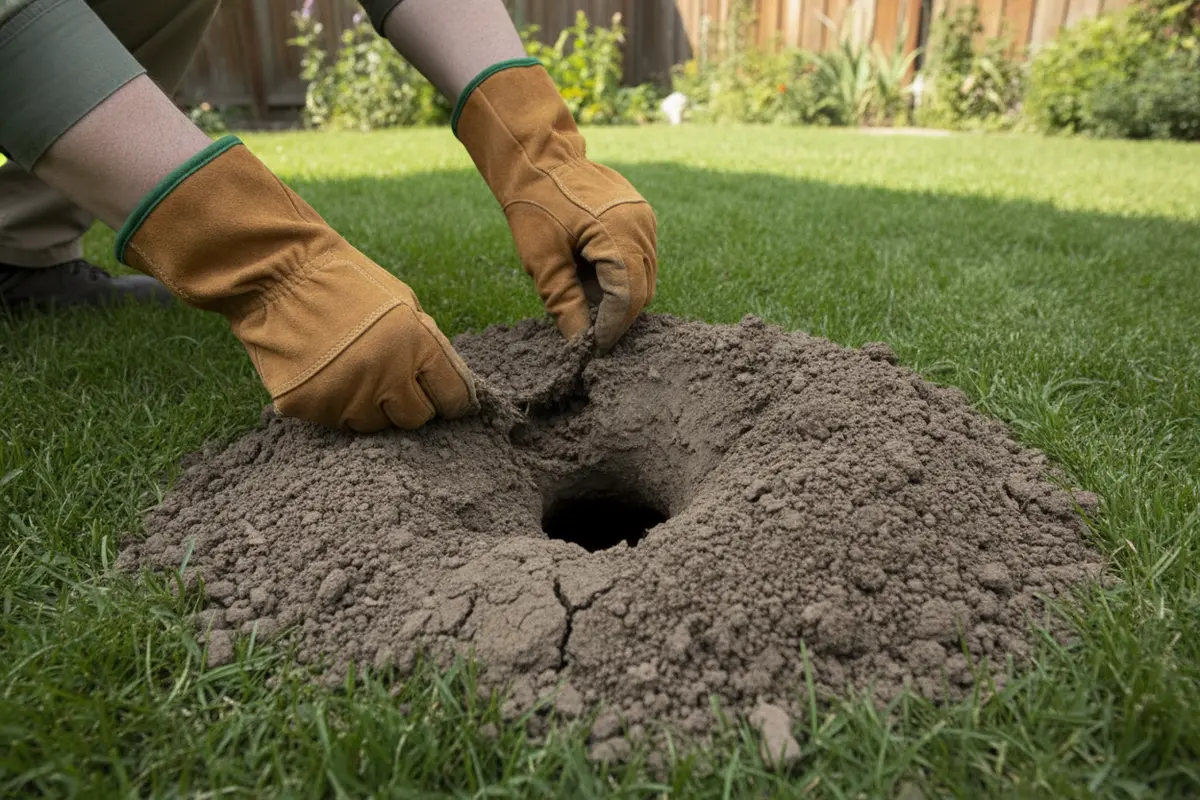
Make the smallest stable opening that lets you place the trap in the runway; do not force tools or equipment through hard ground.
Which gopher trap approach makes sense for compacted soil?
There is no single soil label that selects a trap for you. Consider whether you can uncover a suitable passage, whether the trap can be positioned securely in it, and whether the trap is intended for the animal and tunnel you have identified. The Cinch gopher trap is designed for in-tunnel placement; read the instructions for the exact model before setting it.
Use this comparison to plan the work, not as a substitute for product directions. Soil moisture, tunnel size, access, and the trap model all affect what a practical setup looks like.
| Ground or tunnel condition | What to do first | What to avoid |
|---|---|---|
| Firm surface, fresh signs nearby | Open a small test area at a likely active runway and assess the tunnel. | Assuming a mound's location is the tunnel's best trap point. |
| Very dry, hard crust | Wait for workable conditions or carefully soften only the surface area if appropriate. | Hammering or levering a tool into an unseen tunnel. |
| Loose, crumbly opening | Clear debris and make sure the passage and trap position are stable. | Placing the trap in a collapsed or obstructed runway. |
| Wet or saturated ground | Wait until the tunnel and surrounding soil can hold their shape. | Flooding the tunnel or setting into unstable mud. |
| Uncertain pest or tunnel | Confirm the animal and inspect fresh activity before choosing equipment. | Using a gopher setup on a suspected mole run without checking. |
Trap size and access matter as well. Use the manufacturer's sizing guidance rather than choosing a larger device simply because the soil is hard. If you are uncertain which model fits the animal and runway—start with gopher trap selection, review Cinch trap sizing guidance, then compare available options in the Cinch trap store. For customers managing more than one active area, the gopher trap kit is another product to consider; check its contents and instructions against the work you need to do.
Choose based on pest, tunnel, fit, and secure placement—not on soil hardness alone.
Related products

What causes a trap attempt to fail in compacted soil?
A missed catch does not automatically mean the trap is unsuitable or that the gopher has disappeared. Recheck the setup as a series of decisions: Was the animal identified correctly? Was the runway active? Did the opening preserve the tunnel? Was the trap aligned and set as its directions specify? Soil can make one or more of these steps harder, but it is only one possible factor.
- Starting from an old mound: The sign may be stale or disconnected from current travel. Reassess fresh activity.
- Opening too much ground: A wide excavation can damage the passage and add unnecessary work. Keep access controlled.
- Leaving loose soil in the runway: Debris can obstruct travel or interfere with the intended setup. Clear the working area without collapsing the tunnel.
- Forcing a poor fit: A trap that is unstable, misaligned, or not suited to the identified pest should not be wedged into place.
- Using the wrong pest approach: Mole and gopher signs can be confused. Confirm which animal is causing the damage.
- Checking too soon or too late: Follow the product's directions for setting and monitoring rather than expecting an instant result.
Keep a simple record of the location, date, soil condition, and what you found. If you make another attempt, change one variable at a time. For example, test a different section with fresher signs while keeping the same product and following its instructions. That makes it easier to tell whether the issue was tunnel choice, access, or setup.
For a detailed look at placement and common setup steps, consult the gopher traps guide and the trap operation overview. If the instructions do not answer a specific question about your situation, contact Cinch Traps before improvising.
Review the gopher trap and its setup details
When a setup misses, check identification, activity, tunnel condition, and alignment before blaming compacted soil or changing products.
When should you pause or get help?
Do not keep digging if the ground is too hard for controlled work, the tunnel keeps collapsing, or you cannot identify the passage with confidence. A poor opening can turn a manageable job into a larger repair and still leave you without a sound trap placement. Pause, protect the area from foot traffic, and try again when conditions are more suitable.
Take extra care around irrigation lines, buried utilities, tree roots, retaining structures, and areas where digging could damage property. If you do not know what lies below the surface, check before using a digging tool. Keep children and pets away from any active setup, and follow all product safety and handling instructions. Do not leave an opened tunnel or trap unattended in a way that creates a hazard.
Professional help may be appropriate if the activity is widespread, repeated attempts do not resolve the problem, or access conditions make safe placement difficult. Property owners managing larger areas can also explore Cinch's farmer information or pest-control information for relevant product and use context.
Pause when you cannot make a safe, stable opening; no trap setup is worth damaging a buried line or creating a hazard.
What is the practical next step?
Start with the signs, not the shovel. Confirm that the problem is a gopher, note where fresh activity appears, and select one likely runway to inspect. If the surface is firm, work in small increments and stop when the tunnel is clear enough to assess. Use a trap intended for gophers, follow its directions, and secure it in the runway rather than placing it at the mound itself.
For broader university research and extension resources that may help with local pest questions, consult the University of California, Davis and look for guidance relevant to your area. Conditions and recommendations can vary by region; rely on the instructions for the specific trap you use for setup and monitoring.
When you are ready to compare options, return to the Cinch gopher trap page or browse the store. For one-to-one product questions, use the contact page. The company has made traps in Oregon since 1909, but the key to a useful result in your yard is still careful identification and correct tunnel placement.
In compacted soil, patience and a sound runway matter more than digging harder: find the active passage, make a controlled opening, and set the right trap as directed.
Frequently asked questions
Does compacted soil stop a gopher trap from working?
Not by itself. Compacted soil can make the tunnel harder to expose and the trap harder to position, but success still depends on identifying an active runway and setting a suitable trap correctly. If you cannot make a stable opening, wait for more workable ground rather than forcing it.
Should I water the ground before setting a trap?
Do not flood a tunnel. If a dry surface is too hard to work, ordinary rain or carefully applied water may make the top layer easier to dig later, but soil and drainage differ. Avoid saturating the runway or creating a collapse, and follow the product directions.
Can I set a trap at a fresh gopher mound?
A fresh mound can help you find an area to investigate, but it is not automatically the best placement point. Locate and confirm a suitable tunnel, then set the trap in line with that passage according to its instructions.
What if I cannot tell whether the damage is from a gopher or a mole?
Pause before choosing a trap. Look at the pattern of damage and soil disturbance, and compare it with reliable identification guidance. The two animals have different habits, so using a gopher setup for a mole problem may lead to wasted effort.
How do I choose a trap for my situation?
Match the product to the pest and the tunnel, check sizing and setup instructions, and consider whether you can place it securely in the ground you have. Review the Cinch sizing information or ask the company before improvising a fit.
In short, compacted soil calls for careful access and stable placement—not a different guess at where the gopher travels.
Choose a workable next step
You do not need to solve every part of the yard at once. Pick one area with recent activity, identify the likely runway, and assess whether you can open it without damaging the tunnel or nearby property. If you can make a clean, stable opening, follow the product instructions for alignment and monitoring. If the soil is too hard or the tunnel will not hold its shape, pause and return when conditions improve.
Compare the trap to the pest and access you actually have. Review the product details, size guidance, and setup instructions before setting anything. For a product-specific question, Cinch Traps can help point you to the appropriate information.
Get help with your gopher trap choice
Make the next move based on fresh activity and a stable tunnel opening; if either is uncertain, pause instead of forcing a setup.