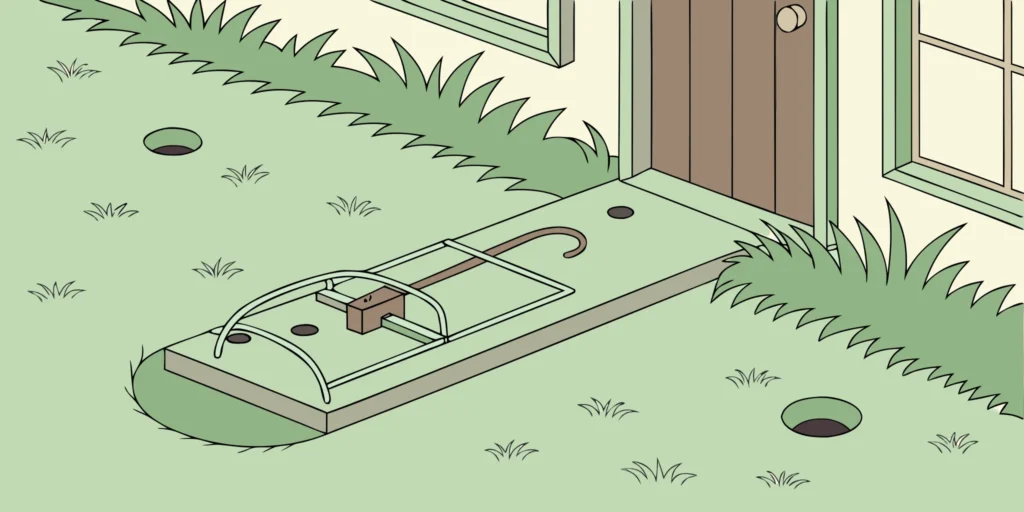
New raised ridges each morning mean an active mole is still tunneling below your lawn. Poison is not the only answer. A durable trap can stop the damage at its source.
How to get rid of moles in your yard without poison starts with finding an active tunnel and placing a mechanical trap in that travel path. The University of Minnesota Extension says most experts agree that trapping is the most effective way to control garden moles. Press down raised soil, check whether the mole repairs it within 24 hours, then set a durable galvanized steel trap firmly in the confirmed run. Keep the mechanism clear of roots and debris, check the trap at least every 24 hours, and move it if the tunnel stays quiet. Limit overwatering and address grub problems as follow-up steps, since a reliable plan removes the mole and makes the yard less inviting.
So what does a safe, durable plan look like when fresh ridges keep appearing? How to get rid of moles in your yard without poison covers three steps: confirm the active run, set the trap correctly, and improve lawn conditions. Here’s how.
How to get rid of moles in your yard without poison
If you are asking how to get rid of moles in your yard, start with the tunnels. Do not reach for poison or chase every raised ridge. A durable plan is simple: find an active run, place a mechanical trap, and check the site often.
Find an active tunnel first
Moles can leave many surface ridges, but not every ridge stays in use. Press down a short section of a tunnel with your foot. If the soil or turf rises again within 24 hours, the run is active. This active tunnel test keeps your effort focused where a mole is still moving.
Choose a firm, straight part of that active run when possible. Soft ground makes trap placement less stable. Look for another spot if the trap cannot sit firmly across the tunnel. That small choice matters more than trying to treat the whole yard at once.
Use a mechanical mole trap
Once you find the right run, set a mechanical trap so it straddles the tunnel. Make sure roots, pebbles, and loose soil do not block its movement. The trigger area should meet the compressed soil surface. For a closer walk-through, follow these safe and effective mole traps setup steps.
Check the trap often, at least once every 24 hours. If it springs without a catch, inspect the tunnel and reset it or try another active run. Patience and good placement beat constant changes. They also help you learn which tunnels the mole uses most.
Keep your work focused. One well-placed trap in a used tunnel is more useful than a scattered response across the lawn. When new ridges appear, test them before moving the trap. That keeps each decision tied to visible signs in the yard.
Skip quick fixes and keep the plan durable
A poison-free approach avoids a common mistake: acting before you confirm activity. Repellents, folk remedies, and random digging can pull attention away from the active tunnel. They do not give you a clear way to check whether the mole has been removed.
Mechanical trapping gives you a direct, repeatable process. It also avoids toxic bait in the yard. The same steps work when fresh ridges appear later: press the soil, wait, and set the trap in a confirmed run. This is a practical routine, not a one-time guess.
If you are weighing traps, baits, and repellents, review the options for mole control without using harmful poisons. Start with one active run and confirm your results. Move the trap only when the tunnel evidence tells you to.
What signs tell you moles are active?
Before you set a trap, make sure you are dealing with moles and not another yard pest. A single hole is not enough evidence. Look for a connected tunnel pattern and fresh soil movement across the lawn.
Surface ridges and molehills
Raised surface ridges are one of the clearest signs of mole activity. They often wind through turf like narrow, soft seams. When you press a ridge with your shoe, the soil may give way because a tunnel runs just below the grass.
Also look for rounded, volcano-like piles of loose soil. The University of Minnesota Extension explains that moles dig deep tunnels for shelter and raising young. Conical soil piles called molehills can cap those deeper tunnels.
Do not treat every mound, divot, or bare patch as proof. Other pests can leave disturbed soil. A mole pattern is more useful: connected ridges, soft runs, and molehills in the same part of the yard.
- Raised ridges: shallow lines that lift the turf as a mole moves below it.
- Soft runs: tunnel sections that compress when stepped on.
- Molehills: loose, conical mounds that can mark deeper tunnels.
- Fresh changes: ridges that return after you flatten a short section.
The active tunnel test
Visible tunnels do not always show current traffic. Some runs are old or used less often. To find an active route, choose several raised ridges and press down a short section of each one.
Then check those spots again the next day. According to the University of Minnesota Extension, an active mole will raise the soil or turf again within 24 hours. Mark the runs that return so you do not lose track of them.
Active-run trap placement
An active run gives you a better place to start than a random mound. It shows where the mole is still traveling. That matters when you are learning how to get rid of moles in your yard with a mechanical trap.
Confirm the run first, then review how to set safe and effective mole traps. Firm placement over an active tunnel helps the trap work as intended. Avoid guessing based on the newest mound alone.
Find the main tunnel before you set a trap
A trap works best when it sits in a tunnel the mole still uses. Do not choose a spot from one fresh mound alone. Map the raised ridges first, then test several sections before you set anything. This short check can keep you from placing a trap in an old side run.
Active tunnel testing
The University of Minnesota Extension advises stepping on a tunnel to compress the soil. If the tunnel is active, the mole will raise the soil or turf again within 24 hours. Use that response to narrow the search.
Walk the yard and trace the ridges. Look for raised paths that link mounds or cross a busy part of the lawn. Mark several test spots so you can compare them later.
Choose straighter sections first. Favor runs that form a clear path through the yard. Skip a sharp bend, loose soil, or a short branch when a firmer test site is nearby.
Flatten a small test section. Press each chosen ridge down with your shoe. Compress the soil enough to notice a fresh repair, but do not dig the tunnel open.
Check the spots after 24 hours. A repaired ridge points to current travel. If footprints or rain hide the result, flatten that spot again and check it the next day.
Pick the best trap site. Use a repaired, straight section with firm soil. Set the trap where its parts can sit securely around the tunnel.
The best place to set the trap
The main tunnel is the active route that gives your trap the best chance of meeting the mole. A straight, repaired ridge is a sound place to start. Firm ground matters too. Soft soil may not hold the trap securely, so move to another active section if needed.
Once you choose the site, follow Cinch Traps’ step-by-step mole trap guide for the setup. Keep the mechanism clear of roots, stones, and loose soil. The trap should sit firmly around the tunnel rather than lean across the ridge.
A quick site check before setting
Pause before you arm the trap. Confirm that the ridge was repaired after your test, the soil feels firm, and the tunnel path is easy to follow. If one detail is off, move a short distance along the active run and test the fit again.
This process takes patience, but it keeps the focus on a route the mole uses now. That is the practical starting point for anyone learning how to get rid of moles in your yard with a mechanical trap.
Traps, repellents, and poison compared
Choosing a mole control method starts with the goal. Some options remove a mole from an active tunnel. Others try to make the yard less inviting or address a separate lawn issue. For homeowners asking how to get rid of moles in your yard, that difference matters.
Direct control versus support measures
Mechanical traps provide direct, poison-free control. They also let you verify the result instead of guessing whether the mole moved to another part of the yard. Placement still matters. A trap belongs in a confirmed active tunnel, not beside every raised ridge.
Poison bait is a different direct-control option. Purdue University notes that effective mole control means using an attractive bait or physically removing the mole. Bait is not a non-toxic method. Mechanical trapping is the clearer fit when you want a verified result without spreading poison in the yard.
Method-by-method comparison
Repellents, grub treatments, and home remedies belong in a different category. They may play a supporting role, but they do not give the same proof of removal. Use the table to match each option to its real job.
| Method | Main role | Uses poison bait | Key limitation |
|---|---|---|---|
| Mechanical trap | Direct removal | No | Requires an active tunnel and correct setup |
| Castor oil repellent | Deterrence | No | Does not confirm removal |
| Poison bait | Direct control | Yes | Adds a toxic product to the yard |
| Grub control | Lawn care support | Depends on the treatment | Does not remove a mole |
| Home remedies | Unverified deterrence | Varies | Results are hard to verify |
Practical next steps
Start with a mechanical trap when the goal is a clear outcome. Castor oil may be considered as a deterrent, but do not mistake changed surface activity for confirmed removal. If you prefer poison-free control, review the comparison of methods without using harmful poisons.
Treat grubs only when the lawn has a grub problem. The University of Minnesota explains that the grub species matters because life cycles, treatment choices, and timing differ. That makes proper grub identification a lawn-care step, not a substitute for mole removal.
Be cautious with home remedies. A strong smell, household product, or changed tunnel pattern does not prove the mole is gone. A verified, non-toxic trapping plan is more useful because it targets the animal in an active run and gives you a result you can check.
Why Cinch mole traps fit long-term yard control
A poison-free tool for repeat use
A long-term mole plan needs a method that can address active tunnels without adding poisons to the yard. The University of Minnesota Extension says most experts agree that trapping is the most effective way to control moles in a garden. That makes a mechanical trap a practical tool for ongoing yard care.
Cinch mole traps use a poison-free mechanical design and galvanized steel. The steel construction is made for durability, so the trap can stay part of a seasonal yard routine. This approach suits homeowners who want to manage mole activity without relying on toxic bait.
Cinch Traps has hand-crafted American-made traps in Oregon since 1909. Each trap also comes with a lifetime warranty. Those details matter when the goal is steady control, not a short-lived fix after new tunnels appear.
Credibility paired with simple setup
Cinch mole traps are ranked number one by five major universities and the USDA. Their use is also straightforward. Each trap is designed for a four-step setup, and the design does not require you to handle dead animals.
Placement still matters. Start with a tunnel that shows current activity, then set the trap firmly in the soil. A stable trap can work as intended without roots, stones, or loose soil getting in the way. The safe and effective mole traps guide explains the hands-on process.
- Look for fresh raised runs or renewed soil before choosing a tunnel.
- Use firm ground so the trap stays stable after setup.
- Keep the mechanism clear of roots, pebbles, and other debris.
- Check the trap often and reset it when activity shifts.
A practical long-term routine
Learning how to get rid of moles in your yard is not just about setting a trap once. Mole activity can move through a tunnel system, so watch for fresh runs and adjust your placement. The same durable trap can remain part of that routine as yard conditions change.
To guide each reset, flatten a raised run and return later to check the soil. Renewed soil points to an active tunnel. That simple check helps you place the trap where current activity is easier to track.
Use the trap when new activity appears, check it often, and keep the mechanism clear. This repeatable process keeps the focus on active tunnels. It also gives homeowners a direct mechanical option without adding poison to the lawn or garden.
How do you keep moles from coming back?
Trapping solves the active problem, but prevention calls for a steady routine. Watch the lawn, care for the grass, and respond when fresh tunnels appear. A new ridge does not mean your first effort failed. It means another mole may have found useful feeding ground.
Active tunnel checks
Keep checking ridges after the visible damage slows down. To test a tunnel, press down a short section with your foot. The University of Minnesota Extension says an active mole will raise the soil or turf again within 24 hours. Mark the spot so you can compare it the next day.
Focus on ridges that come back after you flatten them. Older surface tunnels may stay visible even after trapping works. A simple weekly walk around the yard helps you spot fresh activity early. Check garden edges, lawn borders, and the same firm runs that produced results before.
Lawn care after trapping
Avoid overwatering while the turf recovers. Water for the grass, not as a way to chase moles away. Press raised turf back into contact with the soil. Then fill bare spots and reseed them when needed. This helps roots recover and makes new ridges easier to see.
Grub control may reduce one food source, but it is not the whole answer. Moles also hunt earthworms and other soil-dwelling prey. Removing grubs alone does not prove that your yard will stay mole-free. Pair sound lawn care with routine tunnel checks.
- Flatten old ridges so fresh damage stands out.
- Repair thin or bare turf after the soil settles.
- Watch for new runs after rain or seasonal lawn work.
Traps ready for new activity
Keep clean traps ready instead of waiting for wide lawn damage. When a tested run becomes active again, set the trap in a firm section of that tunnel. Review the guide to safe and effective mole traps before placing it. Clear away roots, stones, and packed debris that could block the mechanism.
Continue checking the area after a catch. Moles use tunnel systems, so one catch does not make monitoring less important. The practical goal is not a one-time fix. It is a repeatable response: test the ridge, confirm activity, set the trap, and repair the lawn.
Frequently Asked Questions
What is the most effective way to get rid of moles in your yard?
The most effective poison-free method is to find an active tunnel and set a mechanical mole trap in that run. The University of Minnesota Extension says most experts agree trapping is the most effective way to control garden moles. Good placement matters more than treating every ridge.
How do you identify active mole tunnels?
Press down a short section of several raised ridges, then check them the next day. If the soil or turf is raised again within 24 hours, that tunnel is active. Choose a firm, straight section of that repaired run for trap placement instead of guessing from a mound alone.
Are poison baits effective for mole control?
Some poison baits are made for moles, but they are not the right fit for a non-toxic yard control plan. Moles do not eat ordinary rodent bait, so random baiting also wastes time. A mechanical trap gives a direct result without adding poison to lawns, gardens, or landscaped areas.
Can castor oil help repel moles from a lawn?
Castor oil repellents may help deter activity in some lawns, but they do not confirm that a mole has been removed. Treat repellents as a support measure, not the main fix. If fresh ridges keep returning, test for active tunnels and use a trap where the mole is still traveling.
Do moles eat grubs in the lawn?
Moles eat grubs, but grubs are not their only food source. They also feed on earthworms and other soil-dwelling prey. That is why grub control alone may not solve a mole problem. Use lawn care to support recovery, then rely on active tunnel checks and trapping for direct control.
Ready to Stop Mole Damage Without Poison?
Waiting gives active tunnels more time to spread across your lawn, garden, and landscaped areas each passing week. Starting now helps you identify active runs, place a durable mechanical trap, and begin a focused yard control routine before fresh damage expands today. If you have questions about humane mole trapping and what it means for your yard, we answer them in our complete guide. With a clear setup process, you can spend less time chasing every raised ridge and more time addressing the visible signs of mole activity.
Ready to take the next step? Shop the mole trap and learn how to set it to start a practical, poison-free yard control plan today. Review the setup guidance before placing your trap, and request help if you need support choosing the right approach for your yard.