Gopher Repellent vs. Gopher Traps: What Actually Works
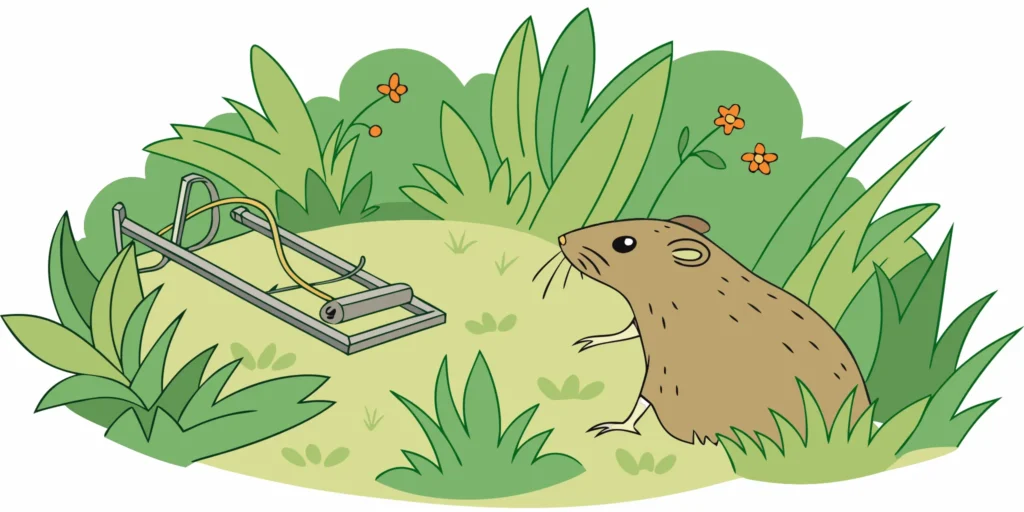
A fresh fan-shaped mound is not just an ugly patch of dirt. It is evidence that a gopher is already tunneling near roots, irrigation lines, or valuable plants. Reaching for a gopher repellent can feel like the fastest answer, but an odor that moves the animal a few feet is not the same as control. If you need a reliable result, compare what each method can actually accomplish: repellents may briefly redirect activity, while a correctly placed trap removes the animal causing the damage.
The short answer: Gopher repellents have not shown consistent field results, especially after an animal has established a tunnel system. Traps are more dependable because they work inside the burrow and provide visible confirmation of removal. Prevention tools such as underground mesh can protect selected roots, but they should support, not replace, active control.
The right response starts with the goal. If you only want to discourage digging near one newly planted bed, a barrier or temporary deterrent may help. If fresh mounds are appearing and plants are declining, you need to find the active tunnel and remove the gopher. The sections below explain the evidence, the tradeoffs, and a practical trapping process for homeowners, growers, nurseries, landscapers, and pest control professionals.
Does gopher repellent actually work?
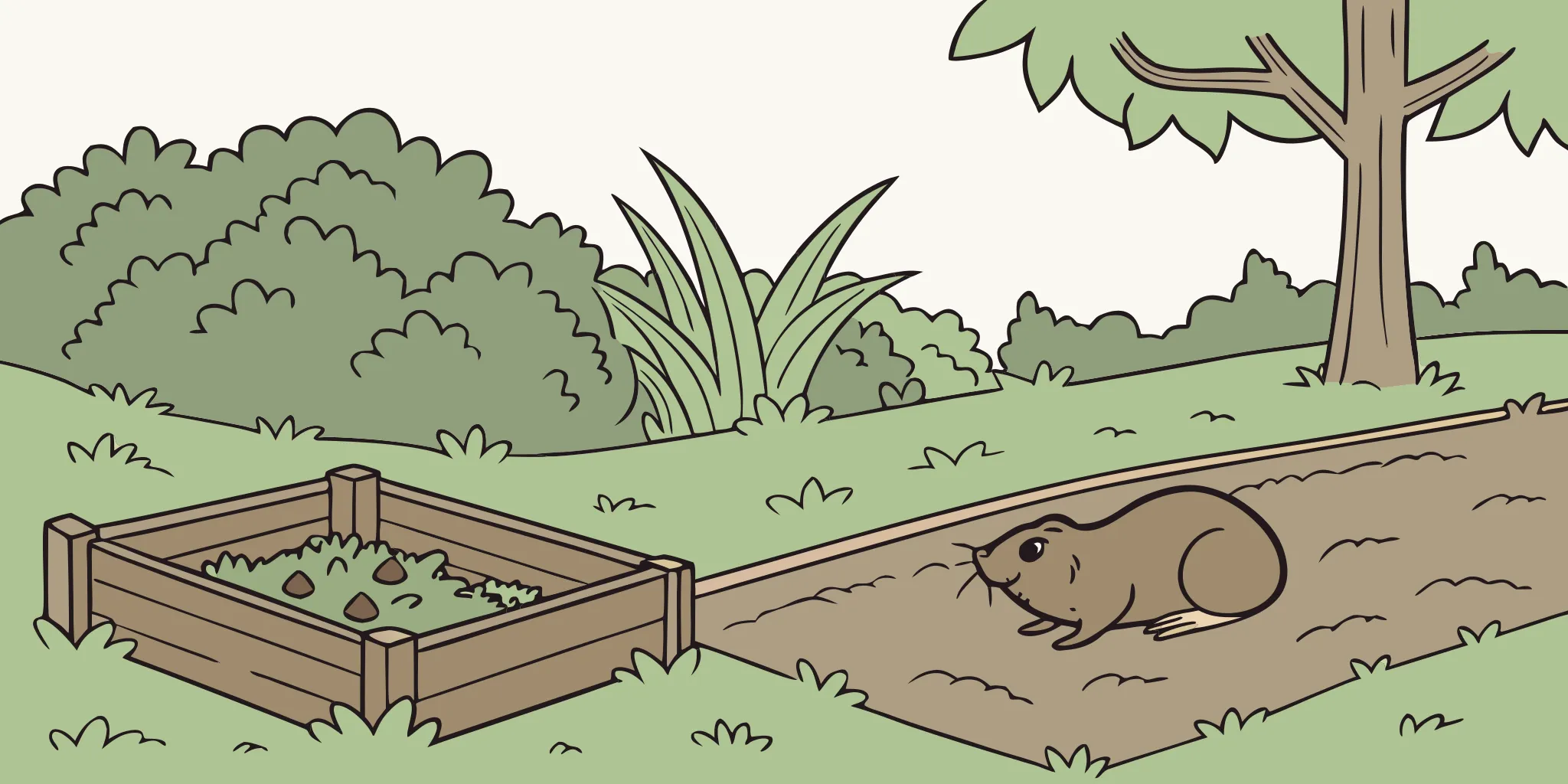
Gopher repellent may briefly change where a gopher digs, but it does not consistently remove an active animal or provide dependable, property-wide protection.
Why scents and tastes produce uneven results
Most repellents try to make soil, roots, or a small area unpleasant through smell or taste. Common options include castor oil, peppermint, rosemary, lavender, hot pepper products, and commercially formulated granules. Gophers have a strong sense of smell, so it is reasonable to expect them to notice these materials. The problem is that noticing a scent is not the same as leaving the property.
A pocket gopher spends nearly all of its time underground. Its tunnel network can include feeding runs, nesting areas, storage chambers, and routes to other parts of the property. When one section becomes unpleasant, the animal can seal it, dig around it, or feed elsewhere. Soil type, moisture, rain, irrigation, product concentration, and tunnel depth also affect whether a repellent reaches the animal at all.
What field research tells us
Controlled field evidence does not support treating repellent as a reliable stand-alone solution. Research on an in-soil capsicum oleoresin product found that it did not reduce pocket gopher activity. That result illustrates the main limitation: a treatment can seem potent above ground without changing what an established gopher does below ground.
Repellents can also make results difficult to measure. If no new mound appears beside the treated bed, the product may look successful even though the gopher simply opened a new feeding route across the yard. Without confirming removal, you cannot know whether roots remain at risk.
When a deterrent may still be useful
A temporary deterrent may be worth trying when there is no confirmed active tunnel and the goal is to discourage exploratory activity near a limited area. It may also serve as one layer in a broader plan that includes barriers, monitoring, and trapping. Set a clear limit before starting: if fresh mounds continue or shift to another area, move to a method that removes the animal rather than repeatedly applying more product.
Gopher repellent vs. gopher traps
Repellents attempt to redirect a gopher, while traps remove it; for active infestations, traps offer the more reliable and measurable outcome. Compare Cinch’s gopher trap options to match the equipment to your property and tunnel size.
Compare control, proof, and long-term cost
The most important difference is confirmation. A repellent offers no direct proof that the gopher has left. A trap allows you to verify a catch, close the tunnel, and watch for any remaining activity. That feedback matters because a quiet section of lawn may mean success, temporary inactivity, or a rerouted tunnel.
Repellent products also need repeat purchases and applications. Rain, irrigation, soil movement, and time can weaken their effect. A well-built steel trap can be reset and reused through many seasons. Research comparing management methods has found that trapping can be a cost-effective approach, particularly when operators improve placement and reuse equipment.
| Decision factor | Gopher repellent | Mechanical trap |
|---|---|---|
| Primary purpose | Discourage or redirect activity | Remove an active gopher |
| Proof of success | No direct confirmation | Visible confirmation of a catch |
| Consistency | Varies with soil, weather, and animal behavior | Depends mainly on tunnel location, fit, and placement |
| Ongoing cost | Repeat product purchases and applications | Reusable equipment |
| Best role | Limited deterrence within a larger plan | Active control in occupied tunnels |
For homeowners ready to switch to trapping, the professional gopher traps in Cinch’s Deluxe Gopher Kit are backed by university research and designed for repeated use season after season.
Why barriers are different from repellents
Wire baskets and underground mesh do not rely on smell or taste. They physically block access to roots or planting areas. A properly installed barrier can be valuable around a new raised bed, young tree, or high-value planting. However, barriers are easiest to install before planting and protect only the enclosed area. They do not remove a gopher already using the surrounding tunnel system.
Use safety as part of the decision
Any control method must be used according to its instructions and with the property in mind. Mechanical traps should remain inside the opened tunnel and be covered or otherwise secured so children, pets, and non-target wildlife cannot reach them. For property owners who want to avoid toxic bait, trapping provides a direct way to control gophers without poison.
Confirm that the gopher problem is active
Before treating or trapping, look for fresh fan-shaped mounds, locate the plugged side, and confirm an occupied main tunnel nearby.
Read the mound pattern
Pocket gophers push excavated soil to the surface, usually creating a fan-shaped or crescent-shaped mound with a plugged opening near one edge. Fresh mounds tend to have loose, darker, or more moist soil than older mounds. A line or cluster of new mounds can help reveal the direction of the tunnel system.
Do not assume every mound belongs to a gopher. Mole mounds and surface ridges have different patterns and require different equipment. Correct identification prevents wasted time and poor trap placement. Cinch Traps offers separate tools for these pests, and its mole and gopher FAQ can help with identification and sizing questions.
Find the main tunnel, not the mound plug
The visible mound is displaced soil, not usually the best place for a trap. The main tunnel often runs several inches underground and to the side of the mound. Start on the plug side and use a gopher probe or sturdy rod to test the soil roughly 6 to 12 inches away. A sudden drop with reduced resistance can indicate the open run.
Probe carefully in a widening pattern until you can reproduce the drop. Then open a small section with a shovel or trowel and verify that you found a tunnel with two directions, rather than a short lateral route ending at the mound. Accurate location is one of the biggest factors in trapping success.
Confirm occupancy before investing effort
If you are unsure whether an old tunnel is active, open a small section and check it later. An active gopher often returns to close an opening that lets in light or air. A replugged opening, a new mound, or recently damaged plants supports immediate action. Old, dry, undisturbed tunnels may no longer be occupied.
How to get reliable results with a gopher trap
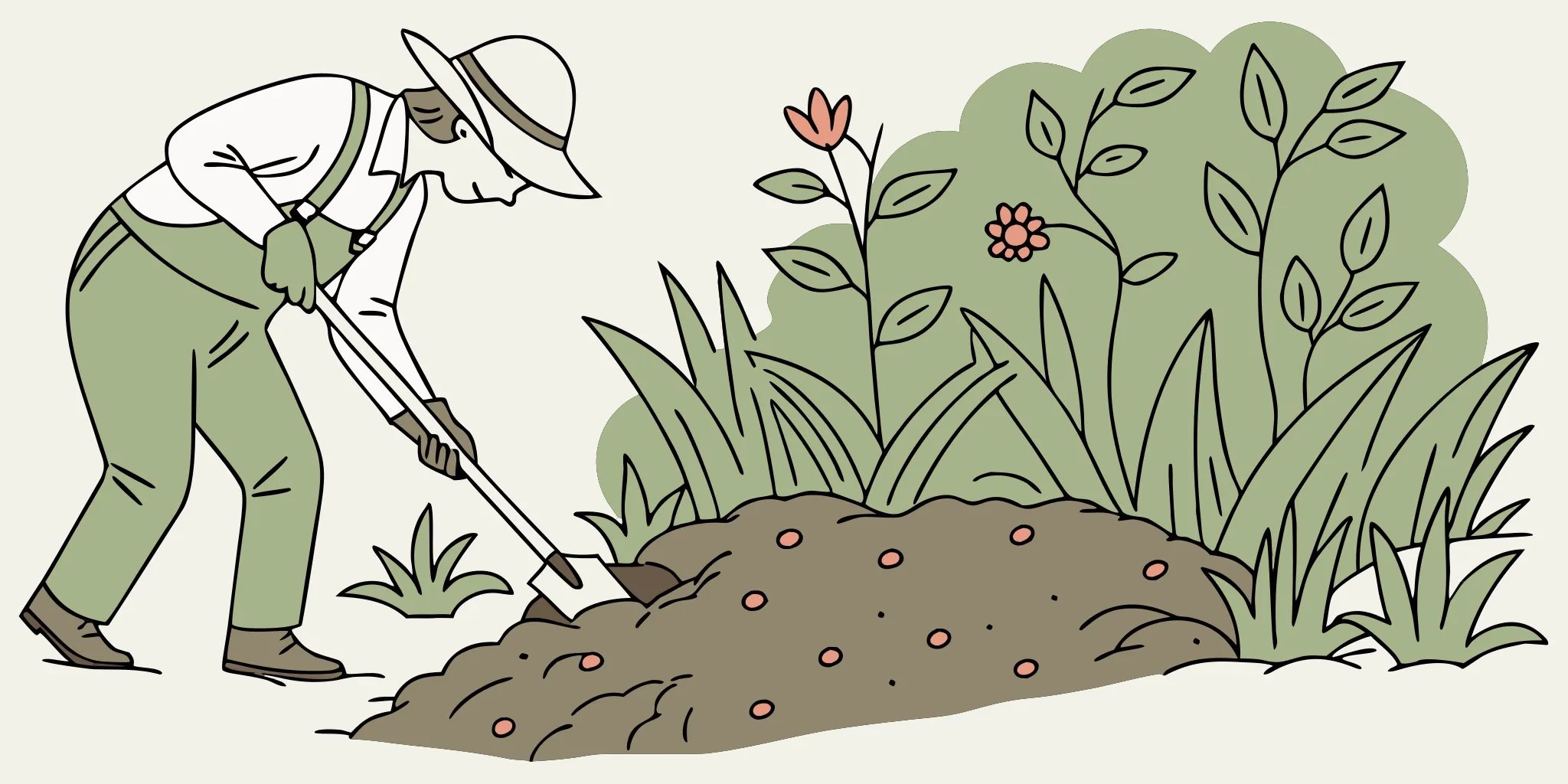
Reliable trapping depends on locating the active main run, matching the trap to the tunnel, setting it securely, and monitoring it consistently.
Choose a trap that fits the tunnel
A trap should fit the burrow closely enough that the gopher encounters the trigger while traveling through its normal route. A device that is too small may leave space to pass around it. One that is too large may not seat correctly. Cinch gopher traps come in multiple sizes so operators can match common tunnel widths instead of forcing one tool into every situation.
Durability also matters. Cinch traps are made from American steel in Oregon and are designed for repeated field use. Reusable equipment is particularly important for nurseries, farms, landscapers, and pest control professionals who need to respond to new activity throughout the year.
Set the trap in the active run
- Locate the main tunnel: Probe near a fresh mound until you find a repeatable drop into the open run.
- Open a working hole: Dig carefully to expose the tunnel without collapsing more of it than necessary.
- Prepare the trap: Follow the product instructions, set the trigger, and keep hands clear of the working mechanism.
- Seat it securely: Place the trap into the tunnel at the correct depth and orientation, with a close fit that guides the gopher toward the trigger.
- Cover the opening: Exclude excess light while keeping loose soil from interfering with the mechanism.
- Mark and check the set: Note the location and inspect it daily. Follow all applicable local rules for trap use and disposal.
Some tunnel layouts support setting traps in opposite directions so either direction of travel is covered. Follow the manufacturer’s directions for the specific trap and site. Never place an exposed set where a child, pet, or non-target animal can contact it.
Diagnose an empty or plugged trap
If the trap is repeatedly packed with dirt, the fit, placement, or tunnel choice may be wrong. The gopher may be treating the opening as a repair site rather than traveling normally through it. Recheck that you are in the main run, remove loose soil that could jam the trigger, and make sure the trap is stable.
If there is no result after about 24 to 48 hours and fresh activity continues elsewhere, relocate to the newest active tunnel. Monitoring and adjustment are part of good control. For a more detailed walkthrough, review Cinch’s guide to effective gopher control methods.
Build prevention around removal, not instead of it
Prevention works best after active gophers are removed, using barriers, routine monitoring, and quick response to new mounds.
Protect high-value roots with physical barriers
Install appropriately sized underground mesh or gopher baskets when planting valuable trees, shrubs, bulbs, or garden beds. Physical barriers create a defined protected zone and do not lose strength because of rain or irrigation. Installation details matter: gaps, shallow edges, and unsuitable mesh can give a gopher a route inside.
For an established landscape, retrofitting a full barrier can be disruptive and expensive. Focus on the plants or zones where damage would be most costly, then monitor the rest of the property. A barrier is not evidence that the resident gopher is gone, so pair it with active control when fresh signs are present.
Monitor boundaries and vulnerable areas
New gophers can move into a cleared property. Check fence lines, field edges, irrigated areas, and beds with tender roots on a regular schedule. The sooner a fresh mound is found, the smaller the active tunnel system may be and the faster a trained operator can respond.
Keep a simple map or log on larger properties. Mark mound dates, trap locations, catches, and areas with recurring activity. This turns control from guesswork into a repeatable process and helps crews distinguish a new animal from an unresolved set.
Know when repellent is no longer worth repeating
If a gopher repellent does not stop fresh activity after the defined trial period, do not keep applying it while damage spreads. Shift to removal. Repeated movement from one bed to another is evidence that the animal remains active, not that the property is protected.
Choose an approach for your property
Homeowners, growers, nurseries, and pest control professionals share the same goal, but the right trapping and monitoring plan depends on scale, risk, and labor.
Home gardens and residential yards
For a small yard, begin with correct identification and the freshest mound. Protect children and pets by keeping every trap within the tunnel and securing the site according to instructions. If the gopher is near a favorite tree or vegetable bed, combine active trapping with a barrier around the highest-value roots.
A homeowner may be tempted to cycle through coffee grounds, vibrating stakes, scented plants, and granules because each option seems easy. That trial sequence can cost more time than learning to locate the main tunnel. A reusable trap provides a clear result and can be stored for the next sign of activity.
Nurseries, farms, and commercial landscapes
Commercial operators need consistency across many acres or many customer properties. Establish a route for checking known pressure zones, train staff to recognize fresh mounds, and maintain enough trap sizes to match local tunnel conditions. Track placement and results so the team can improve efficiency rather than repeatedly treating the same inactive areas.
Root loss can erase years of work in a short period, particularly around young trees and valuable stock. A rapid-response plan limits exposure. Reusable steel equipment also avoids the recurring material cost of applying gopher repellent throughout a large growing operation.
Professional pest control programs
Professionals benefit from methods that can be documented for customers. Trap placement, inspection, and confirmed catches create a transparent service record. Trapping also allows a technician to adjust based on observed activity rather than promising that a scent will push the animal beyond the property line.
Every site still requires judgment. Soil texture, irrigation, tunnel depth, surrounding habitat, and reinvasion pressure can affect results. Use the same disciplined sequence each time: identify, locate, set, inspect, document, and monitor.
Frequently Asked Questions
These concise answers explain what common repellents can and cannot do, and when trapping is the more dependable response.
What is the best repellent for gophers?
No gopher repellent has shown consistently reliable control on its own in field conditions. Strong scents may shift activity briefly, but trapping is the more dependable choice when an active gopher must be removed.
What smells do gophers hate the most?
Gophers may avoid sharp scents such as peppermint, rosemary, lavender, and camphor. However, an unpleasant smell does not reliably remove a gopher or protect an entire property because the animal can close or reroute a tunnel.
Will coffee grounds repel gophers?
Coffee grounds may create a temporary odor near the surface, but there is no strong evidence that they reliably control an active gopher. They also lose their scent and may never reach the main tunnel.
How do you get rid of gophers permanently?
Remove active gophers with correctly sized traps placed in their main tunnels, then monitor for fresh mounds and trap new activity quickly. Barriers installed around valuable plants can help prevent future damage, but they do not remove existing gophers.
Stop redirecting gophers and start controlling them
For an active tunnel system, a correctly selected and placed trap offers the clearest path from ongoing damage to confirmed control.
A repellent may have a limited role around a protected area, but it cannot tell you whether the gopher is gone. Find the main tunnel, use a trap that fits, check it consistently, and monitor for new mounds after removal. That practical process protects a residential garden and scales into a repeatable program for growers and professionals.
Choose durable equipment built for the job and get help matching the trap to your tunnel conditions.