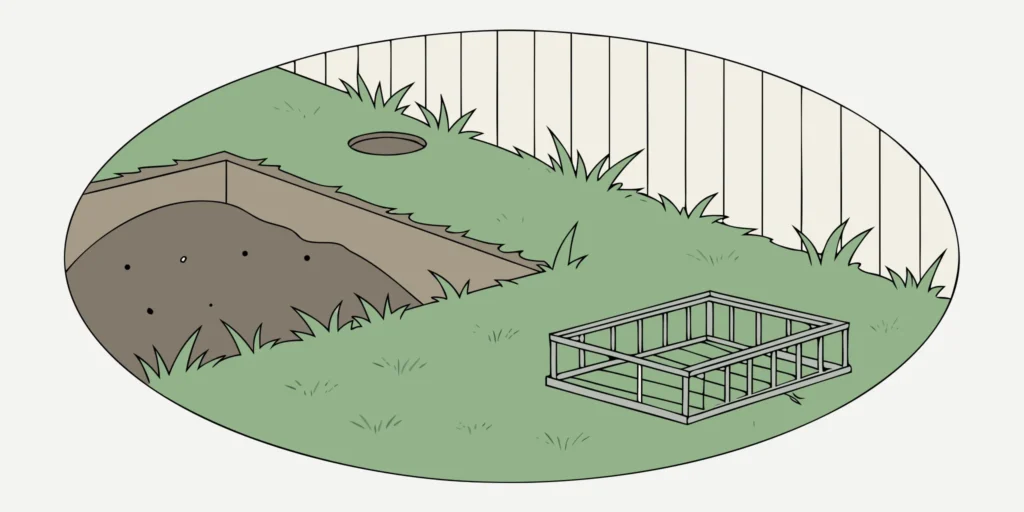
Fresh fan-shaped mounds mean a gopher is actively damaging roots and irrigation below your yard. A properly placed mechanical trap stops that damage without putting poison near pets, children, or wildlife.
Shop Cinch Traps’ proven gopher trap
How to get rid of gophers without poison starts with finding a fresh, fan-shaped mound, then locating the active tunnel beneath it. Place durable mechanical traps inside that tunnel, set and cover them as directed, and check them often so you can reset them when needed. Position traps in opposite directions to intercept movement either way, then continue trapping until fresh mounds stop appearing around the nearby problem area. This direct method targets the animal causing damage, requires no food bait, and helps you confirm success by watching for new activity. UC Statewide Integrated Pest Management recommends traps and warns that toxic baits can threaten wildlife, pets, and children.
The key question is not whether traps work, but how to place and monitor them so each active tunnel gets prompt attention. How to get rid of gophers without poison breaks that process into clear steps you can follow from the first fresh mound. Here’s how.
How to get rid of gophers without poison
The most reliable poison-free answer is to place mechanical traps inside active gopher tunnels. Confirm fresh activity, locate the main runway, align a trap with that travel path, and check it regularly. This direct approach avoids toxic bait and gives you a result you can verify.
The most reliable poison-free answer is to place mechanical traps inside active gopher tunnels. Traps act where gophers travel, so they do not depend on an animal eating bait. The University of California’s pest management program lists traps as a way to reduce the gopher population without chemicals.
Start by confirming the pest, finding fresh activity, and opening an active tunnel. Then set the right trap in that underground path and check it often. This direct approach also shows whether your control effort worked.
Why underground traps work
Pocket gophers spend most of their time below ground and feed on plant roots. A trap placed in an active runway meets the gopher in the space it already uses. It also avoids the risk that comes with leaving toxic bait in a yard.
Mechanical trapping gives you a clear result that you can inspect. No food bait is needed, and you can reset the trap if fresh damage appears. For setup details, follow these effective trapping methods before placing a trap.
- Use recent soil mounds to narrow the search area.
- Probe beside a mound to find the main tunnel.
- Place traps in the tunnel, not on the surface.
- Check the area for new soil after each set.
Fresh crescent-shaped mounds
A fresh gopher mound often looks like a fan or crescent of loose soil. Its plugged opening sits off to one side, rather than in the center. Fresh, dark, loose soil points to recent digging and helps you choose where to probe.
Do not assume every old mound holds an active tunnel. Focus on the newest mound in a cluster, then search beside it for the underground runway. This keeps trap placement tied to current activity instead of past damage.
Gopher damage versus mole damage
Gophers leave crescent or fan-shaped mounds with an off-center plug. Moles tend to leave round mounds with a plug near the center. They may also make raised surface ridges as they move through shallow soil.
This difference matters because the trap must match the animal and its tunnel pattern. If you confirm gopher signs, place the trap in the gopher’s active underground path. A practical guide to trapping gophers can help you plan the set and monitor fresh activity.
How do you trap gophers in four steps?
Trap a gopher by finding the freshest mound, probing for its active main tunnel, opening the tunnel carefully, and placing a secured mechanical trap in the travel path. Check the set regularly and relocate it near newer activity when fresh mounds appear elsewhere.
Learning how to get rid of gophers starts with placing a trap in a tunnel that the animal still uses. A fresh mound gives you the best place to begin.
Before you start
Gather a mechanical tunnel trap, a narrow probe, a small hand trowel, gloves, and a marker or flag. Read the trap maker’s directions before setting its trigger. Trap designs differ, so the right trigger position and safe handling steps may also differ. For anyone who needs more than a single trap, a professional gopher kit supplies three traps plus the accessories you would otherwise buy separately.
Look for a fan-shaped mound with a plugged opening set off to one side. That shape helps separate gopher activity from a mole mound. Start with the newest loose soil, since an old mound may lead to a tunnel that is no longer active.
Probe from more than one angle if you do not find the passage on your first try. A tunnel often feels like a sudden drop beneath the probe. Work slowly, and stop once you can trace its direction.
The four-step process
This method keeps the work focused on the tunnel rather than the mound itself. For more detail on trap placement, use Cinch Traps’ How to Trap Gophers guide as you work through these steps.
Find a fresh mound and active tunnel. Probe the soil near the plugged side of the mound until the tip drops into an open space. Confirm the tunnel’s direction before digging.
Open the tunnel with care. Use the trowel to make a small access hole without crushing the tunnel walls. Clear loose soil from the path where the trap will sit.
Set and secure the trap. Place the mechanical trap in line with the open tunnel, following its directions for trigger position. Anchor it as directed, then mark the spot so people and pets can avoid it.
Check the trap and relocate when needed. Inspect it on the schedule in the maker’s directions. If you see fresh activity elsewhere but no catch, reset the trap in a newer active tunnel.
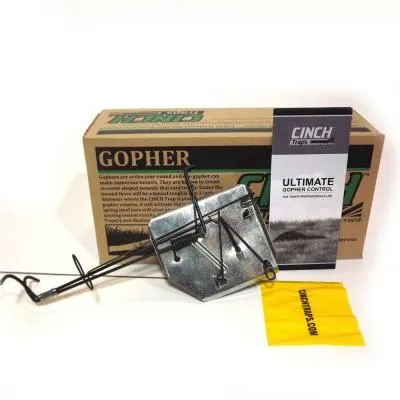
A careful opening matters because a blocked or damaged passage can keep the gopher from reaching the trap. Do not pack loose dirt around the trigger. Keep the trap aligned with the travel path, and secure it before leaving the site.
Checking and relocating
Mark each trap location and inspect the surrounding area for new soil. Consistent checks show whether the setup worked or whether the gopher shifted its digging. If a trap has not produced a catch and fresh mounds appear nearby, move it instead of waiting in an inactive tunnel. Probe near the newest mound, open the passage with care, and repeat the same setup.
Continue watching the area after a catch. A new mound can point to another active tunnel system, so treat it as a fresh setup rather than an old problem. Recheck your trap’s trigger and anchor each time you move it.
How do poison-free gopher control methods compare?
Mechanical traps provide direct, verifiable gopher control inside active tunnels. Exclusion barriers protect selected roots and beds but do not remove gophers elsewhere. Repellents and fumigation are difficult to verify, while poison bait introduces risks for pets, children, wildlife, and other non-target animals.
When deciding how to get rid of gophers, compare each method by its target, limits, and proof of success. Mechanical traps act inside active tunnels and provide a clear result. Barriers protect set areas, while repellents, poison bait, and fumigation may leave more doubt.
| Method | Main use | Key limit | Result check |
|---|---|---|---|
| Mechanical traps | Control in active tunnels | Requires correct tunnel placement | Direct and clear |
| Poison bait | Bait placed underground | Can threaten non-target animals | Often indirect |
| Repellents | Attempt to drive gophers away | Some devices lack proven results | Hard to confirm |
| Exclusion barriers | Protect beds, trees, or shrubs | Does not control gophers elsewhere | Check protected plants |
| Fumigation | Send smoke or gas into burrows | Gophers can seal tunnel sections | Hard to confirm |
Choose a Cinch gopher trap kit for a repeatable poison-free setup
Limits of bait, repellents, and fumigation
Poison bait can pose risks to wildlife, pets, and children. It may also be hard to confirm whether the target gopher took the bait. Research trials found that vibrating stakes and ultrasonic devices did not control gophers well. Smoke and gas cartridges also perform poorly because gophers can quickly seal their burrows. These findings appear in the Oregon State University Extension pocket gopher guidance.
Protection versus active control
Exclusion barriers serve a different purpose from traps. Hardware cloth beneath raised beds and wire baskets around roots can guard selected plants. Yet barriers do not address gophers already active beyond the protected space.
Traps pair active control with a result you can verify. Set them in active tunnels, inspect them often, and watch for fresh mounds after a catch. If new soil appears, reset traps near that activity instead of assuming the whole yard is clear.
Why do gopher traps fail?
Gopher traps usually fail because they sit in an inactive side tunnel, face the wrong direction, rock out of position, or have soil and roots blocking the trigger. Start near the freshest mound, align the trap with the travel path, clear its moving parts, and relocate when activity shifts.
When gopher traps fail, the trap itself is often not the problem. Most missed catches trace back to tunnel choice, poor placement, blockage, or timing. A careful reset usually works better than adding bait or changing methods too soon.
Start with the right tunnel
A trap in an empty side tunnel cannot catch a gopher using the main run. Start near the freshest mound, then probe beyond its soil plug until the probe drops into an open tunnel. If the probe reaches a pocket filled with loose dirt, keep searching for a clear run. Once you find it, remove only enough soil to set the trap and keep the tunnel shape intact.
Correct placement and a clear trigger
Place the trap where a traveling gopher must meet the trigger, not beside its path. For a main tunnel with traffic from either side, set traps in pairs facing opposite directions. Before leaving, check that pebbles, roots, loose soil, and tunnel walls do not block the working parts. Test the trigger’s movement and confirm the trap does not rock or sit at an angle.
- Wrong run: Relocate beside a fresh mound and probe for an open tunnel.
- Loose setup: Brace the trap so it cannot shift away from the trigger path.
- Blocked parts: Remove soil, roots, and stones that stop clean movement.
- Poor angle: Align the trap with the tunnel instead of placing it across the run.
Know when to move or switch
Do not keep adjusting a sound setup every few minutes. Give the gopher time to return, then inspect the trap on a regular schedule. If it stays untouched while fresh mounds appear elsewhere, move it to the newer activity.
A trap can also fail because the animal was misidentified. If the signs point to a mole, stop using the gopher setup. Switch to the right trap and placement method for the animal present. Correct identification prevents repeated resets in tunnels that no gopher will use.
How can you keep gophers from returning?
Keep gopher damage under control by flattening old mounds, checking frequently for fresh soil, and trapping new activity before it spreads. Protect valuable beds and young plants with underground wire barriers, but continue monitoring because barriers defend selected roots rather than removing gophers from the property.
Catching the active gopher solves the immediate problem, but follow-up work helps protect the area. Pocket gophers stay active year-round, so prevention depends on steady checks and a quick response. The goal is ongoing control, not a promise that gophers will never return.
Watch for fresh activity
After a catch, flatten the nearby mounds so new soil is easy to spot. Then inspect the area every few days at first. Focus on garden edges, fence lines, and the border between managed land and open ground. Also check near irrigation lines, young trees, and beds with root crops.
Protect high-value plants
Use physical barriers where damage would be hard or costly to repair. Line the bottom of a new raised bed with hardware cloth or suitable wire mesh before filling it. At planting time, place wire baskets around the roots of prized shrubs and young trees.
Choose mesh openings that block gophers while leaving enough room for roots to grow. Check exposed barrier edges during routine garden care, and repair gaps before planting again. Barriers protect selected areas, but they do not replace checks for fresh mounds elsewhere in the yard.
Respond before damage spreads
When a fresh mound appears, mark it and inspect the area soon. Confirm activity before opening a tunnel or setting a trap. Keep your trap clean, working, and stored where you can reach it. A ready trap makes early action easier when signs return.
What should you look for in a gopher trap?
Choose a gopher trap designed for underground tunnel placement, with a clear trigger, stable fit, and durable materials for repeat use. Cinch gopher traps are handmade in Oregon from galvanized American steel, supported by a lifetime guarantee, and available in sizes for different tunnels.
A good gopher trap should be simple to set, sturdy enough for repeat use, and suited to the tunnel where it will sit. These traits matter more than extra parts or a complex design. The goal is a tool you can place correctly and check with ease.
A design made for tunnel placement
Start by choosing a mechanical trap designed for gopher burrows. It should fit inside the tunnel without needing food bait or loose poison. Look for a design that is easy to position and stable once set. A trap that shifts, twists, or blocks the tunnel poorly can make correct placement harder.
Strong materials and repeat use
Durability matters because soil, moisture, roots, and stones put stress on a trap. Galvanized American steel is a practical choice for a tool used below ground. Check the frame, trigger, and moving parts for a firm build with few weak points.
A reusable trap should reset without bent parts or a long cleanup process. Warranty terms can show how firmly a maker stands behind its materials. Cinch offers a lifetime guarantee on its mechanical traps, and you can review the available gopher trap sizes and product details.
A setup beginners can repeat
For a beginner, the best trap is one with clear setting steps and a visible trigger position. You should be able to tell when it is set without guessing. Simple handling also helps you place multiple traps in less time.
- Choose a trap sized for the tunnel and soil conditions.
- Check that the trigger moves freely before each use.
- Use a design that can be set and removed with basic hand tools.
- Confirm that instructions explain placement, checking, and resetting.
Frequently Asked Questions
These quick answers cover how to find active gopher tunnels, why correctly placed traps work, what beginners should look for, whether tunnel openings should be covered, and why ultrasonic stakes are unreliable. Always follow the safety and setup directions supplied with your specific trap.
How do you find an active gopher tunnel?
Look for fresh, loose soil in a fan-shaped mound with a plugged opening off to one side. Probe the soil near the flat side of the mound until the probe drops into the main tunnel.
Should I use traps to get rid of gophers?
Traps are an effective poison-free option for controlling pocket gophers when placed inside active tunnels. Set traps in pairs facing opposite directions, then check and reset them often. Continue monitoring the area after a catch.
What type of gopher trap is best for beginners?
A mechanical trap with a simple setting process and clear placement instructions is a practical choice for beginners. Choose a trap designed specifically for gophers, follow its safety directions carefully, and practice setting it above ground before placing it.
Do I need to block the light in the tunnel for traps to work?
Follow the instructions for your trap model. Many tunnel-trap setups call for covering the opening after placement to keep the tunnel close to its normal condition. Use a cover that will not disturb the mechanism, and mark the location clearly so people and pets avoid it.
Are ultrasonic vibrating stakes effective against gophers?
Research has not shown ultrasonic or vibrating stakes to provide effective gopher control. For poison-free control, trapping active tunnels and protecting plant roots with underground wire barriers are more reliable approaches.
Ready to control gophers without using poison?
Starting now helps you identify fresh activity sooner, place traps where gophers are moving, and begin steady, poison-free control. With a durable mechanical trap ready for repeated use, you can respond to new signs quickly and manage future activity on your schedule.
Shop durable Cinch gopher traps and begin your first setup today
Contact Cinch Traps if you need help choosing the right trap or planning your next step.