

Managing several traps across a farm, acreage, estate, or large landscaped property is not the same as setting one in a backyard. The work becomes easier when every zone has a purpose, every station has an ID, and every move is based on fresh evidence.
Shop Cinch Traps for reusable mole and gopher trapping equipment as you build your property plan.
The most practical trap rotation strategies for large properties combine species identification, confirmed activity, zone-based placement, regular inspections, and a simple station log. Keep productive stations in place, move unreliable stations to confirmed routes, and use weather, soil, and capture history to decide when a rotation is justified.
That approach avoids two common mistakes: scattering equipment over every visible mound and moving every trap on a fixed calendar even when the tunnel is still active. The sections below show how to organize a repeatable system for both moles and pocket gophers.
Field note: A workable rotation plan gives each trap a location, a reason for being there, and a documented next action.
What Should You Map Before Setting Multiple Traps?
Begin with a field map before carrying equipment across the property. Divide the grounds into zones that make sense for the people doing the work, such as north lawn, vegetable garden, orchard edge, pasture, drainage corridor, or athletic field. The zones do not need to be equal in size. They need to be easy to recognize and specific enough that another person can find a station without a long explanation.
Mark visible damage and access conditions on the map. Include fresh mounds, raised surface runs, damaged plants, irrigation lines, fences, driveways, buildings, gates, livestock paths, and areas where children or equipment regularly pass. Also mark places where a trap would be difficult to inspect safely. A station that is technically close to an active route may still be a poor choice if it is likely to be disturbed by mowing. Foot traffic, or irrigation work.
Identify the animal before choosing the equipment
Do not treat every mound as evidence of the same pest. UC IPM describes pocket gopher mounds as loose, often crescent-shaped soil with a plugged opening to one side. Mole mounds are generally more circular and have the plug near the center. Gophers spend most of their time underground and can damage roots, irrigation lines, and lawns. Moles create underground feeding and travel tunnels, so the setup and inspection process differs.
When signs are unclear, compare the mound shape, opening, nearby plant damage, and tunnel pattern before assigning a station. The Cinch Traps mole versus gopher guide is a useful internal reference for the first identification pass. For a research-based comparison, review UC IPM's mole identification guidance and its pocket gopher management guidance.
Confirm activity and label the route
After identifying the likely species, trace the route that deserves attention. A line of mole mounds can indicate a connected tunnel. For a mole route, compress a short section of suspected tunnel and check it again within 24 hours. Freshly raised soil or turf is a useful sign that the route is active. The University of Minnesota Extension's mole-trapping guidance explains this activity check.
For pocket gophers, fresh mounds are the clearest reason to investigate an underground burrow. UC IPM recommends locating active burrows and setting traps inside them. Mark each confirmed route with a station code, such as NORTH-M03 for a mole station or ORCH-G02 for a gopher station. Keep the code on the map and on a weather-resistant tag near the equipment.
Takeaway: Map zones, access limits, species signs, and confirmed routes before setting multiple traps. The map is the control center for every later rotation decision.
How Do You Choose Placement Patterns Across a Large Property?
Use a route-based pattern rather than a uniform grid. A grid may look orderly, but it can place traps in inactive soil while leaving productive routes uncovered. Start with confirmed activity, then choose stations that are stable, accessible, and easy to inspect. Within each zone, rank locations as primary, secondary, or reserve routes. That gives you a plan for moving equipment without losing track of why a station was selected.
Place mole traps on active, suitable tunnels
Mole signs can include shallow feeding tunnels and more established travel tunnels. Choose a section where the trap can engage the tunnel cleanly and where the soil can hold the setup. Avoid forcing a trap into a route filled with roots, rocks, compacted debris, or loose fill. A nearby section of the same confirmed route may offer a better working surface.
For a harpoon-style mole trap, position the legs over the prepared tunnel and push them firmly into the ground. The trip pan should sit at the level needed to engage the tunnel, and the set trap should remain stable when touched. The Cinch Traps setting guide can support a consistent setup when several people share field duties. A shared method matters because inconsistent placement makes station results difficult to compare.
Place gopher traps inside active burrows
Gopher traps belong underground in an active burrow, not beside a mound in open air. UC IPM notes that pincer and box traps are common choices, and recommends placing traps in pairs facing each other. Covering the opening so light does not enter, checking them often, and resetting as needed. Follow the instructions for the specific gopher trap you are using and take care when opening or probing a burrow.
On a large property, use the map to record which burrow entrance led to each station. If a gopher station produces no result, do not assume that every nearby mound is inactive. Check whether the trap was in a fresh burrow, whether the entrance was covered properly, and whether the station remained undisturbed. Then decide whether to reset it, test another section of the same burrow, or move the equipment to a newer active mound.
Protect the station from avoidable disturbance
Place stations where inspections can happen without damaging the surrounding grounds. Keep a safe distance from routine mowing paths, playgrounds, livestock access, and irrigation work. Use visible field markers that help the crew find the station without making the trap itself a target for accidental contact. The marker should identify the station, not invite people to handle the equipment.
Reliable placement uses active routes first, then filters those routes by tunnel fit, soil stability, inspection access, and the correct species-specific setup.
How Often Should You Rotate Mole and Gopher Traps?
There is no useful property-wide schedule that says every trap must move after the same number of days. Rotation should respond to what the station tells you. A quiet trap may indicate poor placement, a temporary change in activity, a disturbed setup, or an inactive route. Record the observation before moving anything.
- Confirm the route. For a mole station, compress a suspected tunnel and check for renewed activity within 24 hours. For a gopher station, prioritize a fresh mound and locate the active burrow. Do not rotate equipment from one unconfirmed location to another unconfirmed location.
- Inspect on a consistent field rhythm. During an active trapping push, walk the route map often enough to identify captures, sprung traps, disturbed covers, and fresh signs before the information becomes stale. Use the same inspection fields for every station.
- Reassess after rain or irrigation. Water can change soil firmness and reveal new activity. Recheck the zones, but do not automatically move every trap. Keep stations that remain active and stable.
- Respond to a failed setup. A trap that shifts, springs without a capture, or cannot engage cleanly deserves an inspection before it is moved. Correct the cause when possible. If the location remains unreliable, rotate the unit to another confirmed route.
- Use capture and activity history. Keep a productive station in place while the route continues to show useful activity. Move a station after repeated inactivity, changed tunnel signs, poor soil support, or a stronger opportunity elsewhere.
Season and weather can change what you see. UC IPM notes that mole activity may slow or be absent in extreme conditions. A quiet period during severe heat, cold, or drought is not enough by itself to declare a zone clear. Record the conditions and look for renewed signs before making a property-wide change.
For gophers, continue trapping while fresh mounds appear. UC IPM advises checking traps often and resetting as needed until new mound formation stops. That does not mean every unit must stay in its first location. It means the rotation plan should follow the most recent active burrows instead of a calendar that ignores new damage.
Takeaway: Rotate based on confirmed activity, species signs, station stability, weather, and results. A fixed calendar can organize inspections, but field evidence should determine relocation.
How Can You Track Which Trap Stations Produce?
A station log turns a large property from a collection of guesses into a manageable system. Give every unit and location a short ID, then use the same fields at every inspection. A notebook works for a small crew. A shared spreadsheet can be more practical when several people inspect different zones or when equipment moves between properties.
Review the Cinch Traps store when you need equipment that can be assigned, inspected, and moved through a repeatable field plan.
| Inspection result | Record | Next decision |
|---|---|---|
| Capture | Date, station ID, species, route, and conditions | Mark the route as productive and inspect nearby fresh activity before redeploying. |
| Sprung with no capture | Trigger status, soil, cover, disturbance, and weather | Check alignment and setup. Reset, correct, or move only after identifying the likely cause. |
| Set with no useful sign | Last activity check, days in place, and current route evidence | Reconfirm activity. Rotate to a verified route if the sign has shifted. |
| Unstable station | Loose soil, roots, rocks, flooding, or traffic | Choose a safer, firmer location on a confirmed route and record the change. |
Use the same fields at every station
- Zone, station ID, suspected species, and exact route or mound.
- Date set, inspection date, and days in place.
- Fresh activity, trap status, capture status, and equipment condition.
- Soil firmness, rainfall or irrigation, disturbance, and access issues.
- Next action: monitor, reset, relocate, clean, repair, or hold in reserve.
Review the log by zone after each inspection round. Look for repeated no-result stations, productive routes, stations that fail after watering, and equipment that is often moved without a clear reason. Those patterns show whether the problem is route selection, setup, soil, timing, or equipment condition. They also help a supervisor assign the next inspection without revisiting the full property history.
Do not use the log to create a false sense of precision. A capture does not prove every nearby route is active, and a quiet station does not prove the zone is clear. The log is a decision aid. It preserves observations so the next move is based on the property as it is now.
Track the station, route, conditions, and outcome together. The best rotation decision is the one another person can understand from the record.
What Maintenance Checks Keep a Trap Rotation Reliable?
Moving a trap does not reset the need for inspection. Each unit should be checked before returning to service, especially when it has been exposed to wet soil, roots, stones, mud, or repeated handling. A reliable rotation includes equipment checks as well as route checks.
Inspect the ground and mechanism
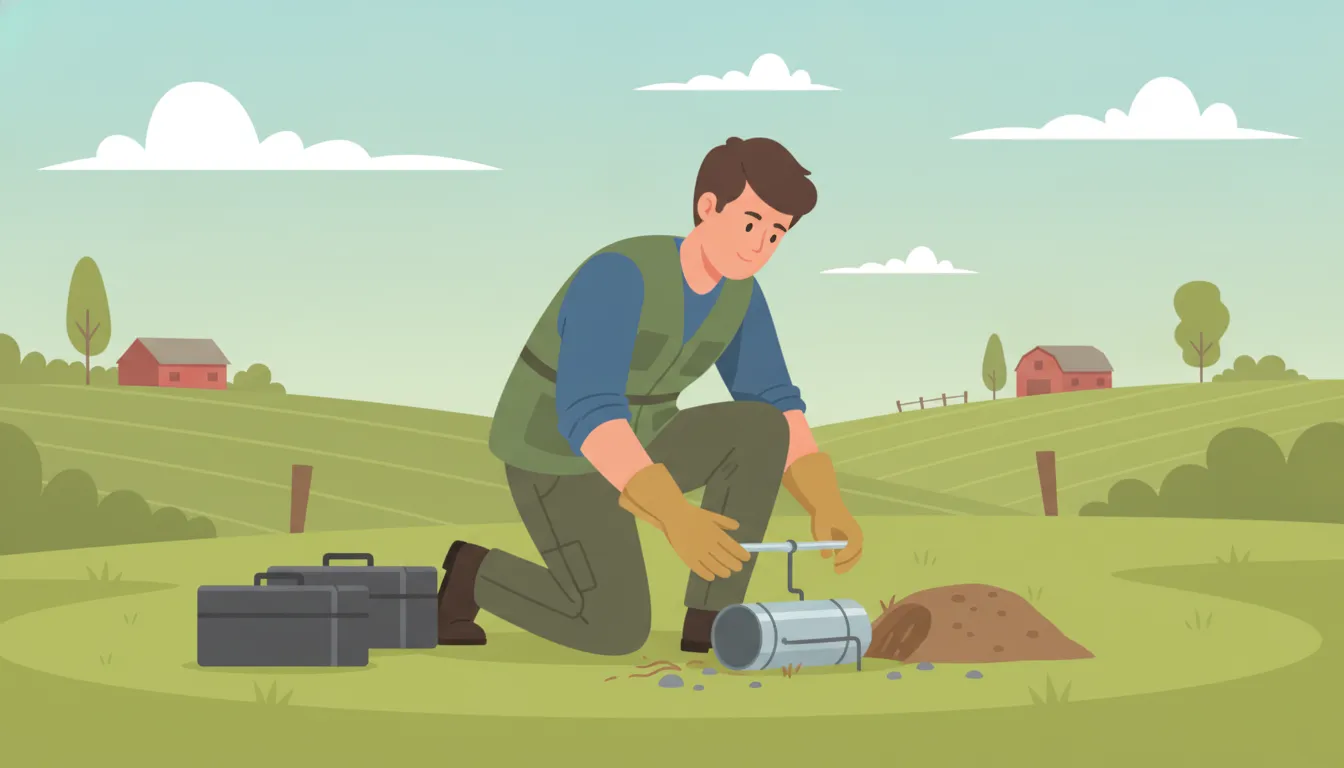
Clear loose material from the tunnel opening and the area where the trap will sit. Look for roots crossing the path of moving parts, stones that could block movement, and clumps of soil that prevent the trip pan or cover from sitting correctly. If the ground is too soft to hold the setup, choose another stable section of the confirmed route rather than relying on an unstable anchor.
Test before leaving the station
For a harpoon-style mole trap, hold the unit securely and test the spring and tines as directed by the product instructions. The movement should be smooth and decisive. Set aside equipment that hesitates, binds, or shows damage. Do not compensate for a questionable unit by putting it in a busier tunnel. A maintenance note keeps that unit from quietly returning to the field.
For gopher stations, check that the trap is positioned correctly inside the burrow, that the entrance is covered as required, and that the setup has not been disturbed. Follow the instructions for the exact model. Keep tools and spare equipment organized by zone so a crew member does not leave an open station while searching for a replacement.
- Clear roots, pebbles, loose soil, and debris from the working area.
- Test moving parts safely and set aside units that bind or show damage.
- Confirm that legs, covers, or anchors remain stable in the soil.
- Record cleaning, repair, replacement, and storage needs in the log.
Cinch Traps are handmade in Oregon from galvanized steel and backed by a lifetime warranty, according to the company context. Proper cleaning and inspection help a durable product perform as intended. Store each unit clean and dry, and make sure its working parts remain clear before the next setup.
Reliable rotations depend on clean mechanisms, stable stations, correct species-specific placement, and a maintenance record that follows each unit.
How Can Trap Rotation Strategies for Large Properties Control Costs?
Cost control starts with using equipment deliberately, not with buying the largest possible quantity. Count the active stations, reserve units, and equipment currently out for cleaning or repair. Then compare that inventory with the number of zones you can realistically inspect. A property does not save money by owning more traps than the crew can set correctly and check on schedule.
Build an equipment pool around the field plan
Separate the inventory into active units, clean reserve units, maintenance units, and retired units. Label the storage areas so a person can find the right equipment without opening every box. If mole and gopher work happens on the same property, keep the species-specific equipment distinct. This avoids sending a crew member into the field with a trap that does not match the animal or tunnel.
Durable, reusable equipment can support repeated rounds when it is cleaned and inspected between uses. The Cinch Traps overview of how the products work provides a starting point for understanding the setup process. Use the mole trap product information or gopher trap product information when confirming which item fits the task. Product pages and current availability should be the source for purchase decisions rather than assumptions about package contents.
Buy for coverage, not duplicate convenience
Before ordering more equipment, review the station log. You may need additional units when several confirmed routes must be monitored at the same time. You may need fewer new units when existing equipment is sitting unused because stations were never confirmed. A reserve is useful when a property is remote, inspection windows are limited, or a unit must be removed for cleaning. The right number depends on route activity, crew capacity, and how quickly stations can be revisited.
Accessories can also support efficient rotations when they solve a documented field problem. For example, the Cinch Traps tunnel tool may be relevant when a crew needs a consistent way to locate or prepare a route. Do not add accessories simply because they are available. Add them when the log shows that a tool will reduce setup time, improve consistency, or protect equipment during repeated work.
If several people manage the property, assign responsibility for inventory at the end of each inspection round. Record which units are in the field, which are in reserve, and which need maintenance. This simple handoff prevents duplicate orders and helps the next person understand what equipment is actually available.
Control costs by matching inventory to confirmed routes, inspection capacity, maintenance needs, and reusable equipment. The most efficient bulk plan is the one that prevents both shortages and unnecessary duplicates.
When Is a Rotation Plan Ready for a Large Property?
A rotation plan is ready when it can be followed by someone who did not create it. The map should show zones and access limits. The station log should explain what was set, what happened, and what comes next. The equipment area should separate active, reserve, and maintenance units. The inspection rhythm should fit the property and crew rather than an ideal schedule that cannot be maintained.
Use this final field review before the next trapping round:
- Every station has an ID that appears on the map and in the log.
- Every active station is tied to a confirmed mole route or fresh gopher burrow.
- Each setup matches the target species and the product instructions.
- Access, mowing, irrigation, livestock, and public-use risks are marked.
- The next inspection date and next decision are clear for every unit.
- Reserve and maintenance equipment are counted before new purchases are considered.
For additional planning, review the Cinch Traps mole and gopher FAQs and the current store selection. Keep the plan practical. A short, accurate log followed consistently is more useful than a complicated system that no one updates.
A large-property rotation plan works when each station is identifiable, species-appropriate, accessible, inspected, and connected to a documented next step.
Frequently Asked Questions
What are the most effective trap rotation strategies for large properties?
Divide the property into zones, confirm active mole routes or gopher burrows, label each station, and record every inspection. Keep productive stations in place while activity continues. Move stations when the route changes, the soil will not hold the setup, the trap repeatedly produces no useful result, or a stronger confirmed opportunity appears.
How often should you rotate mole and gopher traps on a large property?
Inspect on a consistent rhythm during active control work, but do not move traps solely because a calendar date arrived. Reassess after rain, irrigation, extreme weather, a sprung trap, changed mound activity, or a capture. Confirm the next route before relocating equipment.
What is the best placement pattern for trapping moles across large areas?
Follow confirmed active tunnel routes instead of placing traps in an even grid. Choose stable, accessible sections where the trap can engage the tunnel cleanly. Map primary and secondary routes so equipment can move deliberately when activity shifts.
How can I track gopher trapping productivity on a large property?
Give every gopher station an ID and record the zone, fresh mound, burrow location, date set, inspection result, trap condition, and next action. Note captures, sprung traps, disturbed covers, and new mound formation. Review the log by zone to identify active areas and stations that need a different setup.
Are bulk purchasing strategies cost-effective for large property trapping?
They can be useful when several confirmed routes must be covered at the same time, but the right quantity depends on activity, inspection capacity, reserve needs, and maintenance. Count equipment already in circulation before ordering. Compare current product details and package contents, and do not assume a discount that has not been confirmed.
Shop Cinch Traps to build a practical mole or gopher equipment plan for your property.