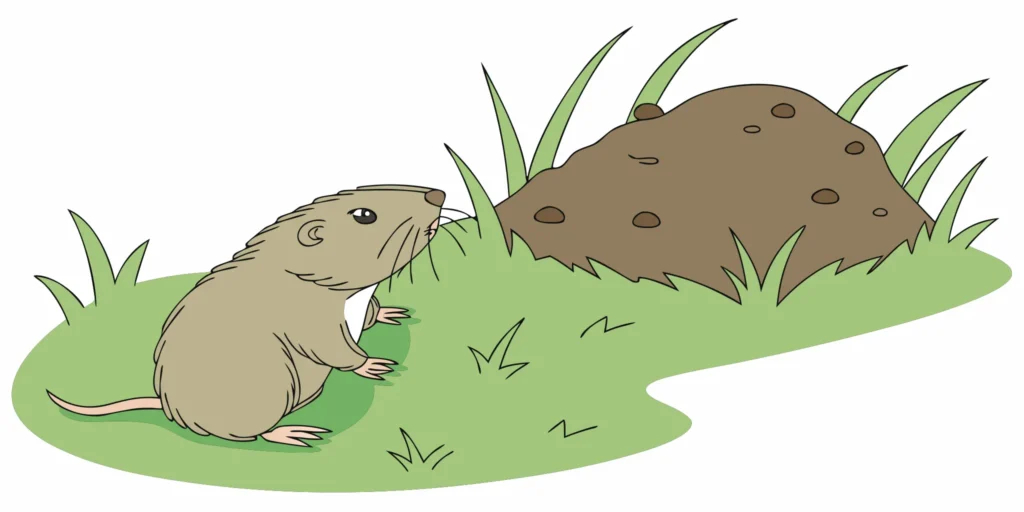
Fresh, half-moon dirt mounds are often the first warning of a hidden pocket gopher. Spotting the right clues early helps protect roots, irrigation lines, and a smooth lawn.
A pocket gopher is a burrowing rodent identified by its compact body, small eyes and ears, strong front claws, and large visible incisors. Its name comes from the fur-lined cheek pouches it uses to carry food and nesting material. Since this animal spends almost all its time underground, homeowners usually identify it by damage rather than a sighting. Look for fresh, crescent-shaped mounds of loose soil with a plugged opening off to one side. According to UC Statewide IPM, mole mounds are circular with a center plug, while ground squirrel holes remain open and lack a mound. Wilting plants, severed roots, damaged irrigation lines, and new mounds appearing across the yard add further evidence that a pocket gopher is active below.
That leaves one practical question: which clues confirm the animal before you take action? Start by comparing its body features, mounds, tunnels, and feeding damage with signs left by similar pests. How to identify a pocket gopher breaks those clues into a quick field check. Here’s how.
How to identify a pocket gopher
When a pocket gopher appears above ground, its digging-built body helps separate it from other yard pests. Look at the whole animal first, then confirm the smaller features around its head and tail.
Viewed from the side, the animal looks compact and low to the ground. Its thick front end leads into a flat head without a clear neck. This shape puts its digging power near the front paws instead of the hind legs.
Body shape, fur, and digging features
A pocket gopher has powerful forequarters, a flat head, and a short neck. Its front paws carry large claws made for moving soil. The University of Idaho’s pocket gopher description also notes that its fine, short fur does not cake in wet soil.
The eyes and ears are small, so they may be hard to notice at a glance. The tail is also easy to miss. It has sparse hair and serves as a sensitive guide when the animal moves through dark tunnels.
Cheek pouches and visible teeth
The clearest facial clue is the set of fur-lined cheek pouches outside the mouth. Pocket gophers use these pockets to carry food and nest material. The pouches can make the sides of the face look full, but they may be less clear when empty.
Next, look for four large, yellow front teeth. The lips close behind these incisors, which lets the animal dig without filling its mouth with soil. This unusual setup leaves the teeth visible even when the mouth seems closed.
Do not mistake the cheek pouches for a mouth full of food. Because the pockets sit outside the mouth, the gopher can fill them while keeping its teeth free for digging.
Taken together, the large front claws, small eyes and ears, external cheek pouches, and exposed incisors form a strong visual match. Cinch Traps’ pocket gopher identification hub can help you compare that match with other burrowing pests.
Why a live sighting is uncommon
A clear view is useful, but do not wait for one before checking your yard. Pocket gophers spend almost all their time below ground and are not commonly seen, according to University of California guidance.
Most homeowners find the animal’s work instead. Look for fresh, loose soil shaped like a half circle, with a plugged opening off to one side. These mounds provide a stronger clue than a brief glimpse of fur near a tunnel.
What do pocket gopher mounds and tunnels look like?
The shape of a pocket gopher mound
A pocket gopher usually leaves a fan, crescent, or half-moon mound of loose soil. The tunnel opening is plugged and sits off to one side. This off-center plug is the strongest clue because a mole mound is round with its plug near the center. The University of California pocket gopher guide uses these mound shapes to tell the pests apart.
Look at the whole mound before moving any soil. A gopher pushes dirt from a side tunnel, then seals the opening. That process creates the lopsided fan shape and a flat or packed plug near one edge. The plug may blend into the mound, so check for a patch with a firmer or smoother surface.
Tunnels, ridges, and plant damage
Gopher tunnels stay below ground, so a clear raised ridge is not always present. Instead, several mounds may form a loose line that follows the hidden tunnel system. Use that line as a map, but do not assume every space between mounds contains a tunnel.
Nearby plant damage can support your mound check. Pocket gophers feed on plant roots, so watch for wilted plants, missing roots, or plants pulled partly below the soil. Bare patches beside fresh mounds also deserve a closer look. For more visual clues, compare your signs with the pocket gopher identification resources.
- Fan or crescent-shaped piles point toward a pocket gopher.
- Round, centered piles are more consistent with mole activity.
- Long surface ridges may also suggest a mole rather than a gopher.
- An open hole without a soil mound may point to another animal.
How to spot recent activity
Fresh soil is the clearest sign of recent digging. New mounds often look dark, loose, and damp compared with older piles. Their edges remain crisp, and grass has not grown through them. Older mounds tend to fade, flatten, crust over, or collect leaves after weather and yard work.
Mark or photograph each fresh mound, then check the area again over the next few days. New loose soil or a newly plugged opening shows where digging continues. A single pocket gopher can make several mounds in one day, so a quick cluster may come from one animal. This active-gopher guidance treats fresh mounds as the main activity sign.
Do not judge activity by mound count alone. Old piles can remain long after digging stops, while a new mound may appear far from the first one. Focus on fresh soil, recent plugs, and new plant damage. Together, these signs give a clearer picture of where the pocket gopher is working now.
Pocket gopher vs. mole, vole, and ground squirrel
Correct pest identification starts with the shape of the damage, not a quick glimpse of an animal. A pocket gopher spends nearly all its time underground, so fresh soil often provides the best clue.
Before choosing a control method, inspect each mound, opening, tunnel, and damaged plant. The following field marks help separate a pocket gopher from other common digging pests. Using professional gopher traps ensures you have the right equipment for the job..
Fast comparison of yard signs
| Pest | Soil or tunnel sign | Opening | Plant damage clue |
|---|---|---|---|
| Pocket gopher | Crescent or half-moon mound | Plugged hole off to one side | Roots eaten; plants may vanish below ground |
| Mole | Round mound or raised surface ridge | Plug often near mound center | Roots may be lifted by tunneling |
| Vole | Narrow surface runways through grass | Small open holes near cover | Gnawed stems, bark, or low plants |
| Ground squirrel | Little or no mound at entrance | Open, visible burrow entrance | Plants eaten above ground |
| Groundhog | Large dirt pile near a broad burrow | Large, open entrance | Broad feeding damage above ground |
Use more than one clue from the table. Rain, mowing, and foot traffic can blur a mound’s shape or hide an entrance. A second sign, such as an open hole or surface runway, makes the identification more reliable.
The mound is the clearest first check. According to the University of California Integrated Pest Management guidance, a pocket gopher leaves a half-circle mound with an off-center plugged hole.
A mole mound is round, and its plug sits near the center. Ground squirrel holes stay open and usually lack a mound. These differences matter because a mound alone does not prove that a pocket gopher made it.
Runways, open holes, and large entrances
Voles tend to leave paths through grass instead of broad piles of fresh soil. Their small openings often sit near dense grass, mulch, or other cover. Look closely for clipped plants or gnaw marks along those paths.
Ground squirrels leave visible entrances rather than sealing them with soil. Groundhog entrances are also open, but they are much larger and often have a clear dirt pile nearby. Compare several signs before making a call.
Confirming a pocket gopher
Fresh, crescent-shaped mounds in a loose line point strongly toward a pocket gopher. New mounds are useful because one active animal can make several in a day. The plugged opening usually sits along one edge, not in the center.
Also check the type of plant damage. Pocket gophers feed on many plant roots, while above-ground feeding suggests another pest may be involved. Cinch Traps’ pocket gopher identification resource offers more signs to compare before selecting any control method.
If the evidence conflicts, watch the area for fresh activity before acting. A short wait can reveal a new mound, runway, or open entrance and prevent the wrong control choice.
What damage can a pocket gopher cause?
Roots become food
A pocket gopher feeds on the roots of many kinds of plants. It can reach those roots while staying inside its tunnel system. This hidden feeding may weaken grass, garden plants, shrubs, or young trees before anyone sees the animal.
Damage may first appear as a plant that wilts, leans, or pulls loose with little root growth left. That pattern alone does not prove a gopher is present. Pair plant damage with fresh mounds and other signs covered in this pocket gopher identification guide.
Damage above and below ground
Loose soil mounds are the clearest damage on a lawn. They cover grass, leave bare patches, and can make mowing or play harder. The University of California’s pest guide notes that gopher mounds are unsightly and can interfere with mowing and other lawn activities.
Below ground, feeding and digging can affect more than turf. A pocket gopher may damage garden roots, landscaping plants, and crop roots as it moves through the soil. Digging near shallow irrigation lines may uncover them, shift their support, or make a leak harder to find.
- Fresh soil can bury grass and low plants.
- Root loss can weaken or kill valued plants.
- Tunnels can leave soft or uneven spots in a lawn.
- Digging can disturb garden beds and shallow irrigation runs.
Why fresh activity matters
A fresh mound signals current activity, not just old damage. One pocket gopher can make several mounds in a day, so a small visible area may change quickly. Early action helps limit new root feeding and keeps loose soil from spreading across the yard.
First, confirm that the mound belongs to a pocket gopher. Fresh gopher mounds often form a half circle and have a plugged opening off to one side. Once active tunnels are confirmed, homeowners can review options for trapping pocket gophers without treating every old mound as active.
Prompt action does not mean every mound points to severe damage. The practical goal is to verify fresh activity, protect plants at risk, and focus control on the active tunnel system.
What should you do after confirming a pocket gopher?
Once you confirm the pest, focus on the burrow that is active now. This keeps your work targeted and helps you avoid digging across the whole yard. The goal is simple: find fresh activity, reach the main tunnel, place the trap correctly, and check the site.
Start with fresh activity
Begin near the newest crescent-shaped mound with an off-center soil plug. Fresh mounds are the main sign of an active pocket gopher. The University of California Integrated Pest Management program notes that one gopher can create several mounds a day. Older mounds may lead to tunnel sections the animal no longer uses.
Use a probe near the fresh mound to find the main tunnel. Probe with care so you can feel where firm soil gives way to open space. The main tunnel often sits away from the soil pile. A side tunnel connects it to the mound.
A four-step trapping process
Gather a probe, a small digging tool, gloves, and a durable mechanical trap before you start. Select the right model for the animal and tunnel. Cinch’s guide to pocket gopher trap sizes can help you choose before opening the burrow.
Confirm fresh activity. Mark the newest mound and check nearby soil for other recent signs. Work there first rather than choosing a mound based only on size.
Locate the main tunnel. Probe around the mound until the tip drops into open space. Open the tunnel with the smallest practical hole. Then clear loose soil from the trap path.
Select and set the trap. Choose a trap that fits the tunnel, then follow its safety and setup directions. Position it in the open tunnel without leaving soil or roots in its working parts.
Monitor and reset. Check the set on a regular schedule and reset it when needed. If fresh mounds appear elsewhere, move your attention to the newest active area.
Careful placement and follow-up
Correct placement matters more than adding bait. Pocket gopher traps do not require food bait when they sit in an active tunnel. Keep the trap’s moving parts clear and stabilize the set. Avoid changing more of the burrow than needed.
Use the maker’s directions each time you set or reset the device. Cinch provides illustrated trap setup instructions for its mechanical traps. Read the directions before setting the trap. Keep children and pets away from the work area.
After each check, look again for new mounds. New activity can show that the pocket gopher has shifted to another tunnel section. If signs stop, keep watching the area before repairing the mound and restoring the soil.
When are pocket gophers active?
Pocket gophers can be hard to watch because most of their work happens below ground. They spend almost all their time inside burrows and are not often seen. The fresh soil mounds they leave behind offer a much better activity clue than a rare sighting.
Underground activity, day and night
A pocket gopher does not need to come above ground to dig, feed, or move through its tunnel system. As a result, watching the yard during daylight may reveal little. Checking only after dark is not much more useful.
The time you notice a mound does not show exactly when the digging happened. Look instead at the soil itself. Loose, fresh-looking soil points to recent work, while a hard or weathered mound may be older. For more visual clues, use the pocket gopher identification guide.
Why mounds appear so quickly
Several new mounds can seem to appear at once, but that does not always mean several animals arrived. One pocket gopher can create several mounds in a day. It pushes dug soil through side openings, then plugs those openings as work moves along.
Pocket gophers usually live and work alone, apart from breeding periods. This habit means one active animal can account for a cluster of nearby fresh mounds. Treat each fresh cluster as a sign worth checking, rather than waiting to see the animal above ground.
Seasonal signs to watch
Spring is an important part of the pocket gopher life cycle. The University of Idaho notes that they breed in spring and may produce one or two litters each year. Still, the best sign of current activity is fresh digging, not the calendar alone.
Weather and soil conditions can change how easy fresh work is to spot. Check gardens, lawns, and planted areas often for new crescent-shaped mounds with an off-center plug. Comparing the same area over several days helps separate current digging from old damage.
How to monitor your yard for new activity
Build a simple inspection routine
After control work ends, walk the yard on a regular schedule and look for fresh soil. Focus first on places where you found activity before. Then check lawn edges, garden beds, fence lines, and the ground near irrigation pipes. A short, repeatable inspection makes new signs easier to spot.
Fresh mounds are the clearest sign of an active pocket gopher. One animal can make several mounds in a day. Look for loose soil shaped like a crescent, with a plugged opening set off to one side. Cinch Traps’ pocket gopher identification guide can help you compare signs before taking action.
Protect plants that matter most
Give extra attention to young trees, valuable shrubs, vegetable beds, and other plants you cannot afford to lose. Check for fresh digging, damaged roots, wilt, or a plant pulled below the soil. Mark each new mound and note the date. This record helps show whether activity is new or part of an older tunnel area.
Physical barriers can reduce risk around select plants, but they do not make a whole yard gopher-proof. The University of California recommends laying hardware cloth or 3/4-inch poultry wire under raised beds before planting. Its pocket gopher guidance also notes that plant repellents have not been shown to drive gophers away.
Manage attractants and respond carefully
Pocket gophers feed on many kinds of plant roots, so removing every food source is not realistic in a planted yard. Clear fallen produce, manage weeds, and avoid leaving unused garden areas overgrown. These steps support general yard care, but none can guarantee that a pocket gopher will stay away.
When you find a fresh mound, confirm the pest before disturbing the area. Do not assume every mound means the same animal or the same tunnel. If control is needed, check local rules and follow all product directions. Keep monitoring after activity stops, since a quiet yard today may show new signs later.
Frequently Asked Questions
How deep do pocket gopher tunnels run?
A pocket gopher’s main tunnel often runs parallel to the surface, generally 4 to 18 inches underground. Some sections may reach depths of 5 or 6 feet. Tunnel depth can vary with soil, weather, and the purpose of each chamber. Because the active route is hidden, fresh mounds remain a more useful surface clue than estimated depth. See this pocket gopher burrow overview for additional measurements.
What can keep pocket gophers out of raised garden beds?
Install a physical barrier beneath a raised bed before adding soil and plants. The University of California Integrated Pest Management program recommends hardware cloth or 3/4-inch-mesh poultry wire under raised beds. Individual shrubs and trees can also be planted in wire baskets that leave room for root growth. Inspect barriers over time because gaps and damaged edges can provide access.
Do ultrasonic devices repel pocket gophers?
No reliable research shows that ultrasonic devices repel pocket gophers from a yard. The University of California Integrated Pest Management program reports that ultrasonic devices, vibrating stakes, and wind-powered pinwheels have not worked in research trials. Plant-based deterrents, including garlic and castor bean, have not been shown to repel them either. Confirm active tunnels and use a proven management method instead.
How large is a pocket gopher?
Pocket gopher size varies by species, but adults generally measure 5 to 14 inches long. The National Wildlife Federation describes them as medium-sized rodents. Their compact body and powerful front end can make them look stockier than other rodents of similar length. They also have large digging claws, small eyes and ears, and a short neck. Size alone is not enough for a firm identification.
Ready to Stop Pocket Gopher Damage in Your Yard?
Ignoring active pocket gopher signs gives fresh mounds and tunnel damage more time to spread across lawns, gardens, and carefully maintained landscaped areas. Starting now helps you move from identification to control before another round of visible damage makes your yard harder and costlier to manage. Once you confirm pocket gopher activity, choosing a durable mechanical trap provides a practical next step and a reusable tool for future activity.
Ready to protect your property? Shop durable pocket gopher traps to choose an option for your yard. Contact Cinch Traps if you need help selecting a practical setup for confirmed pocket gopher activity.