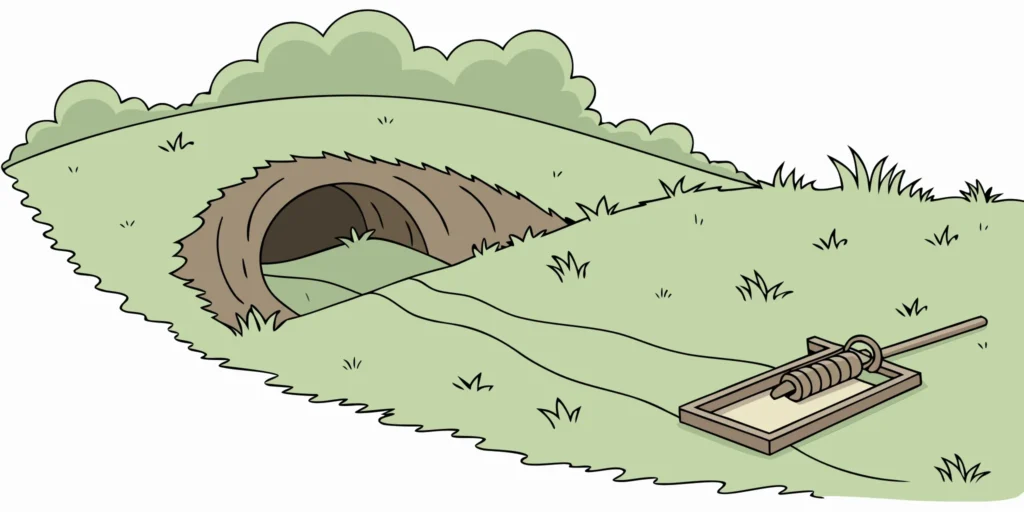
A mole repellent made with castor oil may push pests away for a short time, but it rarely solves the root of the problem. These products work by making the soil smell bad or taste bitter to the animals. While some studies show they can work, moles often just move to a different part of the yard. For a lasting fix, many experts agree that trapping is the most trusted method for stopping these pests. Repellents need to be applied again after every heavy rain, which makes them costly and hard to use over time. If you want to stop the damage for good, you must remove the animal from the area. Traps give you a clear result that a liquid spray simply cannot match.
Do mole repellents actually work?
Homeowners often try mole repellents first to save their lawns. These products use smells or sounds to drive pests away. While some people see quick results, the effects are usually short-lived. Most repellents do not remove the pests from your yard for good. Instead, they just push the animals into a new spot, often your neighbor’s lawn or a different part of your garden.
The limits of castor oil
Castor oil is a common choice for those seeking a natural fix. Some studies show that it can reduce feeding activity in eastern moles on small lawns. This happens because the oil makes the soil and worms taste bad. But this method works best on eastern moles and may not help with other types. It also needs frequent reapplications to stay active, especially after heavy rain.
Many DIY mole control methods rely on these short-term fixes. But because moles have a high metabolism, they must eat 70 to 100 percent of their body weight every day. If a repellent only blocks one spot, the mole will simply dig a new tunnel nearby to find food. You can learn more about mole habits in our guide to mole biology.
Sonic devices and home remedies
Sonic spikes are another popular tool sold in many stores. These devices send vibrations through the soil to scare pests away. While the noise might startle a mole at first, the animals often get used to the sound quickly. There is little scientific proof that these spikes provide long-term protection for a large yard.
In many cases, trapping remains the most reliable method for controlling mole populations. Repellents act like a temporary fence that the pests can easily move around. To truly stop the damage, you need a way to remove the animals from the property. This direct approach solves the root of the problem rather than just hiding it for a few days.
How castor oil mole repellent works
Many homeowners use castor oil as a natural mole repellent to keep pests away from their lawns. This oil comes from the seeds of the castor bean plant. When you apply it to the ground, it coats the roots of grass and the insects that live in the soil. Moles are insectivores with very high metabolisms. They must eat 70 to 100 percent of their body weight in food every day to stay alive.
The science of castor oil
Castor oil does not kill the moles. Instead, it makes their food and their tunnels smell and taste very bad. Some academic studies show that this oil can reduce how much moles feed in treated areas. It often acts as a gut irritant to the mole after they eat a coated worm or grub. This bad experience may cause the mole to move to a new area where the soil is not treated.
Application and limits
To use this method, you typically spray a mix of oil and water over your yard. Most products suggest a rate of one quart per 10,000 square feet. But the oil will break down over time or wash away with heavy rain. You must apply it often to keep the yard safe. Many people find that DIY mole control methods like this work for a short time but do not solve the problem for good.
Realistic expectations
While castor oil can push moles away for a few weeks, it rarely removes them from your property. The moles may just move to a flower bed or a neighbor’s yard until the oil fades. If you want a more reliable way to stop lawn damage, look for effective ways to get rid of moles through other means. Physical traps offer a permanent fix that repellents cannot match because they remove the pest rather than just asking it to move.
Castor oil vs trapping: which controls moles better?
Homeowners often choose between a mole repellent and a mechanical trap. While both aim to protect your lawn, they work in very different ways. Castor oil acts as a short-term fix. It makes the soil smell or taste bad to pests. In contrast, traps give a lasting fix by removing the mole from your yard. Knowing the pros and cons of each will help you save time and money.
How castor oil repellents work
Most mole repellent goods use castor oil to bug a mole’s skin or stomach. Some studies show these sprays can lower feeding in treated areas (University of Nebraska-Lincoln). But this effect is often short. You must spray the oil at a rate of one quart per 10,000 square feet to see results. Heavy rain or watering can wash the oil away. This means you have to spray the yard again and again.
Using oil also does not solve the core problem. It just pushes the moles to a new part of your lawn or to a neighbor’s yard. If you have a large lot, DIY mole control methods like these can cost a lot over time. Many people find they spend more on sprays than they would on a one-time tool.
Why trapping is the reliable choice
Experts agree that trapping is the most effective way to stop mole damage (Rutgers University). Instead of just moving the pest, a trap ends the digging for good. This is key because moles have high needs and can eat up to 100 percent of their body weight each day (University of Nebraska-Lincoln). By taking them out, you protect your plant roots and soil from more harm.
High-quality tools, such as the ones from effective ways to get rid of moles, are made of strong steel to last for years. While setting a trap takes more work than spraying a liquid, the results are much more sure. You can see when you have caught the mole. This gives you peace of mind that your lawn is safe. For the best result, experts suggest using at least two traps in active tunnels.
| Feature | Castor Oil Repellent | Mechanical Trapping |
|---|---|---|
| Main Goal | Push moles away | Remove moles for good |
| Reliability | Low (short-term) | High (lasting) |
| Setup Work | Quick spray | Set by hand |
| Future Cost | High (must buy more) | Zero (buy once) |
| Best Use | Small, minor issues | Active digging |
When you need results fast, physical removal is hard to beat. If you want to stop the digging today, look into getting rid of moles fast with a proven trapping system. It is the best way to ensure your garden stays green year after year.
How to move from repelling to effective mole control
Many home owners start their search for lawn care with a mole repellent. These products, such as castor oil sprays or sonic spikes, aim to drive pests away without harming them. Some lab tests show that castor oil can reduce mole feeding in small areas. But these results are often short lived and hard to repeat. Moles are insectivores with high metabolisms that force them to hunt. They must eat up to 100 percent of their body weight every day. This hunger often drives them back into treated zones once the scent of the spray fades. For a more lasting fix, most experts suggest physical removal.
The limits of the typical mole repellent
A mole repellent may move the problem to your neighbor’s yard, but it rarely solves the issue for good. Most home remedies do not address the root of the problem. Moles create deep, fixed tunnels for living and shallow runs for feeding. While a spray might make the top soil taste bad, the mole can just dig deeper to find food. This is why college tests list trapping as the most reliable way to control moles. It stops the damage at the source by removing the pest from your yard fully. You spend less time on temporary fixes and more time on real results.
How to find an active mole tunnel
Before you set a trap, you must find where the mole is currently digging. Eastern moles make surface tunnels that look like raised ridges in the grass. Star-nosed moles are known for making large mounds of dirt that look like small dirt hills. To find an active run, step on a small part of a tunnel to flatten it. Check back the next day. If the tunnel is pushed back up, you have found a main highway. These paths are the best places for good ways to get rid of moles using metal traps. Finding a run that is used daily is the first step to success.
A simple sequence for trap placement
Using a Cinch trap is a direct way to protect your lawn. These traps are handmade in Oregon from strong steel and come with a lifetime promise. They follow the legacy of Don Sprague by focusing on quality and results. Setting them correctly is the key to clearing your yard. These traps use a trigger system that catches the mole as it moves through its tunnel. Follow this four step process to clear your land of pests.
- Locate the run. Find a straight tunnel that connects two mounds or ridges. Use a probe to find the center of the path where the soil is softest. This spot is where the mole spends most of its time.
- Prepare the opening. Use a small trowel to cut a hole into the tunnel. The hole should be just wide enough to fit the trap. Clear out any loose dirt from the run so the mole can pass through without stopping.
- Set the Cinch trap. Slide the trap into the tunnel opening. Make sure the trigger is in the center of the path. When the mole tries to clear the dirt or pass through, it will trip the steel jaws fast.
- Check and reset. Look at your traps every 24 hours. A tripped trap usually means success. If you do not catch anything in two days, move the trap to a new active run to find a fresh path.
Cinch Traps has helped growers and homeowners since 1909. Our galvanized steel traps are built to last a lifetime. While a mole repellent might offer a temporary break, a Cinch trap provides a real solution. Using these tools allows you to take control of your land again. You can stop worrying about new mounds and start enjoying a healthy, flat lawn. This method is the best way to keep your grass looking its best all year long.
When should you stop using mole repellent?
Many people start with a mole repellent to save their lawn. These products often use oil from plants to make the soil taste bad. While this may help for a short time, it does not fix the root of the problem. If you still see mounds of dirt after a week, it may be time to try a new plan.
Signs the spray is not working
The first sign of failure is when you see more tunnels. Moles have a high need for food and must eat a lot. They often eat 70 to 100 percent of their body weight every day. You can find more about their life through the University of Nebraska-Lincoln. If their food source is still there, a bad taste won’t keep them away for long.
One more sign is when the digging moves to a new spot. A mole might stop in your lawn but move to your plant beds instead. This shift shows that the pest is still in your yard. It is simply staying away from the oil. This is a common issue with DIY mole control methods that only give a short fix.
When to switch to traps
Most experts agree that trapping is the best way to deal with these pests. Traps remove the mole from your land for good. This stops the cycle of damage that sprays often fail to break. You can find many good ways to trap moles that offer a better result than oils.
You should make a change if you have tried many sprays without luck. If you are tired of buying bottles every month, a steel trap is a better choice. Cinch Traps has helped people for over 100 years. We know that a solid tool is better than a bottle of oil. Our Deluxe Mole Kit gives you all you need to start.
Finding a lasting fix
Moles can be hard to stop because they grow their numbers every year. A female mole can have four or five young in a single birth. If you do not remove the adults, the problem will only get bigger. Using traps to catch these pests will save your lawn and your time.
Waiting too long to switch can lead to deep damage. Large nets of tunnels can ruin the look of your yard and harm plant roots. By moving from a mole repellent to a trap, you take control of your land again. You won’t have to worry about new mounds showing up in the dirt.
What about sonic stakes and homemade mole repellents?
Many people start their search for a mole repellent by looking at the most basic options. Sonic stakes and home fixes are common because they seem easy to use. They promise a way to clear your yard without much work. But while these tools are easy to set up, they often fail to provide the long-term fix that land owners need.
The limits of sonic stakes
Sonic stakes are tools that you push into the ground to send sound or shakes through the soil. The idea is that these pulses will bother the moles. Since moles have very sharp hearing and are keen to feel shakes, the hope is they will leave to find a quiet spot. This seems like a smart way to use a mole repellent without using any poison.
But these tools often fall short in the real world. Soil type can change how far the shakes go. In thick clay, the sound might stay very close to the stake. In sandy soil, it might go further but lose its power. Moles are also known to stay in their deep dens where the noise cannot reach them. Often, a mole will just block off the loud tunnel and dig a new one nearby. This is why many find that these stakes do not offer a real fix. If you want a plan that works, you should look into getting rid of moles fast with better tools.
The truth about home fixes
If you talk to your neighbors, you will hear about many DIY mole control methods. People try to put items like gum, glass, or garlic in tunnels. Some even try things like dawn soap or mothballs. These fixes are based on the hope that a bad smell or taste will drive the pest away. Most people want to avoid a mess, so a home cure feels like a good first step.
But most of these cures do not work. Moles eat worms and bugs, and they are not easily fooled by gum or spicy herbs. They have a very high hunger and must eat most of their body weight in food every day. They will not leave a rich food source just because of a bad smell. They will simply dig deeper or move a few feet away. Most of these home cures are just ways to move the problem around rather than solving it for good. Using items like gas or mothballs can also hurt your lawn and the soil life.
Disturbance vs real control
It is easy to see why people want a quick fix. But a real mole repellent needs to do more than just annoy the pest. Many home fixes only cause a short-term move. The mole is still in your yard, just in a spot where you cannot see the damage yet. This leads to more tunnels in the long run and can make the problem worse.
To truly protect your lawn, you need a method that works every time. Research shows that trapping is the most proven way to control mole groups. A shake in the ground or a bad smell might move them for a day. But taking out the mole is the only way to stop the harm for good. Choosing a tool that lasts, like a steel trap, gives you the best chance to keep your grass flat and green. This proven path stops the cycle of new hills and protects your yard for the future.
Frequently Asked Questions
Do mole repellents actually work?
Many mole repellents claim to drive pests away with bad smells or loud sounds. Some studies show castor oil can reduce mole feeding in treated lawns. However, these methods often provide only a short-term fix. Moles can quickly return or move to a new part of your yard once the scent fades. For a better way, trapping is often the best choice for people who want to stop yard damage and get results that last.
Are castor oil-based mole repellents effective?
Castor oil acts as a natural way to bother moles by making their food and tunnels smell and taste bad. The University of Nebraska says these products can drive eastern moles away from treated areas. You often apply them at a rate of one quart per 10,000 square feet. While this may help for a short time, you must use the oil often to keep the moles from coming back.
Does grub control help keep moles away?
People often think that killing grubs will make moles leave. While moles do eat grubs, their main food source is actually earthworms. As noted by Michigan State University, taking out grubs might not solve your mole problem. Even in a yard without grubs, moles will stay to find worms and other soil life. Focus on more direct ways to stop them, like trapping, instead of just managing lawn insects.
Is trapping or repelling better for mole control?
Trapping is widely seen as the most trusted way to handle mole problems. While a repellent might move a mole to a neighbor’s yard, trapping removes the pest from your land for good. Research from Rutgers University shows that trapping is the best method for long-term results. For homeowners concerned about animal welfare, our guide on humane mole trapping questions provides clear answers. It provides a lasting fix to yard damage that scents and noises cannot match. Cinch Traps offers strong steel tools to help you succeed.
Ready to shop mole traps and protect your lawn?
Waiting to act only gives moles more time to dig deep tunnels and ruin your yard. These pests move fast, and the cost of fixing a dead lawn is much higher than the price of a good trap. You might think about using home fixes like oils or smells, but they often fail and waste your time. If you use a real tool today, you can save your soil before the tunnels get too deep. Starting now means you can get a lawn that looks great for years to come. Do not let these pests take over your yard while you try methods that do not work. You can learn about good ways to get rid of moles to stop the damage and take back your yard by acting today. Our traps are made to last and will help you get the job done right.
Ready to shop mole traps? Shop our mole traps to talk to a pro.