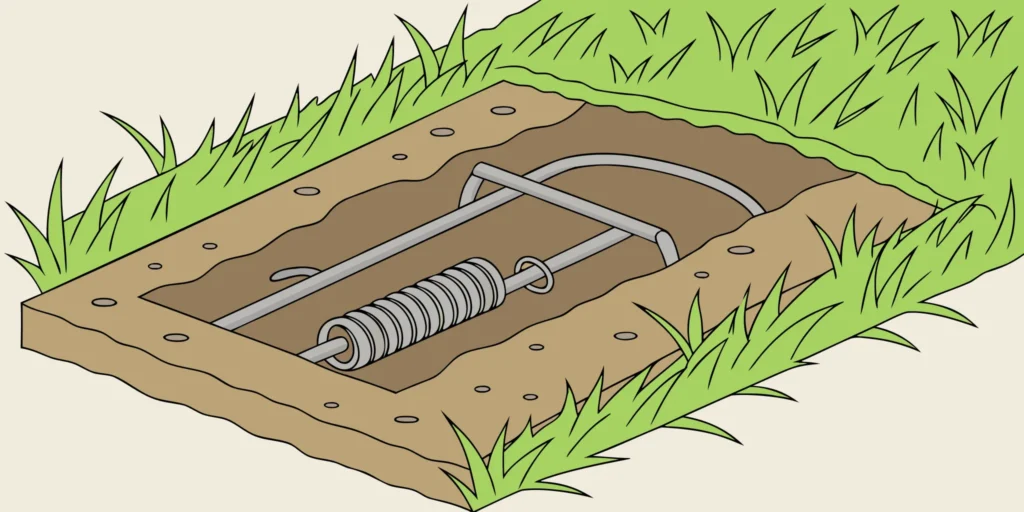
Fresh mounds of dirt in your lawn are a clear sign of gopher damage. Choosing between a live gopher trap and a mechanical kill trap determines how quickly you can reclaim your yard. Both methods offer poison-free control, but they differ sharply in effort, cost, and results.
Shop Cinch Traps gopher traps →
A live gopher trap captures pocket gophers without killing them, typically using a cage or box mechanism inside the tunnel. According to New Mexico State University, trapping is a recommended method for removing specific gophers and is safe for organic lawns. Live traps are common in research settings but are harder to find in stores and require daily monitoring. Mechanical kill traps, by contrast, deliver fast, visible results and are the standard choice for most homeowners. This article breaks down each option so you can decide with confidence.
Understanding the differences between these two trap types starts with a closer look at what a live gopher trap actually is and how it works in the field.
What Is a Live Gopher Trap?
A live gopher trap is a device designed to capture pocket gophers without killing them. These cage-style traps allow you to catch the animal and relocate it to another area. Unlike mechanical kill traps, live traps keep the gopher contained until you check the line. Making them common in research applications but impractical for most homeowners tackling active lawn damage.
Live traps typically use a tunnel-entry door mechanism. You find an active gopher run, place the trap inside the burrow, and when the gopher enters, a door closes behind it. The trap must fit snugly inside the tunnel to work effectively since gophers operate in closed burrow systems below ground.
These traps demand more attention than kill traps. You need to check them every few hours in hot weather to prevent the captured gopher from dying of heat stress before you can relocate it. For a homeowner managing lawn damage, this level of monitoring is impractical. Researchers use live traps to tag and study gopher behavior, but for residential pest control, the time investment rarely justifies the results.
Availability is another obstacle. Most hardware stores and garden centers stock kill traps exclusively. If you want a live gopher trap, you will likely need to order from specialty suppliers that serve research institutions. This limited supply makes them impractical for urgent infestations.
How Do Kill Traps Compare to Live Gopher Traps?
Mechanical kill traps are designed for fast, reliable removal. They fit directly inside active gopher tunnels and use a triggered mechanism to dispatch the pest instantly. Unlike live traps, they require no daily monitoring, no relocation planning, and no special ordering. A properly set kill trap delivers visible proof of success within 24 hours.
Kill traps are the standard tool for gopher control among pest professionals. Research from New Mexico State University confirms that trapping is one of the most effective removal methods without relying on toxic chemicals. This makes kill traps a strong choice for organic gardens and properties where pets roam.
The key differences come down to setup, maintenance, and disposal. The table below shows how they stack up.
| Feature | Live Gopher Trap | Mechanical Kill Trap |
|---|---|---|
| Primary Purpose | Catch and relocate | Fast removal |
| Availability | Hard to find at retail | Widely available |
| Price Per Trap | $35 to $75 | $15 to $30 |
| Monitoring Required | Daily, sometimes twice daily | Every 24-48 hours |
| Catch Confirmation | Must inspect cage | Visible triggered mechanism |
| Disposal Process | Transport to new location | No-touch drop and reset |
| Lifetime Warranty | Rare | Available with Cinch traps |
Cinch traps are built by hand in Oregon from heavy-gauge steel. Each trap carries a lifetime warranty, meaning you buy it once and never need another. The simple 4-step setup makes professional-grade results accessible to any homeowner. This stands in sharp contrast to cheap plastic traps from big-box stores that rust, break, or lose tension after a single season.
With a kill trap, you do not need special skills. You locate the active tunnel, open the trap, place it in the run, and cover the hole. The scissor-jaw mechanism triggers when the gopher pushes through, providing immediate confirmation. There is no guesswork, no waiting for bait to be consumed, and no animal to transport.
Which Trap Delivers Better Results?
Trapping outperforms poison, gas, and repellents for gopher control. It removes the animal directly without introducing toxins into the soil. University studies consistently rank trapping as the most cost-effective long-term strategy for managing pocket gophers.
Success depends less on the trap type and more on placement. A properly placed trap in a main tunnel will catch a gopher regardless of whether it is a live cage or a mechanical kill trap. The challenge for most homeowners is finding that main tunnel. Fresh, moist soil mounds indicate active runs. Dry, crusted mounds mean the gopher has moved on.
Mechanical traps offer one major advantage: visible proof. When a Cinch trap fires, the trigger mechanism is clearly visible above the soil line. You know instantly that the gopher has been removed. With a live trap, you must dig up the cage to check, disturbing the tunnel and potentially alerting other gophers to the disturbance.
Long-term value also favors mechanical traps. A well-built steel trap with a lifetime warranty costs more upfront than a plastic alternative, but it pays for itself over time. As the saying goes, you can buy cheap traps forever or buy a Cinch once. This mechanical trapping effectiveness is backed by university research showing that quality traps deliver consistent results season after season.
Cost Comparison: Live vs Mechanical Traps
Live gopher traps cost $35 to $75 per unit and are difficult to find in stores. Mechanical kill traps range from $15 to $30 and are widely available at hardware stores and online. When factoring durability and reusability, a quality mechanical trap with a lifetime warranty offers significantly better long-term value for homeowners.
The upfront price gap is notable. A live trap often costs two to three times more than a comparable mechanical trap. If you need multiple traps to cover a large property, the cost difference multiplies quickly. For a 1-acre yard with several active tunnels, you might need 6 to 10 traps, pushing the live trap investment well past $300.
According to research from the USDA National Wildlife Research Center, kill traps enjoy widespread availability while live traps remain a niche product. This supply gap means you cannot quickly replace a damaged live trap during an active infestation.
The cost-per-catch calculation also matters. A live trap that requires daily monitoring for two weeks before catching one gopher has a high hidden cost in time and frustration. A mechanical trap set correctly in an active run often catches the gopher within the first 24 hours. Studies show that trapping is more cost-effective than fumigation or baiting over the long term, especially when using reusable steel traps.
| Cost Factor | Live Gopher Trap | Mechanical Kill Trap |
|---|---|---|
| Per-Trap Cost | $35 to $75 | $15 to $30 |
| Retail Availability | Low (specialty only) | High (big-box and online) |
| Setup Time Per Trap | 10-15 minutes | 5 minutes |
| Daily Maintenance | 20+ minutes | 5 minutes |
| Replacement Cost | Full price each time | Covered by lifetime warranty |
| Hidden Time Cost | High (relocation, permits) | Low |
When Should You Choose a Live Gopher Trap?
A live gopher trap makes sense in specific situations: research studies, regulated areas where relocation is permitted, or situations where lethal control is not an option. For the vast majority of homeowners dealing with active lawn damage, mechanical kill traps are more practical, cost-effective, and reliable.
Certain scenarios justify the extra effort of live trapping. If you are a researcher tracking gopher populations, live traps are essential for tagging and data collection. Some municipalities have restrictions on lethal trapping, though these are rare for pocket gophers. If you live in an area with such rules, a live trap may be your only legal option.
Before choosing a live trap, check your local wildlife regulations. Many states prohibit the relocation of wild animals because relocated gophers often do not survive or simply return to nearby properties. Mechanical traps avoid this legal gray area entirely by resolving the problem on your property.
For the homeowner frustrated by gopher mounds appearing overnight, a mechanical kill trap from a reputable manufacturer provides the fastest path to a damage-free lawn. The professional gopher trapping guide from Cinch details how to select and set traps for maximum success, and it consistently points to mechanical traps as the standard for residential control.
How to Trap Gophers Successfully
Good technique matters more than the specific trap you choose. Even the best live gopher trap or mechanical trap will fail if it is placed in the wrong location. Follow these steps to maximize your catch rate.
- Find fresh mounds. Look for moist, recently pushed-up soil. Dry or crusted mounds mean the tunnel is abandoned.
- Probe for the main tunnel. Use a long screwdriver or metal rod to feel for the runway between two fresh mounds. The main tunnel is typically 6 to 12 inches deep.
- Open the tunnel. Dig a small hole directly above the main run and clear out loose dirt so the trap sits flush on the tunnel floor.
- Set the trap inside. Whether using a live trap or a mechanical kill trap, position it so the trigger mechanism faces the direction the gopher will travel.
- Block the light. Cover the hole with a board, sod, or dark cloth. Gophers will plug any tunnel that lets in air or light, which can set off the trap prematurely.
- Check within 24 hours. Inspect the trap daily. If no catch after 48 hours, move the trap to a fresh active mound.
Using a properly set tunnel trap guide will save you time and eliminate the guesswork. Persistence is the key. Gophers are solitary animals, so each catch represents one less pest damaging your yard. With consistent effort, you can clear an infested lawn in one to two weeks.
Are There Legal Issues with Live Gopher Traps?
Relocating a trapped gopher is not as simple as driving to a nearby field and letting it go. Many states classify pocket gophers as nongame wildlife and restrict relocation because moved animals often starve in unfamiliar territory or carry diseases into new populations.
Check with your state fish and wildlife agency before purchasing a live trap. Some jurisdictions require a trapping license or a special permit to transport wildlife. Violating these rules can result in fines, even if your intent was humane control.
Mechanical kill traps avoid these complications entirely. The gopher is dispatched on your property, and disposal is as simple as a no-touch drop into the trash. This legal simplicity is one reason pest control professionals overwhelmingly choose mechanical traps. The mechanical trapping approach used by Cinch is designed to comply with all standard regulations for residential pest control.
Frequently Asked Questions
What is the best trap for gophers?
According to a study from the USDA National Wildlife Research Center, mechanical kill traps are the standard for effective gopher control. They offer fast results, wide availability, and clear proof of catch. For homeowners, a quality steel trap with a lifetime warranty offers the best long-term value.
Can you buy a live gopher trap at a hardware store?
Most hardware stores and garden centers do not carry live gopher traps. They stock mechanical kill traps almost exclusively because those are what homeowners need for active infestations. Live traps are typically sold through specialty suppliers that serve research institutions.
How often should you check a live gopher trap?
Live traps require checks every 4 to 6 hours in warm weather to prevent heat stress on captured gophers. In cooler conditions, once-daily checks may suffice, but the risk of the animal dying before release remains significant.
Is relocating a gopher legal?
It depends on your state and local ordinances. Many jurisdictions prohibit the relocation of pocket gophers because relocated animals rarely survive. Always verify with your state wildlife agency before attempting relocation.
Do mechanical kill traps work on moles too?
Some mechanical traps are designed specifically for gophers and may not be effective on moles, which have different tunnel structures. Cinch offers separate trap models for gophers and moles, each engineered for the specific behavior of the target pest.
How long does a Cinch trap last?
Cinch traps are handmade in Oregon from heavy-gauge steel and are covered by a lifetime warranty. With proper use and storage, a single trap can last decades, making it a one-time purchase for lifelong gopher control.
Ready to Take Control of Your Lawn?
You have seen the facts. Live traps have their place in research, but for homeowners dealing with real gopher damage, mechanical kill traps deliver faster, more reliable results at a lower total cost. Cinch traps are handmade in Oregon, tested at major universities, and backed by a lifetime warranty. The 4-step setup takes minutes, and the scissor-jaw mechanism gives you immediate proof of catch.
Do not let gophers destroy another season of landscaping. Shop Cinch Traps gopher traps and get your lawn back.