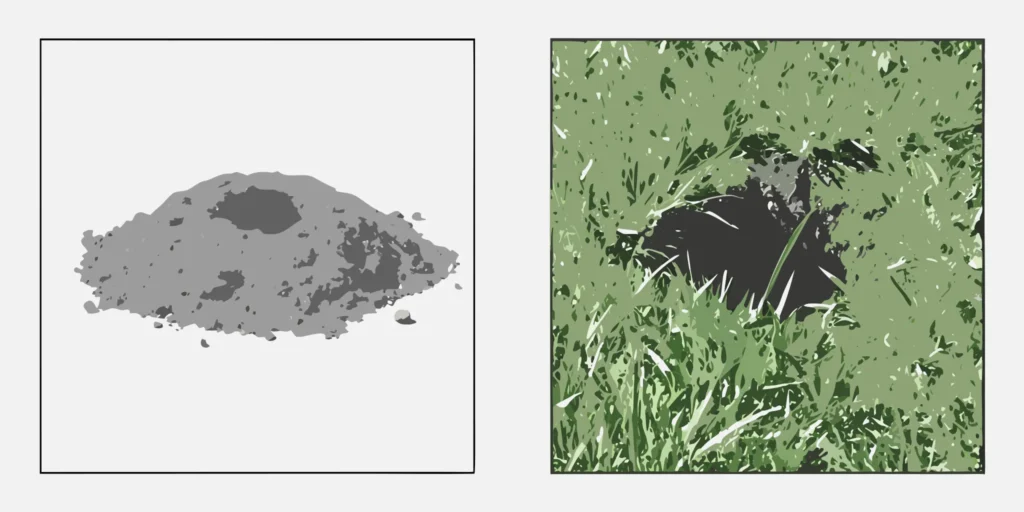
A fresh pile of soil can tell you much more than an animal sighting. When comparing gopher mounds vs mole mounds, look first at the shape of the displaced soil and where the tunnel appears to enter it. Gophers usually leave a fan-, crescent-, or horseshoe-shaped mound with a plugged opening off to one side. Moles more often leave a rounded, volcano-like mound with the tunnel below the center. Raised ridges across the lawn strengthen the case for a mole, while clipped plants and disappearing roots point toward a gopher.
Ready to trap the right pest? Shop Cinch Traps.
Voles create a different pattern. They usually travel through narrow surface runways and small openings instead of pushing up large soil mounds. Identifying the animal before taking action matters because gophers, moles, and voles use different routes and damage plants in different ways. This guide will help you read the signs, locate fresh activity, and choose a response that matches the pest actually using your yard.
Gopher mounds vs mole mounds: the quickest clues
The fastest way to narrow the culprit is to stand several feet away and study the complete pattern, not just one pile of dirt. A gopher excavates soil from a branching underground tunnel system and pushes that soil to the surface from a side tunnel. The result is commonly a fan- or crescent-shaped mound. The plugged opening is usually near an edge, although loose soil can hide it.
A mole pushes soil upward from below. Its mound tends to look rounder, more symmetrical, and more like a small volcano or cone. The opening is generally beneath the middle of the mound, rather than visibly offset. Moles also create shallow feeding tunnels that lift turf into winding ridges. Those ridges can be easier to identify than the mound itself.
Check the location of the tunnel, not just the dirt
Mound shape is a strong clue, but weather, mowing, pets, and foot traffic can distort it. To confirm your first impression, gently probe around the likely tunnel area. For a gopher mound, the main runway generally lies underground on the plugged side of the fan. For a mole mound, the deeper travel tunnel is more likely beneath the mound, and nearby raised ridges may connect to it.
Do not treat every open hole as an active entrance. Both gophers and moles commonly keep their systems closed. A neatly plugged opening can be a sign of recent gopher activity, while an exposed hole may be old or disturbed. Review the visual examples in the Cinch mole and gopher information hub before deciding which pattern matches your yard.
How to compare gopher, mole, and vole signs
These three animals are grouped together because they are small and can damage lawns or gardens, but their habits are very different. Gophers are burrowing rodents that eat plant material. Moles are insectivores that move through soil while looking for earthworms, grubs, and other prey. Voles are rodents that spend much of their time near the surface and feed on grasses, bark, roots, and other vegetation.
| Sign | Gopher | Mole | Vole |
|---|---|---|---|
| Typical soil sign | Fan-, crescent-, or horseshoe-shaped mound | Rounded, volcano-like mound | Usually no large mound |
| Opening position | Plugged and offset near the mound edge | Generally beneath the mound center | Small open holes connected to surface paths |
| Travel pattern | Underground runways with scattered mounds | Raised, winding surface ridges plus deeper tunnels | Narrow runways through grass or mulch |
| Plant damage | Roots and plants eaten or pulled belowground | Roots disturbed by tunneling, not usually eaten | Gnawing on stems, bark, grasses, and roots |
| Best quick clue | Offset plug on a fan-shaped mound | Raised lawn ridges and round mounds | Surface runways with small holes |
Read several signs together
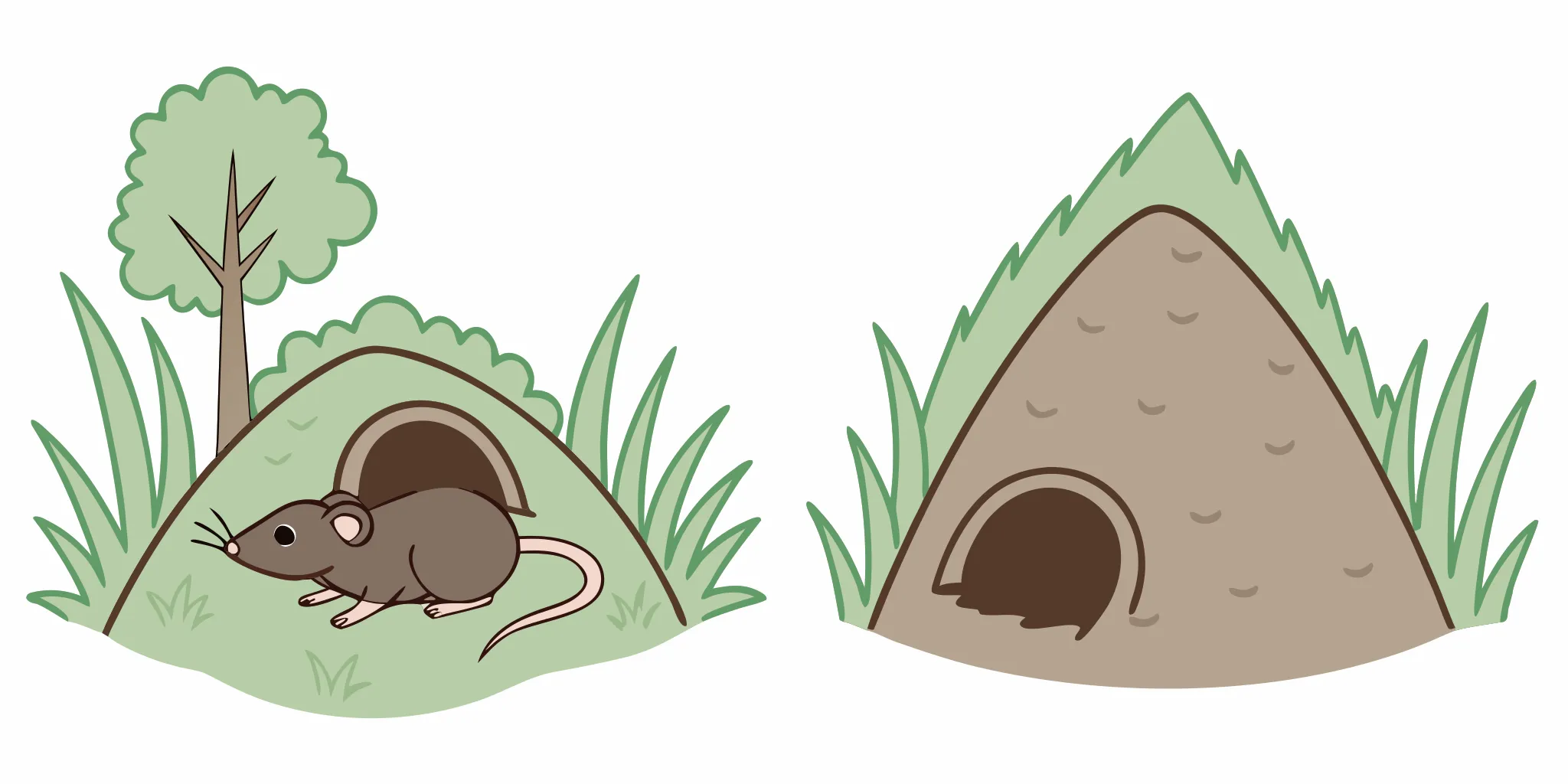
No single clue is perfect. A newly formed gopher mound can look rounded before more soil is pushed out. A mole mound can be flattened into an irregular shape by rain. Vole paths can overlap abandoned tunnels made by other animals. Make your identification from a combination of mound shape, opening position, travel pattern, and plant damage.
Mark fresh signs with small flags or take photos from the same position on consecutive days. New soil, reopened runways, or newly wilted plants reveal where the current activity is concentrated. That active area is more useful than an old mound when it is time to choose and place a trap.
How do you know if voles are the real problem?
Voles are often confused with moles because the names sound alike, but their surface evidence is usually distinct. Instead of producing prominent molehills, voles create narrow, well-worn runways through turf, groundcover, or mulch. Their paths can look like channels where the grass has been clipped close to the ground. Small, open burrow entrances may appear along the routes.
Plant damage is another important clue. Voles gnaw vegetation. You may find tooth marks near the base of a shrub or young tree, missing groundcover, damaged bulbs, or clipped grass along a runway. In winter, their paths may become especially visible after snow melts. A mole may disturb roots as it tunnels, but it is hunting insects rather than eating your plants.
Distinguish a vole runway from a mole ridge
A vole runway is a depressed or cleared path on the surface. A mole ridge is raised because the animal pushed soil upward while tunneling just below the turf. Press gently beside the feature. A mole ridge often feels like loosened soil under the grass, while a vole route looks worn and open from above.
If your yard has obvious runways but no large mounds, inspect the path edges and nearby plants before assuming you need a mole or gopher trap. A trap designed for an underground gopher or mole tunnel will not solve a vole problem simply because all three animals can occupy the same general area. Once you confirm gophers are the problem, a deluxe gopher kit gives you everything needed for effective control..
Use this 4-step yard inspection before choosing a trap
A careful inspection saves time and helps prevent misplaced traps. Walk the property in daylight when shapes and ridges are easy to see. Keep children and pets away from any area you later prepare for trapping, and follow all product directions.
- Map fresh activity. Walk the lawn, garden beds, fence lines, and areas around valued plants. Mark fresh soil, raised ridges, surface runways, and damaged vegetation. Fresh, moist soil and signs that change from one day to the next deserve the most attention.
- Classify the mound. Look for a fan-shaped pile and offset plug for a gopher, or a rounded volcano-like pile and central tunnel position for a mole. Observe the mound from multiple angles before disturbing it.
- Trace the travel route. Follow raised turf ridges that suggest shallow mole feeding tunnels. Look for the underground runway near the plugged side of a gopher mound. For voles, trace the visible surface path and inspect nearby stems and bark for gnawing.
- Match the response to the animal. Once you have confirmed the pest and found fresh activity, select a trap made for that animal and place it according to its instructions. Do not rely on mound appearance alone if the surrounding evidence points elsewhere.
Focus on active tunnels
Found the active tunnel? Choose the matching Cinch Trap.
Correct placement matters as much as correct identification. A perfect trap in an abandoned tunnel cannot intercept an animal. After mapping the property, prioritize the newest signs and learn how to prepare the trap correctly. Cinch provides a clear how-it-works guide for the setup process.
Recheck the area after your first inspection. If fresh mounds appear in a different section of the yard, update your map. Gopher and mole tunnel networks can be extensive, and the most obvious mound is not always the best place to act.
What yard damage points to a gopher instead of a mole?
Gophers and moles can both leave disruptive soil piles, but their diets create different secondary evidence. A gopher feeds on vegetation and can damage roots, bulbs, and whole plants. A plant that wilts unexpectedly, loosens easily, or seems to disappear from below may be near an active gopher runway. Damage often clusters around gardens, landscaping, and other food sources.
A mole primarily feeds on soil-dwelling animals. Its damage is usually indirect. Raised feeding tunnels can separate grass roots from the soil, create uneven footing, and leave turf vulnerable to drying. Moles can disturb beds while searching for prey, but they generally are not the animal eating roots and pulling plants belowground.
Use plant damage as supporting evidence
Do not identify a gopher from one unhealthy plant. Drought, disease, insects, and other rodents can cause similar symptoms. Instead, look for the combination of plant damage and fan-shaped mounds with offset plugs. If the affected lawn is covered in winding raised ridges and plants are not being eaten, a mole is more likely.
Also remember that multiple pests can use one property. A lawn may show mole ridges while a garden bed contains gopher mounds or vole runways. Divide the yard into zones and identify the evidence in each one. Treating every sign as one problem can lead to the wrong trap in the wrong tunnel.
Why the right identification changes your control plan
A trap works only when it fits the target animal and intercepts the route that animal is actively using. Gopher traps belong in gopher tunnels. Mole traps belong in mole tunnels. Vole signs call for a different control plan. Misidentification wastes effort and allows fresh damage to continue while you monitor the wrong place.
After confirming a gopher, find the main runway associated with a fresh mound instead of setting directly into loose surface soil. After confirming a mole, prioritize an active travel tunnel or ridge rather than an old mound. Test uncertain signs over time and return to the places where activity reappears.
Choose equipment made for the confirmed pest
Cinch Traps offers separate solutions for mole and gopher control. The traps are made in Oregon and supported by a lifetime warranty. The straightforward four-step setup helps property owners move from identification to a properly prepared trap without guessing at a complicated mechanism. Browse the Cinch Traps store only after you know which animal and tunnel type you are targeting.
Identification also makes monitoring more meaningful. When you know what signs the target animal creates, you can recognize whether activity has shifted. Whether another part of the yard needs attention, and whether a completely different animal is responsible for new damage.
What should you do after identifying the animal?
Once the evidence points consistently to a gopher or mole, move from general observation to the freshest section of its tunnel system. Note which signs appeared most recently, locate the travel route, and prepare the correct trap according to the manufacturer’s directions. Use gloves, keep the work area orderly, and follow applicable local rules.
Keep checking for fresh evidence
Continue inspecting the yard even after activity appears to stop. Smooth a small section of a raised ridge or level an old mound so new movement is easier to notice. Watch vulnerable plants for fresh damage. If a new sign differs from the original pattern, identify it again rather than assuming the same animal returned.
Ready to stop fresh yard damage? Shop mole and gopher traps.
For product-specific guidance, compare the available mole and gopher traps and review the setup instructions. The goal is not simply to place a trap near a mound. It is to identify the pest, find an active route, and set the appropriate equipment where the animal is likely to encounter it.
Frequently asked questions
What is the main difference between a gopher mound and a mole mound?
A gopher mound is commonly fan-, crescent-, or horseshoe-shaped, with a plugged tunnel opening offset near one edge. A mole mound is typically rounder and volcano-like, with the tunnel below the center. Raised surface ridges nearby are another strong mole clue.
Are raised ridges in a lawn caused by moles or gophers?
Raised, winding ridges just below the turf are most often associated with mole feeding tunnels. Gophers mainly use deeper underground runways and reveal their presence through scattered mounds and plant damage. Inspect the entire pattern before making a final identification.
Do moles or gophers eat plant roots?
Gophers eat vegetation, including roots and other plant parts. Moles primarily eat earthworms, grubs, and other soil-dwelling animals. Mole tunnels can disturb roots, but the mole generally is not eating them.
Can voles make dirt mounds?
Voles usually do not create the large, obvious soil mounds associated with gophers and moles. Look instead for small open holes, narrow surface runways, clipped vegetation, and gnaw marks around stems or bark.
Choose the right trap for the signs in your yard
A mound is your starting clue, not the full diagnosis. Confirm the shape, tunnel position, travel pattern, and plant damage, then act in the freshest active area. Once you know whether the culprit is a mole or gopher, choose the matching Cinch Trap and follow the setup guide for confident placement.
For mole infestations, a complete mole control kit provides all the tools needed to start trapping immediately.